A chinchilla that’s drooling, dropping food, or losing weight while still “trying” to eat almost always has the same underlying issue: dental disease. It’s the number-one health problem in pet chinchillas, and treating it costs most owners $150 to $900 depending on how deep the trouble goes.
Like rabbits and guinea pigs, chinchillas have teeth that grow continuously for life. When they don’t wear down evenly, the surfaces develop sharp points, and worse, the roots can elongate up into the jaw and skull. That root involvement is what separates a routine filing from a serious, expensive problem.
What Treatment Costs
The cost depends almost entirely on whether you’re dealing with crown overgrowth (the visible part) or root elongation (hidden inside the jaw, only visible on X-ray).
| Item | Low | High | Typical |
|---|---|---|---|
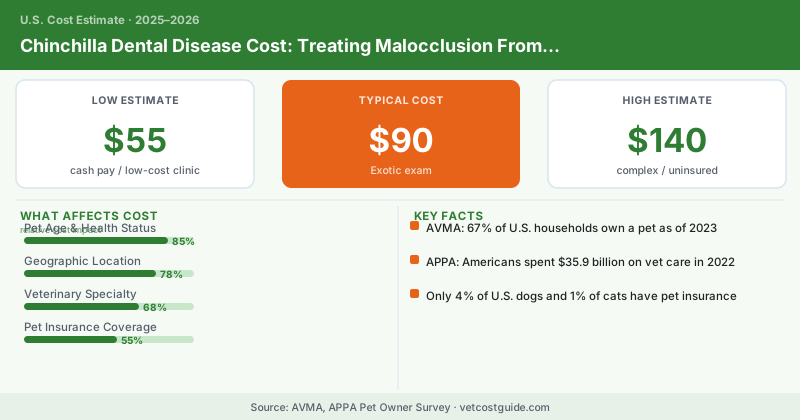
| Exotic exam | $55 | $140 | $90 |
| Oral exam + conscious assessment | $30 | $80 | $50 |
| Skull X-rays | $120 | $400 | $240 |
| Dental filing (sedated) | $150 | $450 | $280 |
| Anesthesia + monitoring | $80 | $250 | $150 |
| Pain meds + assist feeding | $40 | $150 | $85 |
| Tooth extraction (if needed) | $150 | $500 | $300 |
A straightforward crown trim under sedation usually totals $150 to $400. Cases with root elongation, X-rays, extractions, and assist feeding can climb to $700 to $900.
Crown vs. Root: The Critical Difference
This is the part owners need to understand. Filing down sharp crown points is treatable and often improves things right away. But root elongation, where the roots grow the wrong direction into the bone, can’t be filed away. It’s a progressive, often incurable condition that’s managed, not cured. X-rays are essential to tell the two apart, which is why your vet will likely insist on imaging before quoting a plan.
Don’t skip the specialist here. The AVMA recognizes exotic companion practice as a small niche, and dental work on an animal this size demands real skill and the right tools, so a chinchilla-experienced vet is worth finding even if it means a drive.
- Chinchilla dental disease treatment runs $150–$900.
- Crown overgrowth is treatable; root elongation is managed, not cured.
- X-rays are essential to distinguish the two, and to plan treatment.
- A diet of unlimited hay is the best prevention there is.
It’s Usually Recurring
Here’s the budgeting reality: once a chinchilla has malocclusion, the teeth keep growing wrong. Crown trims often need repeating every few months, and root cases need ongoing management for life. That recurring cost is exactly why prevention, and catching it early, matters so much for your wallet.
A chinchilla that stops eating is in danger fast, their digestive system needs constant food to keep moving. If yours is dropping food, drooling, or off its appetite for even a day, see an exotic vet immediately. Waiting can be fatal.
How to Keep the Bill Down
- Feed unlimited hay. Constant chewing of coarse hay is the single best way to wear teeth evenly and prevent malocclusion. Skip sugary treats.
- Catch it early. A small crown point caught on a routine exam is a cheaper, lighter procedure than an emergency under full anesthesia.
- Get X-rays. Knowing whether roots are involved early lets you plan realistically instead of paying for repeated trims that won’t fix the real problem.
- Plan funding. Exotic pet insurance may cover dental work if enrolled early, and CareCredit spreads costs out.
For routine numbers, see our chinchilla vet cost guide and compare against a standard average vet visit cost.
The Bottom Line
Dental disease is the defining chinchilla health problem, and treatment runs $150 to $900 depending on whether the roots are involved. Crown overgrowth is fixable; root elongation is a lifelong management job. The cheapest path by far is prevention, unlimited hay, no sugary treats, and early exams, so you catch trouble while it’s still a quick trim instead of a recurring crisis.
Frequently Asked Questions
Treatment for chinchilla dental disease typically ranges from $150 to $900, with the majority of routine cases falling between $150 and $400. More complex cases involving tooth root elongation or multiple extractions can reach the upper end of $900 or higher, depending on the severity and whether hospitalization or follow-up care is needed.
Most standard pet insurance plans do not cover chinchillas, as they only insure dogs and cats; you'll need a specialized exotic pet insurance policy, which may or may not cover dental disease depending on the plan. Out-of-pocket costs are common since many exotic pet owners pay the full $150 to $900 treatment cost directly, though some veterinary clinics offer payment plans.
Chinchillas with malocclusion may need treatment every 2 to 6 months for the first year, depending on how quickly their teeth regrow and misalign after the initial procedure. Prevention through proper diet (unlimited timothy hay) is critical to slow progression and reduce the need for repeat treatments, which can significantly lower your total lifetime care costs.