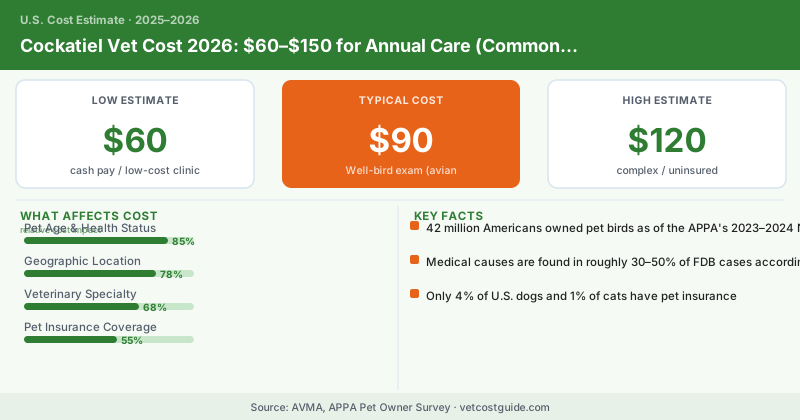
42 million Americans owned pet birds as of the APPA’s 2023–2024 National Pet Owners Survey — and the majority of them have never taken their bird to an avian vet. That’s a problem, because cockatiels in particular are masters at hiding illness, and by the time you notice something is wrong, it’s often an emergency.
Here’s what annual and sick-bird vet care actually costs.
| Service | Low | Typical | High |
|---|---|---|---|
| Well-bird exam (avian vet) | $60 | $90 | $120 |
| Psittacosis (Chlamydophila) screen | $40 | $65 | $100 |
| Fecal parasite check | $25 | $45 | $70 |
| CBC/blood panel | $80 | $140 | $220 |
| Radiographs (x-rays) | $100 | $175 | $280 |
| Crop wash and culture | $80 | $150 | $250 |
| Antibiotic treatment (per course) | $30 | $60 | $120 |
| Emergency visit (avian) | $100 | $200 | $400 |
Why Avian Vets Cost More
There aren’t many of them. The Association of Avian Veterinarians (AAV) has roughly 2,500 members in the U.S. — compared to over 100,000 total licensed veterinarians. Avian medicine requires specialized training and equipment: gram stains, specialized blood sampling from tiny patients, knowledge of bird-specific pathogens, and an understanding of the way birds metabolize drugs differently than mammals.
General practice vets can see cockatiels, but many lack the diagnostic tools and species-specific experience to accurately identify conditions like early psittacosis, proventricular dilatation disease (PDD), or the subtle respiratory changes that precede serious illness. An avian-experienced vet is worth the premium.
The Well-Bird Annual Visit — What’s Included
A standard annual wellness exam for a cockatiel at an avian practice typically includes:
- Physical examination (weight, feather condition, eyes, nares, beak, feet, vent)
- Choanal slit and crop examination
- Fecal gram stain (checks bacterial balance)
- Fecal parasite screen
- Discussion of diet, lighting, and environmental enrichment
Many avian vets also recommend a Chlamydophila psittaci (psittacosis) test annually, especially for birds with new housemates or recent exposure to pet stores. Psittacosis is zoonotic — it can infect humans — making it a public health concern, not just a bird health concern.
Annual well-bird care: $100–$200 for a healthy bird. Add bloodwork for birds over 5–7 years: $80–$220 extra.
- Initial setup visit (first 30 days): $100–$200
- Psittacosis screen: $40–$100
- Fecal gram stain and parasite check: $25–$70
- Gram-negative bacteria treatment if needed: $30–$80
- Annual exam (years 2+): $100–$200
- Emergency fund: $300–$600
- First-year total (healthy bird): $200–$500
Common Cockatiel Health Issues and Costs
Psittacosis (Chlamydophila psittaci)
Psittacosis is a bacterial infection that spreads through airborne fecal dust and respiratory secretions. In cockatiels, symptoms include lethargy, fluffed feathers, yellow-green droppings, and respiratory distress. It’s treatable — doxycycline for 45 days is the standard protocol — but it requires an accurate diagnosis first.
Testing: $40–$100 (PCR test from choanal or cloacal swab). Treatment: $30–$80 for doxycycline. Most birds recover fully when treated promptly. Untreated psittacosis is often fatal.
Respiratory Infections
Respiratory disease is common in cockatiels and can stem from psittacosis, Aspergillus fungus, bacterial infections, or poor air quality (cigarette smoke, Teflon fumes, aerosols). Signs: tail bobbing, open-mouth breathing, clicking sounds, discharge from nares.
Diagnosis includes physical exam, radiographs (to look for air sac thickening or fluid), and cultures. Cost: $150–$400 for workup and initial treatment.
Feather Destructive Behavior (FDB)
Cockatiels that over-preen, chew, or pluck their own feathers present a diagnostic challenge. FDB can be behavioral (boredom, anxiety), physical (skin irritation, infection, follicle damage), or both. A vet workup rules out medical causes before any behavioral intervention.
Workup: $100–$250 including skin scraping and sometimes biopsy. Medical causes are found in roughly 30–50% of FDB cases according to avian behavior literature.
Egg Binding in Female Cockatiels
Egg binding is a life-threatening emergency. A female cockatiel that can’t pass a forming egg will become lethargic, stop eating, and sit on the cage floor. It progresses quickly — hours, not days.
Treatment: warm soaking and supportive care for mild cases; oxytocin or calcium injections to stimulate passage ($80–$200); surgical intervention in refractory cases ($300–$800). Female cockatiels housed alone can still develop eggs — no male is needed.
Tumors
Older cockatiels, particularly females, have a significant risk of reproductive tumors. The AAV notes that chronic egg-laying is a major risk factor for ovarian cysts and tumors in female parrots. Diagnosis typically requires ultrasound or radiographs ($150–$300). Surgical options exist for accessible masses: $500–$1,500+. Hormone implants (Lupron or Suprelorin) can suppress chronic egg-laying: $100–$300 per injection, repeated every 3–6 months.
| Condition | Diagnostic Cost | Treatment Cost | Notes |
|---|---|---|---|
| Psittacosis | $40–$100 | $30–$80 | Zoonotic — test annually |
| Respiratory infection | $100–$250 | $100–$300 | Rule out Aspergillus |
| Feather destructive behavior | $100–$250 | $50–$200 | Medical + behavioral workup |
| Egg binding (emergency) | $80–$150 | $80–$800 | Seek care within hours |
| Reproductive tumor | $150–$300 | $500–$1,500 | More common in females |
| Crop impaction/infection | $80–$150 | $80–$250 | Crop wash + antibiotics |
When to Go to an Emergency Avian Vet
Birds decompensate fast. Go same-day if you see:
- Sitting on the cage floor (abnormal — cockatiels roost high when healthy)
- Tail bobbing at rest (labored breathing)
- Blood anywhere — feathers, droppings, or from the beak
- Suspected exposure to Teflon or non-stick cookware fumes (this can kill a bird in minutes)
- A female cockatiel straining, fluffed, and lethargic (egg binding)
Emergency avian vet visits: $100–$400 for the visit itself, before any diagnostics or treatment. Geographic availability is the bigger challenge — many areas lack a 24-hour avian emergency clinic. Know your nearest option before you need it.
Non-stick cookware heated to high temperatures releases polytetrafluoroethylene (PTFE) fumes that are lethal to birds, often within minutes. If you own cockatiels or any pet birds, replace all non-stick pans with stainless steel or cast iron. This is not an exaggeration — avian vets see PTFE toxicity deaths regularly.
General Vet vs. Avian Specialist — Which Should You Use?
A general practice vet who occasionally sees birds will charge less per visit but may lack the diagnostic tools and species-specific knowledge to accurately assess a sick cockatiel. For annual wellness exams in a healthy bird, a general vet with avian experience is often adequate. For anything involving illness, respiratory symptoms, neurological signs, or reproductive issues, an avian specialist is worth the higher fee.
Use aav.org to find an AAV member vet in your area. Annual care for a healthy cockatiel: $100–$200. Keep $300–$600 in an emergency fund — birds don’t give you much warning when things go wrong.
Frequently Asked Questions
A routine wellness exam at an avian-experienced vet runs $60–$120. If your cockatiel is sick, expect $150–$400 for diagnosis and treatment depending on what's found. Initial setup visits for new birds — where the vet establishes a baseline, does a fecal check, and often runs a Chlamydophila psittaci (psittacosis) screen — typically run $100–$200 including the lab fees.
Yes. The Association of Avian Veterinarians recommends annual wellness exams for all pet birds, including cockatiels. Birds hide illness extremely well — by the time you notice something is wrong, the condition is often advanced. Annual exams catch weight loss, early respiratory changes, and feather abnormalities before they become expensive emergencies. Budget $100–$200 per year for a healthy bird.
Use the Association of Avian Veterinarians' 'Find a Member' directory at aav.org. Not all vets who will 'see birds' have avian-specific training — look specifically for vets who list birds as a primary or significant species focus. Avian-certified specialists charge more ($80–$150 per exam) than general vets seeing birds occasionally ($50–$80), but the diagnostic accuracy and treatment quality are meaningfully better.