Your vet says your dog needs a dental that’ll run $1,300, and you assume insurance has it covered. Maybe. The answer hinges entirely on one word: is it a cleaning or is it disease? Pet insurance draws a hard line between the two, and which side your bill falls on decides whether you get reimbursed or pay it all.
Routine dental cleanings—the kind your pet should get every year or two—are usually treated as preventive care and excluded from standard accident-and-illness coverage. But dental disease, extractions, and trauma from accidents are often covered. The trick is knowing which bucket your bill lands in before you book.
- Routine dental cleanings are usually NOT covered by base accident-and-illness plans—they’re preventive care.
- Dental disease, periodontal treatment, and medically necessary extractions often ARE covered.
- Broken teeth from accidents are typically covered under the accident portion of the policy.
- A wellness add-on can reimburse routine cleanings ($100-$300), but rarely the full $500-$1,300 cost.
The Cleaning vs. Disease Divide
This is the whole ballgame. Insurers reimburse problems, not maintenance.
| Dental Service | Typical Cost | Base Plan | Notes |
|---|---|---|---|
| Routine cleaning (no disease) | $300-$700 | Not covered | Preventive wellness item |
| Cleaning + extractions | $800-$1,800 | Often covered | Disease portion covered |
| Periodontal disease treatment | $600-$2,000 | Usually covered | If not pre-existing |
| Broken tooth (accident) | $500-$2,500 | Usually covered | Under accident benefit |
| Wellness add-on cleaning | $300-$700 | Partial reimburse | Capped $100-$300 |
So a $1,300 dental that’s purely a cleaning with no disease? Probably on you. The same $1,300 dental that includes treating periodontal disease and pulling three rotten teeth? Often largely covered. The medical-necessity line is everything. Our coverage basics guide explains how insurers classify procedures.
Why Routine Cleanings Get Excluded
Insurers exclude cleanings for the same reason they exclude vaccines—they’re predictable preventive care, not unexpected losses. A cleaning is something every pet needs on a schedule, so it isn’t really a risk to insure against. That’s why it falls under wellness, not core coverage.
The American Veterinary Dental College reports that the majority of dogs and cats show signs of periodontal disease by age three—it’s one of the most common conditions vets see. That high prevalence is exactly why insurers carve out routine cleanings: if everyone’s pet needs them, covering them in the base plan would just raise everyone’s premium.
The Pre-Existing Dental Trap
Dental disease is a classic pre-existing condition trap. If your pet already has visible tartar, gingivitis, or periodontal disease when you enroll, the insurer can exclude all future dental disease treatment as pre-existing. Get coverage and a baseline dental exam done while your pet’s mouth is still healthy—waiting until there’s a problem usually means it’s excluded.
This makes timing critical, and it’s another reason when you get pet insurance matters so much. A young pet with a clean mouth keeps dental coverage intact. An older pet with existing disease may find dental permanently excluded—the very thing it’s most likely to need.
Some Plans Require a Dental Clause
Read the fine print here. A number of insurers only cover dental disease if you’ve kept up with routine cleanings and can prove it. Skip your pet’s annual cleaning, then file a $1,800 periodontal claim, and the insurer may deny it for lack of preventive maintenance. The coverage and the cleaning are linked on these plans—you have to do the preventive part to unlock the treatment part.
How to Actually Cover Dental Costs
Layer your approach:
- Base accident-and-illness plan handles disease, extractions, and accident-related dental trauma.
- Wellness add-on ($5-$12/month for a dental rider) reimburses part of routine cleanings—see our wellness add-on cost guide for the math.
- Self-fund the gap for the routine cleaning, since add-ons rarely cover the full $500-$1,300.
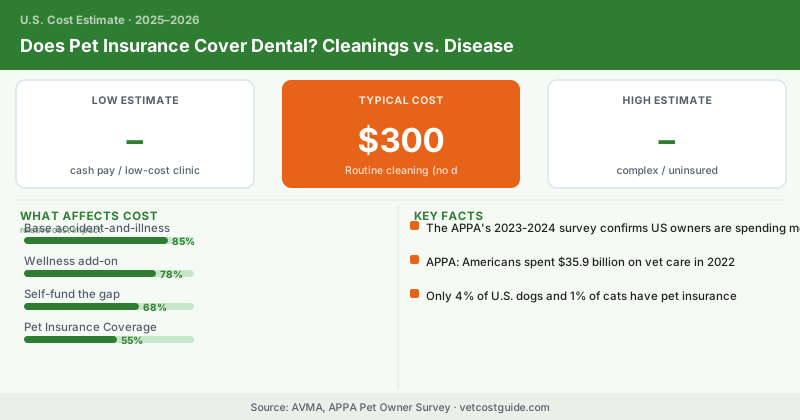
If a big dental hits before you’re prepared, a vet payment plan or a CareCredit card can spread the cost. The APPA’s 2023-2024 survey confirms US owners are spending more on veterinary care overall, and dental is a rising share of that—a single advanced periodontal case can top $2,000.
Bottom line: pet insurance covers dental problems, not dental maintenance. Keep up with cleanings to protect your coverage, enroll before disease sets in, and use a wellness rider if you want help with the routine part. The line between covered and not covered is medical necessity—and you can plan around it if you know it’s there.
Frequently Asked Questions
A routine professional dental cleaning for dogs typically costs between $500 and $1,300, depending on your vet, location, and your dog's age and health status. Senior dogs or those with existing dental disease may cost more due to additional pre-anesthetic bloodwork and longer procedure time.
Most standard pet insurance plans exclude routine dental cleanings as preventive care, meaning you'll pay the full $500–$1,300 out of pocket. However, if your pet develops dental disease requiring treatment or extraction, many plans will cover that as an illness or accident, with typical reimbursement of 70–90% after your deductible.
Veterinarians typically recommend professional dental cleanings every 1–2 years for most dogs and cats, though some pets with poor oral health may need them annually. Establishing a routine cleaning schedule early can prevent costly dental disease treatment later, even though cleanings themselves aren't usually covered by insurance.