Most patients assume acupuncture for dogs is fringe medicine. Wrong. Veterinary acupuncture is now recognized by the AVMA as a valid therapeutic modality, offered at most university veterinary teaching hospitals, and routinely recommended by board-certified veterinary rehabilitation specialists for dogs with arthritis, intervertebral disc disease, and chronic musculoskeletal pain. The cost is real, but so is the evidence — here’s how to think about it.
What Conditions Respond Best to Acupuncture
Canine acupuncture has the strongest evidence base for:
- Osteoarthritis (hip, elbow, stifle) — most commonly treated indication
- Intervertebral disc disease (IVDD) — often used post-surgically or as a medical management adjunct
- Degenerative myelopathy — slows functional decline in some dogs
- Chronic musculoskeletal pain — soft tissue injuries, muscle tension
- Post-operative pain and recovery
- Cancer pain palliation — improving quality of life alongside oncology treatment
A 2022 systematic review in Frontiers in Veterinary Science found that veterinary acupuncture showed statistically significant benefits for pain management in dogs with musculoskeletal conditions, though the authors noted the need for larger controlled trials.
Cost Breakdown
| Service | Typical Cost | Notes |
|---|---|---|
| Initial consultation + first treatment | $100–$250 | Includes intake history and exam |
| Follow-up acupuncture session | $50–$150 | 30–60 minutes per session |
| Aquapuncture (B12 injection) | $75–$175 | Longer-lasting stimulation than dry needling |
| Electroacupuncture session | $80–$175 | Electrical stimulation added to needles |
| Moxibustion add-on | $20–$50 | Heat therapy combined with acupuncture |
| Full initial treatment course (4–6 sessions) | $300–$800 | Most conditions require multiple sessions |
Typical Treatment Plans and Their Costs
Most dogs need a series of treatments before you see meaningful results. A typical plan looks like:
Phase 1 — Loading phase (weeks 1–3): Weekly sessions. Total: 3–4 appointments Phase 2 — Maintenance (month 2–3): Every 2–3 weeks. Total: 3–4 appointments Phase 3 — Long-term maintenance: Monthly or as-needed for chronic conditions
Initial course (8 weeks, 6 sessions): $450–$900 total Annual maintenance (12 monthly sessions): $600–$1,800/year
Arthritis dogs often stay on monthly acupuncture indefinitely — similar to how you’d think about massage or physical therapy for a person with chronic joint disease.
Only licensed veterinarians can legally perform acupuncture on animals in the US. Look for the CVA credential (Certified Veterinary Acupuncturist) from the Chi Institute or IVAS (International Veterinary Acupuncture Society). These programs require 120+ hours of post-graduate training. A general vet who “does acupuncture” with minimal training is very different from a CVA — credentials matter here.
Acupuncture vs. Alternatives: Cost Comparison
How does acupuncture compare cost-wise to other pain management approaches for dogs?
- Monthly NSAIDs (Carprofen, Galliprant): $30–$80/month + quarterly bloodwork ($100–$200)
- Monthly acupuncture: $75–$150/month
- Adequan injections (induction + maintenance): $200–$400 induction + $50–$100/month
- Physical therapy / hydrotherapy: $60–$150/session, similar maintenance frequency
For many dogs, acupuncture is used in combination with — not instead of — medications. The combined approach often allows lower drug doses, which matters for dogs with kidney or liver disease that can’t tolerate long-term NSAIDs.
Does Pet Insurance Cover Acupuncture?
It depends on the policy. Most baseline accident-and-illness plans do NOT cover acupuncture. However, several insurers offer wellness riders or alternative therapy endorsements that do:
- Trupanion: covers acupuncture when prescribed by a vet as part of medical treatment
- Nationwide: covers under some whole-pet plans
- Embrace, ASPCA Pet Insurance: may cover under wellness add-ons
Read your policy carefully and confirm before assuming coverage.
If your dog has a bleeding disorder, active skin infection at needle sites, or is pregnant, acupuncture may be contraindicated or require special precautions. Always disclose your dog’s full health history to the acupuncturist before the first session — including all current medications, since some drug interactions affect how the body responds to treatment.
Is It Worth the Cost?
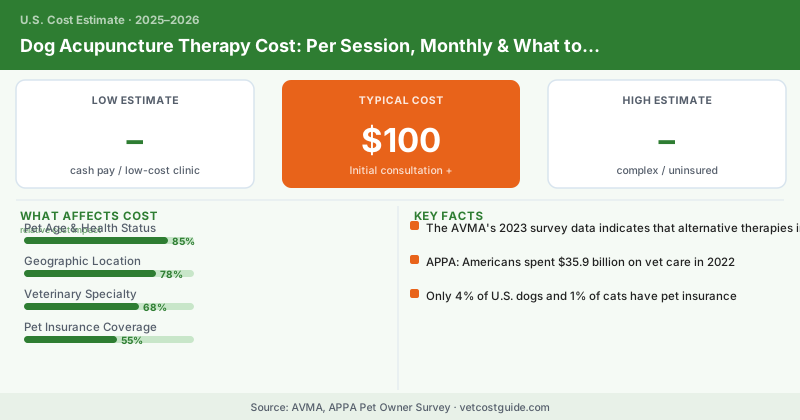
The AVMA’s 2023 survey data indicates that alternative therapies including acupuncture are now offered by approximately 12% of US veterinary practices — up from under 5% a decade ago. Among pet owners who’ve used veterinary acupuncture, satisfaction rates are high, though the evidence base for benefit is stronger in dogs with arthritis and IVDD than for other conditions.
If your dog has chronic musculoskeletal pain and isn’t getting full relief from medications alone — or can’t tolerate medications — veterinary acupuncture is worth a 4–6 session trial. Budget $400–$700 for a proper evaluation of whether your dog responds. Most dogs who are going to benefit do so within the first 3–4 sessions.
Frequently Asked Questions
Dog acupuncture typically costs $50–$200 per session, depending on your location, the veterinarian's experience level, and whether additional therapies are combined with treatment. Most dogs require an initial course of 4–8 sessions over 2–4 weeks, bringing the total initial investment to $300–$800.
Most standard pet insurance plans do not cover acupuncture, as it is classified as alternative or complementary medicine by most insurers. However, some policies offer optional add-ons or wellness riders that may partially reimburse acupuncture costs, so you should review your plan details or contact your provider to confirm coverage.
Dogs typically start with 1–2 sessions per week for 4–8 weeks as part of an initial treatment plan, then transition to maintenance sessions every 2–4 weeks depending on response. Your veterinarian will assess your dog's condition after the first 2–3 sessions and recommend a customized schedule based on pain levels, mobility improvements, and underlying conditions like arthritis or disc disease.