A positive allergy blood test doesn’t tell you what your dog is allergic to — it tells you what antibodies are circulating in the bloodstream. That distinction matters more than most pet owners realize, and it’s why veterinary dermatologists are skeptical of serum allergy panels from general practice in many cases.
Your dog has been itching since July. Every July. You’ve tried two different foods, two different shampoos, and a round of steroids that worked but wore off. Now you’re wondering if testing will finally give you answers.
Maybe. But the answer depends on what kind of test, who’s interpreting it, and whether you’re dealing with a food allergy or an environmental one — because those are two completely different diagnostic and treatment pathways.
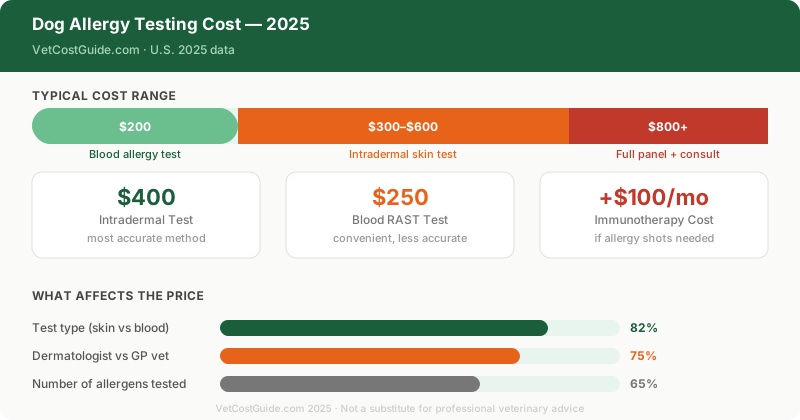
- Serum/blood allergy testing (from your GP vet): $200–$400 — identifies circulating antibodies, not always actionable
- Intradermal allergy testing (board-certified dermatologist): $300–$700 — gold standard for environmental allergens
- Food elimination diet trial: $0–$200/month for 8–12 weeks — the only reliable way to diagnose food allergy
- Allergen-specific immunotherapy (ASIT/allergy shots): $500–$1,500 setup + $50–$150/month ongoing
- Apoquel: $2–$4/day; Cytopoint injection: $65–$150 every 4–8 weeks
Understanding the Two Types of Dog Allergies
Food allergies cause skin symptoms (itching, paw licking, ear infections) and sometimes GI issues. They’re diagnosed through an elimination diet trial — not blood tests. The standard approach: feed a hydrolyzed protein or novel protein diet that your dog has never eaten for a strict 8–12 weeks. Zero treats, zero table scraps, nothing else. If symptoms resolve, you’ve identified a food sensitivity. Re-introduce old food to confirm. Cost: $0 for a carefully managed homemade hydrolyzed diet, or $80–$200/month for prescription hydrolyzed food like Hill’s z/d or Royal Canin Hydrolyzed Protein.
Environmental (atopic) allergies are immune reactions to things like dust mites, grass pollens, mold spores, and tree pollens. Seasonal patterns are common (spring-fall for pollen; year-round for dust mites). These are what intradermal testing and blood allergy panels try to identify.
Serum Allergy Testing vs. Intradermal Testing
| Test Type | Cost | Setting | Accuracy Notes |
|---|---|---|---|
| Serum (blood) allergy panel | $200–$400 | GP vet or lab | Moderate — many false positives |
| Intradermal skin testing | $300–$700 | Board-certified dermatologist | Gold standard for atopic disease |
| Food elimination trial | $0–$200/month | At home | Only reliable method for food allergy |
Serum allergy testing measures IgE antibodies in blood against specific allergens. It’s convenient — any vet can draw the blood and send it to a lab. But veterinary dermatology literature has long noted concerns about false positive rates and inconsistent results between labs. A positive result for tree pollen doesn’t tell you whether that allergen is actually causing your dog’s symptoms.
Intradermal allergy testing is performed by a board-certified veterinary dermatologist (DACVD) under light sedation. Small amounts of individual allergens are injected into shaved skin panels. Reactions — visible wheals — appear within 15–20 minutes. This test identifies specific allergens driving the response in real tissue. It’s more expensive and requires a specialist referral, but it’s far more reliable for building an immunotherapy treatment formulation.
The AVMA and veterinary dermatology guidelines consistently recommend intradermal testing as the preferred diagnostic tool when ASIT is being considered.
What Happens After Testing: Your Options
Allergen-specific immunotherapy (ASIT) is the only treatment that addresses the underlying immune response rather than just suppressing symptoms. Based on testing results, a custom serum is formulated containing small doses of the identified allergens. Injections are given increasingly frequently over 12–24 months to desensitize the immune system.
- Setup and initial formulation: $500–$1,500
- Ongoing injections: $50–$150/month (many owners learn to give them at home)
- Response rate: 50–70% show good to excellent improvement in veterinary dermatology studies
Apoquel (oclacitinib) targets the itch signal directly. It works within 4 hours and controls symptoms effectively for most dogs. Cost: $2–$4/day ($60–$120/month). Requires prescription; ongoing lab monitoring recommended for long-term use.
Cytopoint (lokivetmab) is a monoclonal antibody injection given every 4–8 weeks at the vet clinic. It binds and neutralizes IL-31, the primary itch-signaling cytokine in dogs. Cost: $65–$150 per injection depending on dog weight. No daily pill required; most owners find this convenient.
Medicated shampoos, fatty acid supplements, and topical steroids can manage symptoms at lower cost for mild cases. These don’t address the underlying allergy but reduce flare intensity.
When to See a Board-Certified Veterinary Dermatologist (DACVD)
See a DACVD if:
- Your dog has been on Apoquel or Cytopoint for more than 6 months without exploring root causes
- Multiple food trials haven’t resolved GI or skin symptoms
- You’re interested in allergy immunotherapy
- Symptoms involve complex combinations of skin, ear, and GI issues
- Your GP vet has been unable to establish diagnosis
Dermatologist initial consultation typically runs $150–$350 plus the cost of testing. Many owners find the single specialist appointment more cost-effective than months of trial-and-error at a general practice.
Don’t skip the elimination diet just because your dog has always eaten the same food. Dogs can develop allergies to proteins they’ve eaten for years — in fact, prolonged exposure is how most food allergies develop. The most common culprits are beef, chicken, dairy, wheat, and egg. Switching to a new “premium” food that contains the same proteins accomplishes nothing. A hydrolyzed or true novel protein diet for a strict 8–12 weeks is the only way to rule food allergy in or out.
Getting the Most From Testing Money
Start with food trial, not blood tests. If your dog’s allergy symptoms started with a food change, get worse with certain treats, or involve GI symptoms alongside skin issues, run the elimination diet first. It’s the cheapest and most reliable diagnostic step available.
Save intradermal testing for when you’re ready to pursue immunotherapy. If your goal is ASIT, get intradermal testing from a dermatologist — the formulation will be based directly on the test results. If your goal is just short-term symptom control, Apoquel or Cytopoint are faster paths to relief.
Fatty acid supplements first for mild cases. Omega-3 supplements ($20–$50/month) strengthen the skin barrier and can reduce allergen penetration. Low cost, no downsides, worth trying before escalating to prescription medications.
Frequently Asked Questions
Rarely. Environmental allergies in dogs are typically lifelong conditions that worsen with age and cumulative allergen exposure. Food allergies, once the offending protein is identified and eliminated, can be managed very effectively — but re-exposure to that protein will trigger symptoms again. The goal isn't waiting for your dog to outgrow it; it's identification and management.
Environmental (atopic) allergies are more common. AVMA and veterinary dermatology literature consistently show that atopic dermatitis driven by environmental allergens — dust mites, pollen, mold, grass — accounts for the majority of canine allergy cases. True food allergies exist but are less prevalent than owners typically assume. Worth noting: 'food intolerance' (digestive upset) and 'food allergy' (immune response causing skin symptoms) are different problems that are frequently confused.
For the right candidate, yes — substantially. Allergen-specific immunotherapy (ASIT) desensitizes the immune system over 12–24 months. Studies in veterinary dermatology report 50–70% of dogs showing good to excellent response. It doesn't work for everyone, but for dogs who respond, it can dramatically reduce reliance on medications like Apoquel or Cytopoint over time. A board-certified veterinary dermatologist (DACVD) is best positioned to evaluate whether your dog is a good immunotherapy candidate.