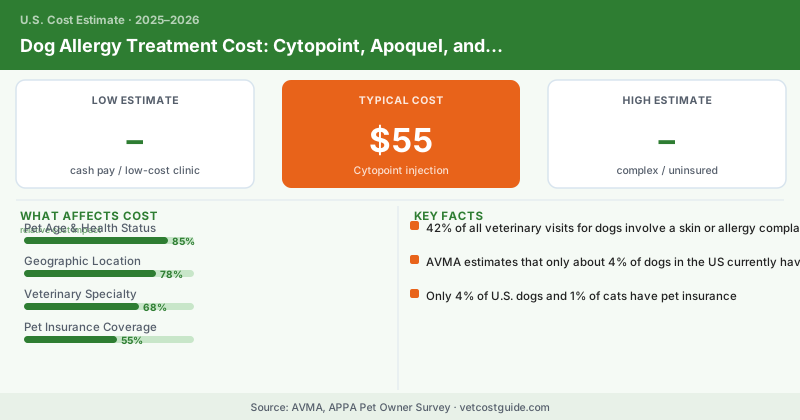
42% of all veterinary visits for dogs involve a skin or allergy complaint — it’s the single most common reason dogs see a vet beyond routine care, according to Nationwide Pet Insurance’s 2023 claims data. And it’s not cheap. Allergy treatment costs range from $80 for a one-time cortisone injection to over $3,000 per year for immunotherapy programs. The right approach depends on your dog’s allergy type. The wrong approach wastes money without solving anything.
Here’s a straight-shooting look at every option, what it costs, and when it’s actually worth it.
- Cytopoint injections cost $65–$150 per dose and work for 4–8 weeks — that’s $500–$1,800/year for year-round itching dogs.
- Apoquel (daily oral tablet) runs $2–$4 per day — about $730–$1,460/year ongoing.
- Allergy testing (blood or intradermal) costs $200–$700 and is required before immunotherapy.
- Immunotherapy (allergy shots or sublingual drops) runs $800–$2,000 in year one, dropping to $300–$600/year after that.
- No single treatment works for every dog — identifying the allergy type first saves you from cycling through expensive dead ends.
Treatment Options and Costs Side-by-Side
| Treatment Option | Monthly Cost | Annual Cost | Best For |
|---|---|---|---|
| Cytopoint injection | $55–$150/dose | $500–$1,800 | Environmental atopy, any age |
| Apoquel (oclacitinib) daily | $60–$125/month | $730–$1,500 | Environmental atopy, 12+ months |
| Prednisone (short-term) | $10–$30/month | $120–$360 | Flare control; not for long-term use |
| Allergy blood testing | One-time $200–$400 | — | Before immunotherapy |
| Intradermal skin testing | One-time $400–$700 | — | Most accurate; done by dermatologist |
| Immunotherapy (shots) | $80–$120/month Y1 | $800–$2,000 Y1 then $300–$600 | Best long-term cure option |
| Prescription hydrolyzed diet | $60–$180/month | $720–$2,160 | Food allergy elimination trial |
| Medicated shampoos/topicals | $15–$60/month | $180–$720 | Adjunct therapy; not standalone |
The Three Types of Dog Allergies (And Why It Matters Financially)
Before spending a dollar on treatment, understand what you’re treating. Getting this wrong is the number-one reason allergy costs spiral.
Environmental allergies (atopic dermatitis) account for roughly 10–15% of all dogs and cause symptoms that appear or worsen seasonally — though many dogs are year-round sufferers. Pollens, dust mites, mold spores, and grasses are common triggers. These dogs respond to Cytopoint, Apoquel, or immunotherapy. They do NOT respond to dietary changes.
Food allergies affect a smaller subset — about 1–2% of dogs, though they’re commonly over-suspected. The only reliable diagnosis is a strict 8–12 week dietary elimination trial using a novel protein or hydrolyzed diet. Blood tests marketed as food allergy tests have poor specificity and aren’t recommended by most veterinary dermatologists. Food allergies don’t respond to Cytopoint or Apoquel.
Contact allergies are the least common and usually localized (think: rash in the belly skin that contacts grass). Avoidance is the treatment. Topicals and antihistamines may help manage flare symptoms.
Seeing a board-certified veterinary dermatologist ($150–$350 for a first consult) often saves money long-term by correctly diagnosing the allergy type before you’ve spent hundreds cycling through the wrong treatments.
Cytopoint: The Injection That Blocks Itch
Cytopoint (lokivetmab) is a monoclonal antibody injection that neutralizes IL-31, one of the key proteins that triggers itch in atopic dogs. It’s administered by your vet and takes effect within 24 hours.
Cost per injection: $65–$150 depending on your dog’s size and your location. Larger dogs need larger doses — a 90-pound Labrador costs more per injection than a 20-pound Beagle.
Duration: 4–8 weeks per injection, with most dogs landing around 5–6 weeks. Year-round atopic dogs need 7–10 injections annually.
Annual cost for a year-round atopic dog: $500–$1,500 for the injections themselves, plus 2–3 vet visits if you’re already going in regularly. Some vets charge a short appointment fee on top of the injection; others don’t.
Who it’s ideal for: Dogs that can’t tolerate daily oral medication, puppies (Cytopoint has no minimum age restriction once labeled for use), dogs with liver concerns where daily drug metabolism is a worry, and dogs whose owners prefer an injection-based approach.
Cytopoint has an excellent safety profile. Because it’s a biologic antibody rather than a small-molecule drug, it’s not processed by the liver or kidneys — making it a strong option for dogs with concurrent organ disease.
Apoquel: The Daily Tablet
Apoquel (oclacitinib) is a JAK inhibitor — a daily oral medication that suppresses the signaling pathways driving itch and inflammation in atopic dogs.
Cost per day: $2.00–$4.25, depending on dose and whether you use the brand-name or generic. As of 2024, generic oclacitinib tablets (Rinvoq for dogs? No — veterinary-specific generics) are available at some compounding pharmacies, though FDA-approved generic equivalents are not yet broadly available.
Monthly cost: $60–$130 at most US veterinary pharmacies. GoodRx and Costco Pharmacy may reduce this slightly.
Annual cost: $730–$1,560 for year-round dosing.
Who it’s ideal for: Dogs with moderate-to-severe atopic dermatitis who need consistent daily control rather than episodic injection management. Works within 4 hours of the first dose — extremely fast.
The caution: Apoquel requires dogs to be 12 months or older. It’s generally very well tolerated, but long-term use warrants periodic bloodwork ($80–$180/year) to monitor white blood cell counts, since JAK inhibitors can suppress immune function. Most dogs tolerate it for years without issues.
Allergy Testing: Do You Need It?
Allergy testing is required before immunotherapy — you need to know specifically what your dog is allergic to in order to create a desensitization formula. It’s not required before Apoquel or Cytopoint.
Allergy blood testing (serology): $200–$400. Tests for specific IgE antibodies against environmental allergens. Convenient — a blood draw at your regular vet. Results in 1–2 weeks. Accuracy is debated among veterinary dermatologists; false positives are common, which can inflate the immunotherapy formula with unnecessary antigens.
Intradermal skin testing: $400–$700. The gold standard. Performed under sedation by a veterinary dermatologist. Small amounts of specific allergens are injected into shaved skin; the dermatologist reads the reactions at 15 minutes. More specific than blood testing, but requires a specialist referral and a sedated dog.
If you’re planning immunotherapy (the most cost-effective long-term approach), the additional $200 to get intradermal testing instead of blood testing is usually worth it for a more accurate allergen profile.
Immunotherapy: The Only “Cure”
Allergen-specific immunotherapy — either subcutaneous injections (allergy shots) you administer at home or sublingual drops — is the only treatment that actually desensitizes the immune system rather than just suppressing symptoms.
Year 1 costs: $800–$2,000 including allergy testing, the custom allergen formulation, and the injection supplies. Many dermatologists provide a starter kit and teach owners to administer injections at home — standard insulin syringes work fine.
Ongoing annual cost after Year 1: $300–$600 for allergen refills. That’s substantially cheaper than continuous Cytopoint or Apoquel.
Effectiveness timeline: This is the part that requires patience. Most dogs show improvement at 6–12 months. About 60–70% of atopic dogs respond well to immunotherapy, per data from the American College of Veterinary Dermatology. Some dogs reach near-complete remission. Others see 50–70% symptom reduction and still need Cytopoint or Apoquel occasionally, but less frequently — reducing overall costs.
The 3–5 year math almost always favors immunotherapy for year-round atopic dogs over continuous biologic or drug therapy.
Geographic and Clinic-Type Variation
| Setting | Cytopoint (per dose) | Apoquel (monthly) | Dermatologist Consult |
|---|---|---|---|
| General practice, rural | $65–$95 | $55–$95 | N/A (referral needed) |
| General practice, suburban | $75–$120 | $65–$110 | N/A |
| Specialty dermatology clinic | $90–$150 | $80–$130 | $200–$400 first visit |
| Veterinary school clinic | $55–$90 | $45–$80 | $100–$200 |
Veterinary dermatology schools (like those at NC State, UC Davis, and Tufts) offer specialist-quality allergy diagnosis and treatment at 30–50% below private specialty clinic pricing. If you have one within driving distance, it’s worth the trip for the diagnostic workup.
What Pet Insurance Covers
Most comprehensive pet insurance plans cover allergy treatment — both the diagnostics and ongoing management — if you enrolled before symptoms appeared. AVMA estimates that only about 4% of dogs in the US currently have pet insurance, which means most owners pay out of pocket for what can be a $1,000–$2,000 annual expense.
If your dog is already showing allergy symptoms, new pet insurance policies will likely exclude allergic dermatitis as a pre-existing condition. Enroll before symptoms appear if possible.
If you’re already paying out of pocket, ask your vet about:
- 3-month prescription refills for Apoquel instead of monthly (some clinics offer discounts for volume)
- Splitting doses with vet guidance (some dogs can transition to every-other-day Apoquel)
- CareCredit for large upfront costs like the allergy testing + immunotherapy starter kit
What Not to Waste Money On
Over-the-counter antihistamines (Benadryl, Claritin, Zyrtec) have poor evidence for canine atopic dermatitis. Unlike in humans, antihistamines alone rarely provide adequate itch relief for atopic dogs. They may have a mild role as adjuncts in mild cases but shouldn’t be your primary strategy if the itching is significant.
Food allergy blood tests marketed directly to consumers or via some vets have very poor specificity for dogs. The only way to diagnose a food allergy is the elimination diet trial. Don’t spend $200–$400 on a food sensitivity panel.
Frequent prednisone/steroid courses work fast and cost almost nothing ($10–$30/month), but long-term steroid use has serious side effects — increased thirst/urination, weight gain, diabetes risk, skin thinning, and Cushing’s disease with prolonged use. Steroids are appropriate for short-term flare control, not year-round management.
The goal is finding your dog’s allergy type, choosing the right long-term strategy, and sticking to it. Allergy management in dogs is rarely cured by the first treatment tried — but with the right approach, most dogs can be comfortable and most owners can afford it.
Frequently Asked Questions
Cytopoint injections typically cost $60–$150 per injection at most US veterinary clinics. Most dogs require injections every 4–8 weeks, bringing annual costs to $390–$1,950 depending on frequency and your location.
Most pet insurance plans cover allergy medications and injections as long as the condition is not pre-existing, though you'll typically pay 10–30% out-of-pocket after your deductible. Some insurers exclude certain chronic skin conditions, so check your policy details before enrolling.
Immunotherapy (allergy shots or sublingual drops) requires 6–12 months to show meaningful improvement, with costs ranging from $1,500–$3,000 for the first year. It offers the best long-term solution for dogs with environmental allergies, potentially reducing or eliminating the need for ongoing medications after 1–2 years of treatment.