Your dog destroys the couch every time you leave. The vet has diagnosed separation anxiety — and now you’re looking at a prescription. Suddenly you want to know: how much does this cost, and does it actually work?
The American Veterinary Medical Association (AVMA) estimates that anxiety-related behavioral problems are among the top five reasons owners surrender dogs to shelters. Getting this right matters far beyond the vet bill.
Here’s what each class of medication costs and what you’re actually getting.
- Daily behavior-modification drugs (fluoxetine, clomipramine): $15–$60/month
- Situational anxiety drugs (trazodone, alprazolam): $20–$50/month
- FDA-approved behavior drugs (Reconcile, Clomicalm): $40–$100/month
- Initial behavioral consultation with diagnosis: $100–$300
- Dog appeasing pheromone products (Adaptil): $25–$50/month
Anxiety Medication Cost by Drug Type
| Medication | Drug Class | Monthly Cost | Best For |
|---|---|---|---|
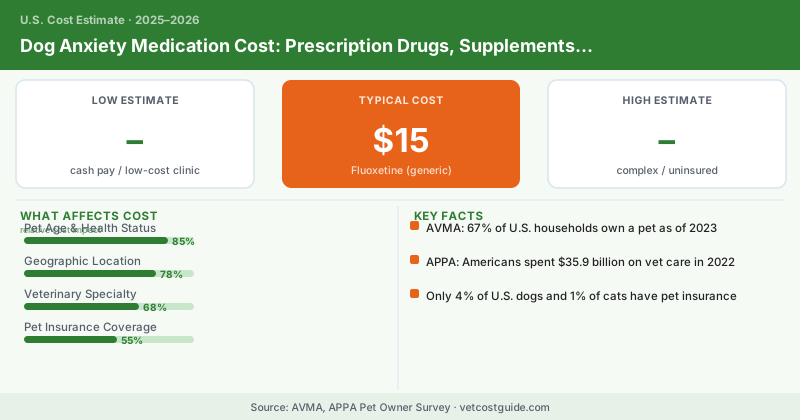
| Fluoxetine (generic) | SSRI | $15–$40 | Daily long-term anxiety management |
| Clomipramine (Clomicalm brand) | TCA | $40–$100 | Separation anxiety; FDA-approved |
| Trazodone | SARI | $20–$50 | Situational use; post-surgery confinement |
| Alprazolam (Xanax generic) | Benzodiazepine | $20–$45 | Short-term situational (storms, fireworks) |
| Gabapentin | Anticonvulsant/analgesic | $20–$50 | Storm phobia; also used for pain |
| Reconcile (fluoxetine brand) | SSRI | $50–$120 | FDA-approved; same drug as generic fluoxetine |
| Sileo (dexmedetomidine gel) | Alpha-2 agonist | $50–$80 per tube | Noise aversion specifically |
Daily Behavior-Modification Medications
These drugs are given every single day, regardless of whether your dog seems anxious. The goal isn’t sedation — it’s lowering the baseline anxiety level so behavior modification (training) can actually take hold.
Fluoxetine is the workhorse. It’s generic Prozac, and it works the same way in dogs as it does in humans — blocking serotonin reuptake to improve emotional regulation. Generic fluoxetine costs $15–$40/month for most dogs. Reconcile is the FDA-approved veterinary-formulated version of the same molecule, with a chicken flavoring; it runs $50–$120/month. They’re pharmacologically identical. Most vets simply prescribe generic fluoxetine.
Fluoxetine takes 4–8 weeks to reach full effect. Don’t judge it at week two.
Clomipramine (Clomicalm) is a tricyclic antidepressant. It’s FDA-approved for canine separation anxiety and has been used in dogs longer than fluoxetine. Branded Clomicalm runs $40–$100/month depending on dog size. Generic clomipramine is available and cheaper. It’s slightly more sedating than fluoxetine and has a narrower safety margin in overdose.
Both of these medications require an initial prescription from your vet — blood work is often recommended before starting SSRIs or TCAs in older dogs, adding $80–$150 to the first-visit cost.
Situational and Event-Based Medications
If your dog is fine 99% of the time except during thunderstorms or fireworks, a daily drug is overkill. These are the as-needed options.
Trazodone is widely prescribed for situational anxiety and also for post-surgical confinement (it helps dogs stay calm during the weeks they’re not allowed to run after orthopedic surgery). Generic trazodone costs $20–$50/month. It causes mild sedation, which is often exactly what owners want during a terrifying thunderstorm. It’s not a controlled substance, which makes refills easier.
Alprazolam (Xanax) works faster than trazodone — onset in 30–60 minutes versus 1–2 hours. It’s a Schedule IV controlled substance, so refills require a written prescription. Generic alprazolam runs $20–$45/month. Works well for predictable events: a vet visit, Fourth of July, travel. Don’t use it in dogs with respiratory issues.
Gabapentin is technically an anticonvulsant used for neuropathic pain, but it’s commonly used off-label for anxiety in dogs. It’s inexpensive ($20–$50/month), non-controlled, and provides both anxiolytic and analgesic effects — useful for anxious dogs who also have arthritis or chronic pain. The sedating effect is dose-dependent.
Sileo (dexmedetomidine oromucosal gel) is FDA-approved specifically for noise aversion in dogs. It’s a thin gel applied to the gum and buccal mucosa. It costs $50–$80 per tube and is typically used as-needed for noise events. It’s one of the few products with a placebo-controlled efficacy study in dogs.
The Behavior Consultation Cost
Here’s the thing most vets won’t tell you during a ten-minute appointment: medication alone doesn’t fix anxiety. The evidence base is clear — behavior modification paired with medication produces far better outcomes than medication alone.
A veterinary behaviorist appointment (Diplomate ACVB) typically costs $200–$400 for an initial consultation and $100–$200 for follow-ups. A certified applied animal behaviorist (CAAB or ACAAB) runs similar rates.
Your regular vet can prescribe medications, but for complex cases — true separation anxiety, aggression, OCD-spectrum behaviors — a specialist consult is worth it.
The American College of Veterinary Behaviorists (ACVB) maintains a board-certified specialist directory at dacvb.org. A 2023 study in the Journal of Veterinary Behavior found that dogs receiving both behavior modification and medication had significantly better outcomes at 6 months than those receiving medication alone.
Never give your dog human anxiety medications without veterinary guidance. While some medications overlap, dosing differences are significant — and some human drugs (such as acepromazine, which is no longer recommended for anxiety due to paradoxical effects, or certain benzodiazepines at human doses) can be dangerous. Xylitol-containing formulations of some medications are toxic to dogs. Always use veterinary-prescribed formulations.
Supplements and Non-Prescription Options
Some owners want to try something before committing to a prescription. Here’s what has actual evidence:
Adaptil (DAP — Dog Appeasing Pheromone) products (diffuser, collar, spray) contain a synthetic version of the pheromone nursing mothers produce. Clinical trials show meaningful reduction in anxiety-related behaviors. A diffuser refill runs $25–$35/month. A collar is $25–$45. It’s a reasonable first step for mild anxiety.
Zylkene (alpha-casozepine, a milk protein derivative) has European clinical data supporting anxiolytic effects. About $30–$60/month.
L-theanine products (Composure, Anxitane) have modest supporting data. $25–$50/month.
Melatonin is sometimes used for storm phobia — cheap (~$5–$15/month for dogs), minimal evidence, minimal risk. Some dogs respond noticeably.
None of these are substitutes for behavior modification or prescription medication in moderate-to-severe cases. But for a mildly anxious dog, they’re worth trying first.
Is Pet Insurance Covering This?
Most standard pet insurance policies cover prescription medications for diagnosed conditions — including behavioral/anxiety diagnoses. If your dog has a formal anxiety diagnosis and a prescription, the medication is typically covered at the same rate as other prescriptions. Annual deductibles still apply.
Some policies exclude behavioral conditions entirely — read the fine print before you buy. This is another argument for getting pet insurance before problems develop.
Frequently Asked Questions
Fluoxetine for dogs typically costs $15–$40 per month, depending on the dosage, your dog's weight, and whether you use a veterinary pharmacy or human pharmacy. Generic versions are significantly cheaper than brand-name alternatives, often saving dog owners 30–50% on their monthly medication costs.
Most pet insurance plans cover anxiety medications like fluoxetine and trazodone if they're prescribed by a veterinarian, though you'll typically pay 10–30% out-of-pocket after your deductible is met. However, some insurers exclude behavioral medications or classify them as non-covered conditions, so review your specific policy or contact your provider before starting treatment.
Most anxiety medications for dogs take 4–6 weeks to reach full effectiveness, though some dogs show improvement within 2–3 weeks. Your vet may recommend starting with a lower dose and gradually increasing it, which extends the timeline but reduces the risk of side effects.