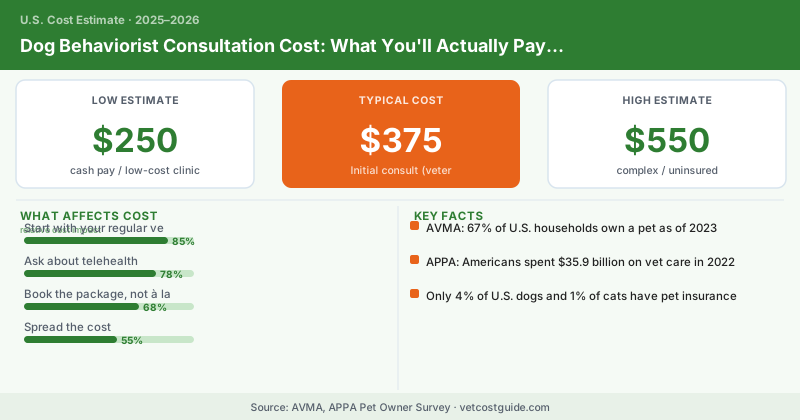
That $375 quote for a single consultation? It’s normal, and here’s the part nobody tells you upfront: it’s not the same thing as a dog trainer. A board-certified veterinary behaviorist (DACVB) is a vet who did a residency in animal behavior. There are fewer than 100 of them in the entire United States, per the American College of Veterinary Behaviorists. That scarcity is a big reason the price sits where it does.
So what are you really paying for? Let’s break it down.
What a Behaviorist Consultation Actually Costs
The first appointment is the big one. It usually lasts 90 minutes to two hours, and the behaviorist takes a full history, watches your dog, and builds a written treatment plan. That’s where most of the money goes.
| Service | Low | Typical | High |
|---|---|---|---|
| Initial consult (veterinary behaviorist, DACVB) | $250 | $375 | $550 |
| Initial consult (certified applied behaviorist, CAAB) | $150 | $250 | $400 |
| Follow-up appointment | $75 | $125 | $200 |
| Phone/video recheck | $50 | $90 | $150 |
| Remote/telehealth initial consult | $200 | $300 | $450 |
A certified applied animal behaviorist (CAAB) or an IAABC-certified consultant typically charges less than a DVM behaviorist, and for many cases that’s a perfectly good fit. The IAABC (International Association of Animal Behavior Consultants) maintains a public directory if you want to compare credentials in your area.
Why the Price Swings So Much
Three things move the number:
- Credentials. A DACVB can prescribe medication and rule out medical causes. A trainer or CAAB cannot. You’re paying for that diagnostic authority.
- Format. In-home visits cost more than clinic or video calls because of travel time. But for fear and reactivity cases, seeing the dog in its own environment is often worth it.
- Your location. Major metro areas run 30 to 50 percent higher than rural ones, which mirrors what we see across the average vet visit cost nationwide.
- A board-certified veterinary behaviorist consult averages $250–$450, with the first visit being the most expensive.
- Certified consultants (CAAB, IAABC) cost less and handle many non-medical behavior cases well.
- Medication, if prescribed, is a separate ongoing cost on top of the consult fee.
- Follow-ups are far cheaper than the initial visit, usually $75–$200.
Behaviorist vs. Dog Trainer: Don’t Confuse Them
This trips up a lot of owners. A standard obedience class teaches sit, stay, and loose-leash walking. A behaviorist treats actual disorders: aggression, severe separation anxiety, compulsive behaviors, and crippling fear. If your dog just pulls on the leash, you want dog training, which costs a fraction of a behaviorist visit. If your dog has bitten someone or panics when left alone, you want the behaviorist.
According to the AVMA, behavior problems remain one of the leading reasons dogs are surrendered to shelters. Getting the right professional early genuinely saves the relationship, and sometimes the dog’s life.
Will Medication Be Part of the Plan?
Often, yes, for moderate-to-severe cases. A behaviorist may prescribe fluoxetine, trazodone, or similar drugs to lower a dog’s baseline anxiety so training can actually stick. Generic versions run $15 to $60 a month at most pharmacies. The medication isn’t a magic fix on its own, it’s the thing that makes the behavior work possible.
How to Keep the Cost Down
You don’t have to overpay to get help.
- Start with your regular vet. They can rule out pain or thyroid issues that masquerade as behavior problems, and that visit is cheaper.
- Ask about telehealth. Many behaviorists now offer video initial consults at $50–$100 less than in-home.
- Book the package, not à la carte. Some practices bundle the initial consult plus two follow-ups for less than buying them separately.
- Spread the cost. If the plan involves diagnostics or meds, CareCredit for vet bills can split it into interest-free monthly payments.
Beware anyone advertising “guaranteed” behavior fixes or using shock and prong tools for fear-based aggression. The AVMA and every major veterinary behavior organization warn that aversive methods can worsen fear and increase bite risk. A real behaviorist works on reducing fear, not punishing it.
Is It Worth It?
For a serious behavior case, one good consultation can replace months of trial-and-error with a generic trainer. When you factor it into the annual cost of owning a dog, a one-time $375 visit that fixes aggression or separation anxiety is a bargain compared to the alternative: a damaged home, a bitten neighbor, or a surrendered pet. Spend the money on the right professional once, and you usually spend less overall.
Frequently Asked Questions
A board-certified veterinary behaviorist (DACVB) consultation typically costs between $250 and $450 for a single visit, with $375 being a common average. Initial consultations may run longer and cost more than follow-up appointments, which usually fall in the $200-$300 range.
Most standard pet insurance plans do not cover behavioral consultations, as they classify these visits as behavioral rather than medical care. You'll typically pay the full cost out-of-pocket, though some wellness add-ons or accident-and-illness plans may offer limited coverage—check your specific policy details.
A veterinary behaviorist is a licensed veterinarian with specialized training in animal behavior (fewer than 100 exist in the US), while dog trainers have no veterinary credentials. A behaviorist diagnoses medical or psychiatric issues driving problem behavior, while trainers teach obedience; you may need a behaviorist first to rule out medical causes before investing in training.