That new lump on your dog is probably nothing. Statistically, most skin masses found on dogs turn out to be lipomas — benign fatty tumors — rather than anything dangerous. But “probably nothing” isn’t the same as “definitely nothing,” and figuring out which one you’re dealing with, and what removing it costs, is worth understanding before you’re standing in the exam room.
Dogs develop skin masses at a fairly high rate as they age, and the vast majority found via routine physical exam and confirmed through a simple fine needle aspirate turn out to be benign — lipomas, sebaceous cysts, or benign papillomas being among the most common. The cost of dealing with any given lump depends heavily on whether it needs monitoring, a biopsy, or outright surgical removal.
- Fine needle aspirate (initial diagnosis): $75–$200
- Small, straightforward lump removal: $300–$700
- Larger or awkwardly located mass removal: $700–$1,800
- Complex removal requiring wide margins: $1,000–$2,500
- Pathology/biopsy analysis after removal: $150–$300
Full Cost Breakdown
| Component | Low End | High End | Notes |
|---|---|---|---|
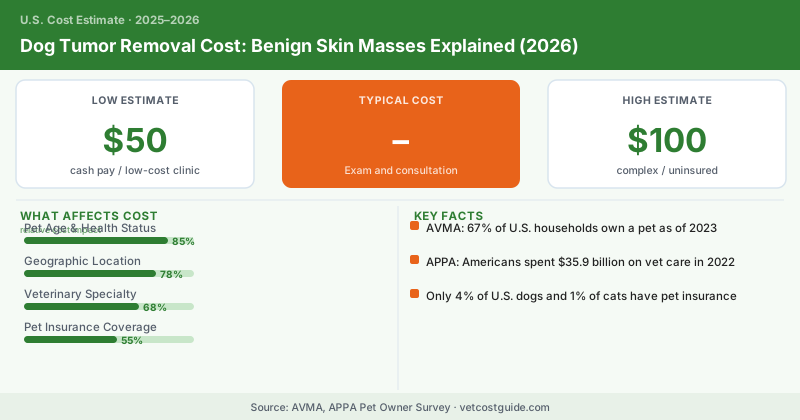
| Exam and consultation | $50 | $100 | Initial assessment |
| Fine needle aspirate | $75 | $200 | Cell sample analysis, often done same-visit |
| Pre-surgical bloodwork | $80 | $150 | Required before anesthesia |
| Small lump removal (surgery) | $300 | $700 | Straightforward locations, simple lipomas |
| Larger/complex mass removal | $700 | $1,800 | More tissue, longer procedure |
| Wide-margin removal | $1,000 | $2,500 | When margins need to be conservative |
| Biopsy/pathology after removal | $150 | $300 | Confirms benign vs. needs follow-up |
| Follow-up recheck | $40 | $90 | Confirms healing |
What Determines the Cost of Removal
Size and location are the two biggest variables. A small, mobile lump on the flank is straightforward to remove under local sedation or brief general anesthesia. A mass near a joint, on a paw, or close to major blood vessels requires more careful surgical planning and often a longer procedure — sometimes warranting referral to a surgical specialist.
Margin requirements matter too. If the fine needle aspirate is inconclusive or shows anything even mildly suspicious, your vet may recommend removing wider margins of surrounding tissue “just in case,” which increases surgical time and sometimes requires reconstructive closure techniques, both of which add to cost.
Whether it’s actually benign only gets confirmed after the mass is removed and sent to pathology. This is why even “simple lump removal” quotes typically include the cost of sending the tissue out for analysis — skipping this step to save $150-$300 means you never actually confirm what the mass was, which defeats much of the purpose of removing it in the first place.
Should You Remove Every Lump?
Not automatically. Many benign lipomas can simply be monitored — measured, photographed, and rechecked at each vet visit — if the fine needle aspirate confirms a benign fatty tumor, it’s not growing rapidly, and it’s not interfering with your dog’s movement or comfort. This “watch and wait” approach avoids unnecessary surgery and anesthesia risk for masses that are truly harmless.
Your vet will typically recommend removal when a lump grows quickly, changes texture or color, is located somewhere it restricts movement (like near a joint or in the armpit), or when the initial aspirate is inconclusive or shows any concerning cell changes.
- Ask whether a fine needle aspirate was done before recommending surgery — this should generally come first, not be skipped
- Confirm pathology analysis after removal is included in the quote, not an optional extra
- Ask whether “watch and wait” is a reasonable option for this specific mass given its characteristics
- If the mass is in a tricky location, ask whether referral to a surgical specialist is worth considering
Managing the Cost
For dogs with multiple benign lumps that need monitoring rather than removal, ask your vet about bundling fine needle aspirates during a single visit rather than scheduling separate appointments for each one. If removal is recommended for several masses at once, ask whether they can be removed in a single surgical session — one anesthesia event covering multiple lumps is typically far more cost-effective than scheduling separate surgeries weeks apart. Pet insurance enrolled before any mass appears typically covers removal costs, provided the specific lump wasn’t already present or symptomatic at the time you signed up.
Frequently Asked Questions
Removing a straightforward benign lump on a dog typically costs $300–$900, covering the exam, biopsy or fine needle aspirate, surgery, anesthesia, and pathology. Larger masses, those in tricky locations like near a joint, or masses requiring wider surgical margins can push the total to $1,000–$2,500.
Not necessarily — many benign lumps like lipomas (fatty tumors) can simply be monitored if they're not growing rapidly, not bothering the dog, and have been confirmed benign via fine needle aspirate. Your vet will typically recommend removal if a lump is growing quickly, changing in appearance, located somewhere it interferes with movement, or if aspirate results are inconclusive or suspicious.