Max, a 5-year-old male Miniature Schnauzer, had been squatting every few minutes in the backyard — his owner assumed it was a stubborn UTI. Three days of antibiotics from a telehealth service didn’t change anything. When Max finally saw his vet and got an abdominal radiograph, the image showed what looked like a handful of gravel packed into his bladder. He had eleven bladder stones. Not a UTI. A urinary problem that required a very different solution.
That scenario plays out thousands of times a year. Bladder stones (urolithiasis) mimic UTI symptoms so closely that misdiagnosis — and delayed treatment — is common. And the stone type matters enormously for what treatment costs.
- Diagnosis (X-ray, urinalysis, culture): $180–$500
- Prescription dissolution diet (struvite): $70–$120/month for 4–12 weeks
- Cystotomy (surgical removal): $1,200–$2,500
- Laser lithotripsy: $1,500–$3,000
- Voiding urohydropropulsion (small stones only): $200–$400
- Breeds most affected: Miniature Schnauzer, Bichon Frise, Dalmatian, Shih Tzu
Stone Types: Why This Matters More Than Anything Else
Before discussing treatment costs, you have to understand what you’re dealing with. The American College of Veterinary Internal Medicine (ACVIM) Small Animal Consensus Recommendations on urolithiasis management emphasize that stone mineral composition is the single most important factor in determining the right treatment. You can’t assume — you have to diagnose.
Struvite (magnesium ammonium phosphate): The most common stone type in dogs, often forming in response to urinary tract infections. The bacteria produce an enzyme that alkalinizes the urine, creating the perfect environment for struvite to crystallize. Good news: struvite stones dissolve with a prescription dissolution diet combined with antibiotic treatment for the underlying UTI. Typical timeline is 4–12 weeks.
Calcium oxalate: The second most common type. Unlike struvite, these stones don’t dissolve with diet — they have to come out. Surgical removal or laser lithotripsy is required. Calcium oxalate stones form in acidic urine and are more common in older male dogs and certain breeds including Miniature Schnauzers, Lhasa Apsos, and Yorkshire Terriers.
Urate: Associated with Dalmatians (a breed-specific metabolic quirk) and dogs with liver shunts. Urate stones may respond to dietary management and the drug allopurinol in some dogs, but surgical removal is sometimes needed.
Cystine: Rare, hereditary (English Bulldogs, Newfoundlands), and typically require surgery and lifelong diet management.
Diagnostic Costs
Getting to a definitive diagnosis takes a few steps, and you can’t skip them if you want to choose the right treatment.
| Test | Cost Range | What It Shows |
|---|---|---|
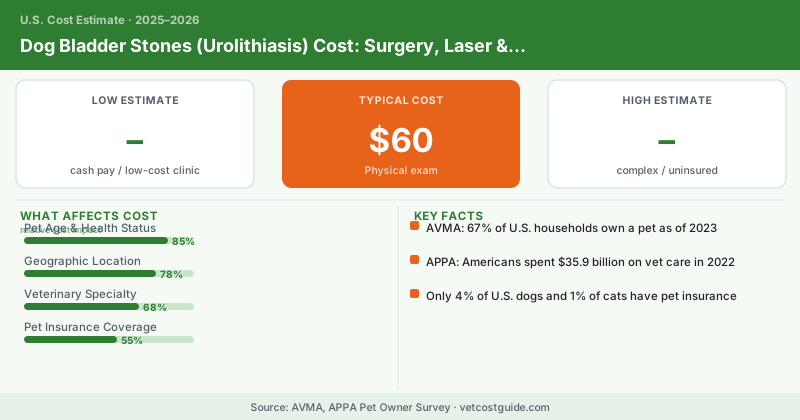
| Physical exam | $60–$120 | Bladder palpation; pain assessment |
| Urinalysis | $30–$80 | Crystals, blood, pH, concentration; suggests stone type |
| Urine culture | $50–$100 | Identifies bacteria driving struvite formation |
| Abdominal radiograph (X-ray) | $100–$250 | Detects radiodense stones (struvite, oxalate visible; urate often not) |
| Abdominal ultrasound | $200–$400 | Detects radiolucent stones; assesses stone number and size |
Most dogs need both X-ray and urinalysis at minimum. A full workup including culture typically runs $250–$500. If your vet isn’t sure of stone type from imaging alone, stone analysis after removal (sent to a lab) is the definitive method — usually $30–$70 and worth it for prevention planning.
Treatment Option 1: Prescription Dissolution Diet
If your dog’s stone type is struvite, a prescription dissolution diet (Hill’s s/d or Royal Canin UC are common options) may dissolve the stones completely without any surgery. It works by changing the urine environment — lowering pH, reducing the mineral concentration that feeds stone growth.
Monthly diet cost: $70–$120 depending on dog size. The diet is typically used exclusively for 4–12 weeks, with urinalysis monitoring every 4 weeks to track dissolution progress. Add $40–$80 per monitoring urinalysis.
This is the cheapest treatment option when it works. The catch: it’s only appropriate for struvite. Using a dissolution diet for calcium oxalate stones won’t accomplish anything.
Treatment Option 2: Cystotomy (Surgical Removal)
A cystotomy is the standard surgical approach to bladder stone removal. The surgeon opens the bladder, flushes and removes the stones, and closes everything back up. It’s a routine procedure at most general practice hospitals.
Cost: $1,200–$2,500 depending on your location, dog size, and whether it’s a general practitioner or specialty surgeon. Urban specialty hospitals often run $2,000–$3,000 when you include the hospitalization.
This is the definitive treatment for calcium oxalate stones and is also used when struvite stones are too large or numerous to dissolve quickly, when the dog is obstructed, or when rapid resolution is medically necessary.
Recovery is typically 1–2 weeks. Post-op stone analysis is strongly recommended to guide prevention strategy.
Treatment Option 3: Laser Lithotripsy
Laser lithotripsy uses a laser fiber passed through a scope into the urethra and bladder to fragment stones into small pieces that can be flushed out — no incision required.
Cost: $1,500–$3,000. It’s pricier than conventional surgery, requires specialized equipment, and isn’t available at every hospital — you’ll likely need to travel to a specialty center. But recovery time is shorter and there’s no surgical wound.
Laser lithotripsy works best for stones under 1–2 cm and when the dog’s urethra is large enough to accommodate the scope (more challenging in male dogs with narrow urethras, and not typically feasible in small male dogs).
Treatment Option 4: Voiding Urohydropropulsion
If stones are small and the right size relative to the urethra, your vet can sometimes flush them out non-surgically using saline instilled into the bladder and applied pressure. This is called voiding urohydropropulsion.
Cost: $200–$400. It’s the cheapest option — but it only works for very small stones, typically under 3–5 mm, and it can’t be used in male dogs because of urethral diameter constraints. When it’s applicable, it’s a good choice.
Urinary blockage in male dogs is an emergency. If your male dog is straining to urinate and producing little to nothing — or crying in pain — this could be a stone lodged in the urethra. A complete urinary obstruction is life-threatening within 24–48 hours. Don’t wait until morning. Go to an emergency clinic immediately. Unblocking a male dog and managing the aftermath typically costs $1,500–$3,500 at an emergency hospital.
Recurrence Prevention Costs
Bladder stones have a frustrating tendency to come back. Recurrence rates vary by stone type:
- Struvite: Lower recurrence if underlying UTIs are prevented and diet is managed
- Calcium oxalate: ~50% recurrence within 3 years — long-term prescription diet and water intake management are essential
- Urate (Dalmatians): Lifelong diet management (low-purine) and sometimes allopurinol ($20–$50/month)
Long-term monitoring typically includes a urinalysis every 3–6 months ($40–$80 each) and periodic imaging every 12 months to catch new stones before they grow.
Breed Predispositions
Some breeds form stones at dramatically higher rates. Miniature Schnauzers top the list — a 2023 analysis of ACVIM consensus data shows Schnauzers have some of the highest struvite and oxalate stone rates of any breed. Bichon Frises, Shih Tzus, Cocker Spaniels, and Dalmatians are also significantly overrepresented. If you own one of these breeds, annual urinalysis as part of your dog’s wellness exam is genuinely worthwhile — it can catch crystals before they form stones.
Frequently Asked Questions
The most common signs are straining to urinate, frequent urination of small amounts, blood in the urine, and apparent discomfort while squatting. Some dogs with stones have no signs at all, and stones are discovered incidentally on X-rays taken for another reason. If your dog is straining to urinate and producing nothing — especially a male dog — that's a potential urinary blockage, which is an emergency requiring immediate veterinary care.
No. Struvite stones (the most common type in dogs) often dissolve completely on a prescription dissolution diet over 4–12 weeks, with urinalysis monitoring to track progress. Calcium oxalate stones cannot dissolve with diet — surgery or laser lithotripsy is required. Urate stones have a middle path: medical management with diet and allopurinol may help, though surgery is sometimes needed. Stone type, identified via urinalysis, culture, and imaging, determines which treatment path makes sense.
Prevention depends on stone type. For struvite-formers, keeping your dog on a prescription urinary diet, ensuring adequate water intake (consider a pet water fountain), and catching UTIs quickly can prevent recurrence. For calcium oxalate formers, a low-oxalate, moderate-protein diet and increased water intake are key — but recurrence rates are still 50% within 3 years. Your vet will recommend periodic urinalysis every 3–6 months to catch new stones before they grow large enough to cause problems.