The gland that pops out in cherry eye produces 30–40% of your dog’s tear film. Remove it, and dry eye disease often follows for life — at $50–$150/month in eye drops forever. That’s why which surgery you choose matters enormously.
This is the part of the cherry eye conversation that many owners don’t hear until after they’ve already had the wrong surgery. Gland removal used to be common. It’s now considered outdated and is explicitly discouraged by the American College of Veterinary Ophthalmologists (ACVO). Yet some general practitioners still offer excision as an option, particularly when repositioning has failed once. Knowing the difference before your appointment could save your dog decades of chronic eye disease.
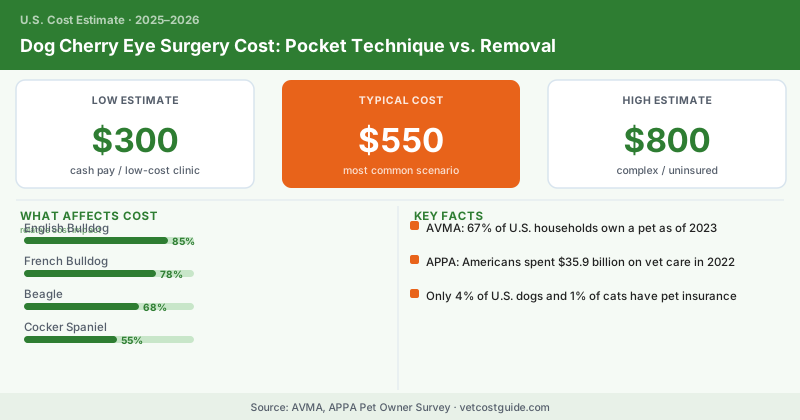
- General practitioner — pocket technique: $300–$600 per eye
- Veterinary ophthalmologist — pocket technique: $500–$800 per eye
- Both eyes, same surgery event: $500–$1,200 (some discount typically)
- Cyclosporine eye drops (if KCS develops post-removal): $50–$100/month
- Ophthalmology consultation: $150–$300
- Breeds most affected: Bulldog, Beagle, Cocker Spaniel, Boston Terrier, Great Dane
What Cherry Eye Actually Is
The third eyelid (nictitating membrane) sits in the inner corner of the eye. It has a T-shaped cartilage and a gland — the nictitans gland — anchored at its base. In some dogs, the connective tissue anchoring that gland is weak or poorly developed, and the gland prolapses outward, creating the characteristic round, red-pink mass in the inner corner of the eye that gives the condition its name.
It’s not painful immediately, but it’s not benign either. The exposed gland dries out, becomes inflamed, and — if left untreated — the gland tissue can sustain permanent damage that reduces tear production even after successful surgical repositioning. This is one reason early treatment is better.
Breeds Most Affected
Cherry eye is far more common in certain breeds because of inherited conformation. The breeds with highest rates include:
- English Bulldog — extremely high rate; brachycephalic anatomy increases risk
- French Bulldog — similar to English Bulldog
- Beagle — one of the most commonly reported breeds in ACVO literature
- Cocker Spaniel — American and English both affected
- Boston Terrier — brachycephalic, elevated risk
- Great Dane — among large breeds with elevated incidence
- Basset Hound
- Shar-Pei
If you own one of these breeds, you should know what cherry eye looks like before you see it. It appears suddenly — one day the eye looks normal, the next there’s a red mass in the corner. You can’t miss it.
The Pocket Technique: Current Standard of Care
The pocket technique — also called the “tuck” or envelope technique — repositions the prolapsed gland back into the third eyelid without removing it. The surgeon creates a small pocket of conjunctival tissue, tucks the gland inside, and closes the pocket with sutures, securing the gland in its anatomic position.
Variations include:
- Morgan pocket technique — the original and most commonly used
- Conjunctival imbrication — a modification some surgeons prefer for certain anatomies
- Combined pocket and purse-string — used when the gland is large or the prolapse is severe
Success rate: 80–95% in most reported series. The ACVO notes that success rates are generally higher when the procedure is performed promptly (before the gland is significantly inflamed) and when performed by surgeons who do the procedure frequently.
When the procedure fails once — the gland re-prolapses — the correct response is to attempt repositioning again, potentially using a different technique, or to refer to a veterinary ophthalmologist. Not to remove the gland.
Gland Removal: Why It’s Discouraged
Excision of the nictitans gland is fast, simple, and eliminates cherry eye immediately. These are its only advantages.
The nictitans gland produces 30–40% of the aqueous component of the tear film. Remove it, and tear production drops. In dogs who already have borderline tear production, removal can directly cause keratoconjunctivitis sicca (KCS, dry eye). In dogs with normal tear production, removal increases long-term risk of KCS — particularly as the dog ages and tear production naturally declines.
KCS causes chronic pain, corneal scarring, discharge, and eventually vision loss if inadequately treated. Management requires lifelong daily application of immunosuppressive eye drops (cyclosporine ophthalmic 0.2% or tacrolimus 0.02%) at $50–$150/month forever. Over a 10-year dog lifespan, that’s $6,000–$18,000 in eye drop costs — plus periodic ophthalmology monitoring.
The ACVO position is clear: gland preservation is the goal. Excision should not be the first-line or default approach.
| Surgical Option | Cost Per Eye | Gland Preserved? | KCS Risk |
|---|---|---|---|
| Pocket technique (general vet) | $300–$600 | Yes | Low |
| Pocket technique (ophthalmologist) | $500–$800 | Yes | Low |
| Gland excision | $200–$400 | No | High — 20–40% develop KCS |
When to See a Veterinary Ophthalmologist
A board-certified veterinary ophthalmologist (Diplomate ACVO) is the right choice in these situations:
- First-time cherry eye in a breed with very high rates (Bulldog, French Bulldog) — specialist experience improves success rates
- Recurrent prolapse after one failed attempt — different technique or anatomical approach needed
- Bilateral cherry eye — more complex management
- Any uncertainty about gland removal being suggested as primary treatment
An ophthalmology consultation costs $150–$300 and is worth every dollar if it prevents an unnecessary gland removal.
Bilateral Cherry Eye
When cherry eye develops in both eyes, they can often be corrected simultaneously under one anesthesia event — saving you one anesthesia fee and one recovery period. Most surgeons offer a 10–20% discount on the second eye when done simultaneously. Total bilateral cost at a general practitioner: $500–$1,000; at an ophthalmologist: $800–$1,400.
Don’t attempt to massage cherry eye back into place repeatedly as a long-term solution. Gentle massage sometimes reduces a fresh prolapse temporarily, and this is fine in the first few days while you arrange a vet appointment. But chronic repeated manipulation without surgical correction leads to increasing gland inflammation and swelling, which worsens outcomes. The gland can sustain permanent damage that reduces its tear-producing function even after successful surgical repositioning. Prompt surgical correction — within 1–2 weeks of noticing the prolapse — gives the best results.
Post-Op Care and Recovery
After pocket technique surgery, your dog will go home with:
- An E-collar (cone) for 10–14 days — non-negotiable; pawing at the eye will tear the sutures
- Topical antibiotic/steroid eye drops for 1–2 weeks ($30–$60)
- Activity restriction (no swimming, no rough play) for 2 weeks
The surgical site is monitored for re-prolapse, which most commonly occurs in the first 2–3 weeks post-op. Suture reactions are uncommon but can occur. Follow-up exam at 10–14 days to confirm healing: typically included in the original surgery fee or $60–$100 separately.
Long-term, a dog with successful cherry eye repair and preserved gland function should have normal tear production and eye health. Annual wellness exams that include a Schirmer tear test (a quick in-clinic measurement of tear production) are a good idea for any dog who has had cherry eye surgery.
Frequently Asked Questions
Rarely, and you shouldn't count on it. A small percentage of cherry eye cases — particularly in young puppies — may spontaneously reduce on their own. Gentle massage of the prolapsed gland sometimes helps it return to position temporarily. But in most cases, the prolapse persists and causes progressive problems: chronic irritation, corneal exposure, and inflammation of the gland itself. The longer it stays out, the more swollen and inflamed the gland becomes, which makes surgical repositioning harder. Don't wait more than a week or two to consult your vet.
Because the gland produces 30–40% of your dog's tear film, and removing it significantly increases the risk of keratoconjunctivitis sicca (KCS) — also known as dry eye disease. KCS is a chronic condition requiring lifelong daily eye drops (cyclosporine or tacrolimus) at $50–$150/month, and it can lead to corneal scarring and vision loss if undertreated. Even if the pocket technique fails once, the correct next step is to try a different repositioning technique or refer to a veterinary ophthalmologist — not to remove the gland. The American College of Veterinary Ophthalmologists (ACVO) strongly recommends gland preservation whenever possible.
Probably not both — but there's a meaningful chance. Studies referenced in ACVO literature report that 30–40% of dogs who develop cherry eye in one eye will eventually develop it in the second eye as well, sometimes months or years later. This doesn't mean you should preemptively operate on the second eye — it means you should watch for signs (that characteristic red mass in the inner corner) and bring your dog in promptly if it appears.