Your dog squints, paws at one eye, and there’s a film of tears running down their face. That’s often a corneal ulcer — a scratch or erosion on the surface of the eye — and how much it costs to fix depends entirely on how deep it goes. A simple, shallow ulcer might cost $200 in drops and rechecks. A deep, infected one threatening to rupture can run past $3,000 with surgery.
It’s one of the more common eye emergencies in dogs, and it’s also one where waiting a few days can turn a cheap problem into an expensive one.
- Simple superficial ulcer (drops + rechecks): $200–$500
- Indolent or non-healing ulcer (debridement procedure): $400–$1,200
- Deep/infected ulcer requiring surgery: $1,500–$3,500+
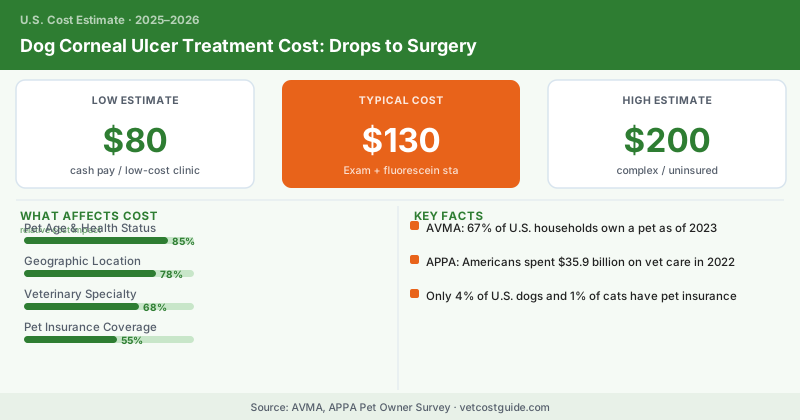
- Diagnostic stain + exam: $80–$200
- Brachycephalic breeds — Pugs, Bulldogs, Boston Terriers, Shih Tzus — are far more prone to ulcers because their bulging eyes are more exposed
- The American College of Veterinary Ophthalmologists notes that prompt treatment of superficial ulcers usually leads to healing within a week, while neglected ulcers can perforate the eye
- Most simple ulcers heal in 5–7 days with proper medication
Corneal Ulcer Treatment Cost by Severity
| Item | Low | High | Typical |
|---|---|---|---|
| Exam + fluorescein stain | $80 | $200 | $130 |
| Medicated eye drops/ointment | $40 | $150 | $80 |
| Recheck visits (1–2) | $80 | $250 | $150 |
| Grid keratotomy / debridement | $300 | $900 | $550 |
| Diamond burr procedure | $400 | $1000 | $650 |
| Surgery (conjunctival graft) | $1500 | $3500 | $2200 |
| E-collar + pain meds | $30 | $120 | $60 |
| Referral to ophthalmologist | $150 | $400 | $250 |
Why Depth Decides the Price
A corneal ulcer is essentially a wound on the clear window of the eye. Catch it shallow and the treatment is simple: antibiotic drops to prevent infection, sometimes a drop to ease pain, an e-collar so your dog can’t rub it, and a recheck to confirm it healed. That’s a few hundred dollars.
Let it get deeper, and the cost structure changes completely. Deep ulcers risk perforating the eye entirely. They may need surgery where the surgeon grafts a flap of tissue over the wound to protect and heal it — a delicate procedure usually done by a specialist. That’s where you cross into four figures.
The Frustrating Middle: Indolent Ulcers
Some ulcers, especially in middle-aged dogs, just refuse to heal. These “indolent” or SCCED ulcers have an edge of loose, dead tissue that won’t bond to the eye. The fix is a debridement procedure — your vet numbs the eye and gently scrapes the bad edge, sometimes followed by a grid keratotomy or diamond burr to encourage healing.
These often need to be repeated, which is why an indolent ulcer that seemed minor can quietly cost $800 over a few weeks. It’s not your vet padding the bill — it’s just a stubborn wound.
How to Avoid the Expensive End
Speed is everything with eyes. The ulcer you treat on day one is cheap. The one you treat on day five, after it’s gotten infected and deep, is not. If your dog is squinting, tearing, or holding an eye shut, that’s a same-day dog emergency vet visit, not a “watch it over the weekend” situation.
Other ways to keep costs sane:
- Never use leftover or human eye drops — steroid drops can make an ulcer dramatically worse and cost you the eye
- Use the e-collar religiously — one rub can undo a week of healing and a couple hundred dollars of treatment
- Check coverage — most pet insurance covers ulcers as illnesses; our pet insurance cost per month guide shows the premium math
- Spread surgery costs with CareCredit for vet bills if a graft is needed
If your dog’s a flat-faced breed, eye issues come with the territory, which is one reason to consider whether is pet insurance worth it for your specific dog. Compared to the cost of a single average vet visit, an ophthalmology surgery is a different universe of expense — and prevention starts with treating squinting eyes immediately.
Frequently Asked Questions
Simple, shallow ulcers typically cost $200-$500 with topical drops and rechecks, while moderate cases run $500-$1,500 with additional medications or diagnostics. Deep or infected ulcers requiring surgery can exceed $3,000, depending on whether a conjunctival graft or other advanced procedures are needed.
Most pet insurance plans cover corneal ulcer treatment as an accident or illness claim after you meet your deductible, though you may pay $200-$500 out-of-pocket depending on your plan. Some policies exclude pre-existing eye conditions, so check your specific coverage details before treatment begins.
Mild ulcers typically heal within 1-2 weeks with topical antibiotic drops applied multiple times daily, while moderate cases may take 2-4 weeks. Surgery becomes necessary if the ulcer is deep, infected, or at risk of rupturing, and recovery from surgical repair usually takes 2-6 weeks depending on the procedure used.