Sarah’s 65-pound Labrador, Duke, suddenly wouldn’t put weight on his back leg after a game of fetch. The vet’s word was blunt: torn cranial cruciate ligament. What followed was a conversation about three different surgical options with three very different price tags — and Sarah, like most owners in that room, had never heard any of these acronyms before that day.
Cranial cruciate ligament (CCL) tears — the canine equivalent of an ACL tear — are among the most common orthopedic injuries in dogs, and large, active breeds are disproportionately affected. Unlike in humans, canine CCL injuries are rarely from a single traumatic event; they’re usually the result of gradual ligament degeneration that finally gives way during ordinary activity. Treatment isn’t one-size-fits-all, and the surgical technique your vet recommends changes the cost substantially.
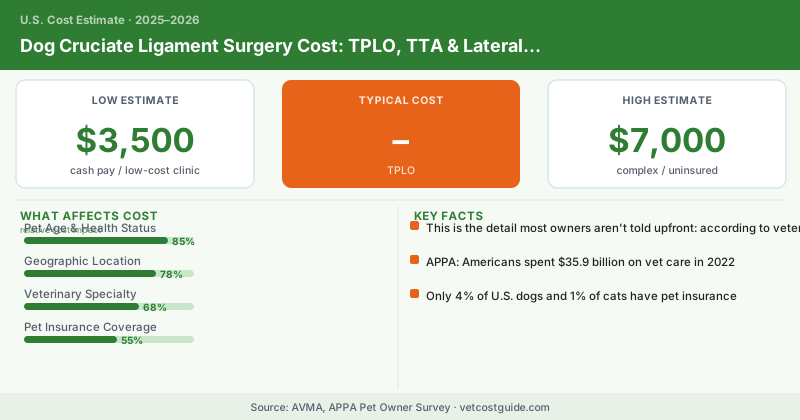
- TPLO (tibial plateau leveling osteotomy): $3,500–$7,000 per knee
- TTA (tibial tuberosity advancement): $3,000–$6,000 per knee
- Lateral suture (extracapsular repair): $1,500–$3,500 per knee
- Conservative/non-surgical management: $500–$1,500 (less reliable outcome for larger dogs)
- Roughly 40-60% of dogs eventually injure the other knee too
Full Cost Breakdown by Technique
| Technique | Low End | High End | Best For |
|---|---|---|---|
| TPLO | $3,500 | $7,000 | Larger, active dogs; best long-term outcomes |
| TTA | $3,000 | $6,000 | Similar candidates to TPLO |
| Lateral suture (extracapsular) | $1,500 | $3,500 | Smaller dogs under 30 lbs |
| Conservative management | $500 | $1,500 | Very small dogs, poor surgical candidates |
| Pre-surgical imaging (X-rays) | $150 | $400 | Confirms diagnosis and surgical planning |
| Post-op physical therapy (per session) | $50 | $120 | Recommended, 6-12 sessions typical |
Why TPLO Costs the Most (and Is Often Worth It)
TPLO changes the biomechanics of the knee itself by cutting and rotating the top of the tibia, altering the angle so the joint becomes stable without relying on the torn ligament at all. This requires specialized equipment — a bone saw, a specific bone plate and screws, and often intraoperative X-ray confirmation — plus surgical expertise typically found in board-certified veterinary surgeons rather than general practitioners.
For larger, more athletic dogs, veterinary orthopedic literature consistently shows TPLO produces better long-term outcomes with lower rates of post-surgical arthritis progression compared to lateral suture, which is why specialists often steer bigger, more active dogs toward TPLO despite the higher upfront cost.
Why Lateral Suture Still Makes Sense for Some Dogs
Lateral suture (extracapsular repair) uses heavy suture material to stabilize the joint externally rather than changing the bone geometry. It’s a less technically demanding surgery, which is reflected in the lower price, and it produces good outcomes specifically in smaller dogs (generally under 30 pounds) where the forces on the repair are lower. For a Chihuahua or small terrier, lateral suture is frequently the recommended and appropriate choice — TPLO’s added expense doesn’t necessarily buy a meaningfully better outcome at that size.
The Other Knee: Plan for It
This is the detail most owners aren’t told upfront: according to veterinary orthopedic research, a substantial share of dogs — estimates commonly cited in the 40-60% range — that tear one cruciate ligament will go on to tear the other within a few years. This isn’t because the first surgery failed; it’s because the same body conformation, weight, and activity level that contributed to the first tear apply equally to the second knee. Budgeting with this in mind, even if it never happens, is simply realistic financial planning for a large or overweight dog.
- Ask why your vet is recommending one technique over another for your dog’s specific size and activity level
- Ask whether referral to a board-certified surgeon changes the recommended technique or improves expected outcomes
- Confirm what’s included in the quote: X-rays, the surgery, hospitalization, pain medication, and the e-collar
- Ask about physical therapy — dogs that do structured post-op rehab generally return to function faster and more completely
Managing the Cost
If your dog is overweight, ask about a weight-loss plan before surgery if time allows — excess weight is one of the strongest risk factors for both the initial CCL tear and for straining the surgical repair during recovery. Physical therapy after surgery ($50-$120/session, typically 6-12 sessions) is worth the added cost since it measurably improves outcomes and can shorten overall recovery time. Pet insurance enrolled before any lameness symptoms appear typically covers a meaningful share of cruciate surgery costs, and given the real possibility of needing the same surgery on the other knee down the road, this is one of the stronger arguments for maintaining coverage even after the first knee is fixed.
Frequently Asked Questions
TPLO (tibial plateau leveling osteotomy) surgery typically costs $3,500–$7,000 per knee, while lateral suture (extracapsular) repair runs $1,500–$3,500. TPLO is generally recommended for larger, more active dogs due to better long-term outcomes, while lateral suture is often sufficient for smaller dogs under 30 pounds.
According to veterinary orthopedic literature, roughly 40-60% of dogs that tear one cranial cruciate ligament will eventually tear the other within a few years, since the same conformational and weight-related factors affect both knees. This is worth planning for financially, even if only one knee needs surgery right now.