Roughly 100,000 dogs are diagnosed with Cushing’s disease (hyperadrenocorticism) each year in the United States, according to AVMA estimates — making it one of the most common endocrine disorders in middle-aged and older dogs. If your dog is over six and has been drinking enormous amounts of water, gaining weight in the belly, losing hair symmetrically, and acting lethargic, Cushing’s is near the top of every vet’s differential list. The frustrating part? It’s a lifelong condition with meaningful ongoing costs that most owners aren’t prepared for.
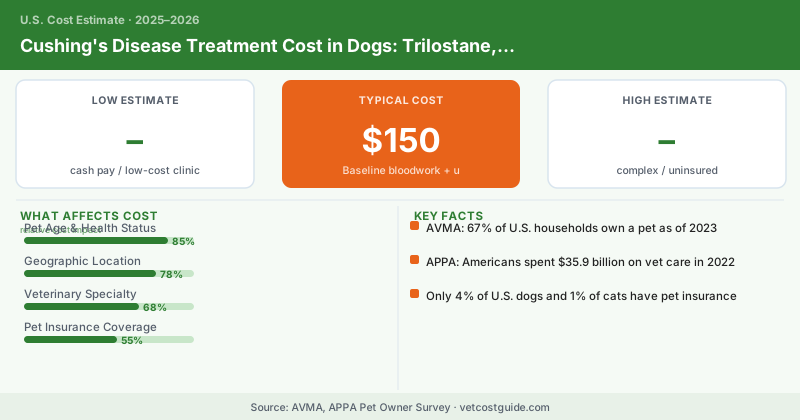
- Diagnostic workup: $400–$1,200 (suppression tests, ultrasound, bloodwork)
- Trilostane (Vetoryl): $150–$400/month + monitoring tests $150–$300 each
- Mitotane (Lysodren): $50–$150/month + monitoring (more complex dosing)
- Adrenal tumor surgery: $2,500–$5,000 (specialist required)
- Annual ongoing cost (medication + monitoring): $1,800–$5,000+
Two Types, Two Treatment Paths
Not all Cushing’s disease is the same. The type your dog has determines which treatment is even on the table.
Pituitary-dependent Cushing’s (PDH) accounts for 80–85% of cases. A small benign tumor on the pituitary gland over-stimulates the adrenal glands to produce excess cortisol. Treatment is almost always lifelong medication — surgery on the pituitary isn’t routinely performed in dogs.
Adrenal-dependent Cushing’s is caused by a tumor on one of the adrenal glands themselves (about 15–20% of cases). These tumors can be benign or malignant. Surgical removal is the definitive treatment — and for benign tumors, it can be curative. Medication can manage symptoms in dogs who aren’t surgical candidates.
Your vet can’t distinguish between these two by symptoms alone. Diagnosis requires testing.
Diagnostic Costs
Getting to a confirmed Cushing’s diagnosis — and pinpointing which type — takes several steps.
| Diagnostic Test | Cost Range | Purpose |
|---|---|---|
| Baseline bloodwork + urinalysis | $150–$300 | Screening; high ALP is a classic Cushing's marker |
| Low-dose dexamethasone suppression (LDDS) | $200–$400 | First-line confirmation test |
| High-dose dexamethasone suppression (HDDS) | $200–$400 | Helps differentiate PDH vs. adrenal-dependent |
| ACTH stimulation test | $150–$300 | Confirms diagnosis; also used for monitoring on meds |
| Abdominal ultrasound | $300–$600 | Identifies adrenal tumor; assesses tumor size and invasion |
Realistically, you’ll spend $600–$1,200 on diagnostics before treatment even begins. If your vet refers to an internal medicine specialist for the workup (common for complex cases), add a consultation fee of $150–$300.
Trilostane (Vetoryl): The Standard of Care
Trilostane is the FDA-approved medication for Cushing’s disease in dogs and the most commonly prescribed treatment. It works by blocking an enzyme in cortisol synthesis — essentially putting a ceiling on how much cortisol the adrenal glands can produce.
Monthly cost: $150–$400 depending on your dog’s weight. Larger dogs require higher doses, and the cost scales accordingly. A 10-pound Poodle is at the low end; a 90-pound Lab is at the high end.
But the drug itself is only part of the expense. Monitoring is mandatory. Because trilostane suppresses cortisol production, there’s a real risk of suppressing it too much — pushing your dog into a life-threatening Addisonian crisis (see the warning section below). The monitoring protocol per ACVIM guidelines:
- ACTH stimulation test 10 days after starting or changing the dose
- Again at 30 days
- Every 3–6 months once the dog is stable
Each ACTH stim test costs $150–$300. In the first year, you’ll likely run 4–6 of them. That’s $600–$1,800 in monitoring alone before you include the monthly medication cost.
Mitotane (Lysodren): Older, Cheaper, Trickier
Mitotane is an older medication — it was the standard treatment before trilostane became available. It works differently: rather than blocking cortisol synthesis, it destroys the cortisol-producing cells in the adrenal glands.
Monthly maintenance cost: $50–$150 — meaningfully cheaper than trilostane. That’s the appeal.
The risk is that mitotane’s margin between “enough to work” and “too much” is narrower. Induction therapy requires a loading phase with daily dosing and close monitoring for signs of over-suppression. It remains an appropriate option, particularly for dogs whose owners are comfortable with the more intensive induction protocol and for cases where cost is a significant barrier. Some internists also prefer it for adrenal-dependent tumors.
Either way, monitoring requirements are similar to trilostane — ACTH stim tests are still necessary.
Adrenal Tumor Surgery
If your dog has adrenal-dependent Cushing’s from a benign tumor, surgery offers the possibility of a cure. It’s not a routine procedure — it requires a board-certified surgeon or internist-surgeon team with experience in adrenal surgery, and it carries real perioperative risks.
Cost: $2,500–$5,000 at a specialty hospital. This typically includes pre-surgical imaging (CT scan to evaluate for vascular invasion), the surgery itself, and hospitalization. Malignant adrenal tumors carry a much more guarded prognosis, and surgery in those cases is more complex.
For dogs with benign adrenal tumors who are good surgical candidates, the calculus often makes sense: a one-time surgical cost versus years of monthly medication and monitoring. Dogs who do well post-surgery may need no further treatment at all.
Addisonian crisis: the most serious risk of over-treatment. Both trilostane and mitotane can suppress cortisol production too aggressively. Signs of over-suppression include sudden severe lethargy, vomiting, diarrhea, weakness, and collapse. This is a life-threatening emergency requiring IV fluids and corticosteroid replacement — emergency treatment typically costs $500–$2,000. Never miss a monitoring appointment, and know the signs. If your dog seems “different” after starting or adjusting medication, call your vet the same day.
Annual Ongoing Cost: The Real Number
First-year costs are highest because of the diagnostic workup and frequent dose adjustments. Here’s a realistic breakdown for a dog stabilized on trilostane:
| Expense | Annual Estimate |
|---|---|
| Trilostane medication (medium-sized dog) | $2,400–$4,800 |
| ACTH stimulation tests (3–4/year) | $450–$1,200 |
| Semi-annual wellness exams | $200–$400 |
| Periodic bloodwork | $150–$300 |
| Total annual ongoing (stabilized dog) | $3,200–$6,700 |
These aren’t worst-case numbers — they’re representative of what owners of medium-to-large dogs actually pay. Pet insurance can help, but most policies require enrollment before diagnosis, and Cushing’s will be excluded as a pre-existing condition if the dog is already showing signs.
Prognosis and Quality of Life
The American College of Veterinary Internal Medicine (ACVIM) notes that most dogs with PDH respond well to medical management and can maintain good quality of life for 2–4 years after diagnosis. The condition itself doesn’t cause acute pain, but the excess cortisol takes a toll — increased infection risk, hypertension, blood clotting disorders, and muscle weakness are all documented complications.
Dogs on well-managed medication frequently show dramatic improvements: less water drinking, return of energy, hair regrowth, a slimmer belly. Owners often say their dog “seems like themselves again” within weeks of reaching a good dose.
Euthanasia becomes relevant when the disease progresses to a point that monitoring and medication can no longer maintain quality of life — particularly with large pituitary tumors that cause neurological signs, or with aggressive adrenal malignancies. Your internist can help you understand your dog’s specific prognosis based on tumor type and size.
Frequently Asked Questions
With proper treatment, most dogs live 2–3 years after diagnosis — some considerably longer. The disease itself isn't immediately life-threatening, but the complications (hypertension, blood clots, susceptibility to infections) are. Dogs managed well on trilostane often maintain good quality of life for years. Without treatment, the disease progresses and significantly shortens lifespan.
Yes, in virtually all cases. Trilostane and mitotane control the condition — they don't cure it. If medication is stopped, cortisol production rebounds and symptoms return, sometimes quickly. The only exception is adrenal-dependent Cushing's where the tumor is successfully removed surgically, which can be curative.
Frequently at first, less often once stabilized. With trilostane, ACTH stimulation testing is typically done 10 days after starting or adjusting the dose, then at 30 days, then every 3–6 months once stable. Each test costs $150–$300. Plan for 4–6 monitoring visits in the first year alone, then 2–4 per year ongoing.