42% of dogs with Cushing’s disease aren’t diagnosed until at least a year after symptoms begin — mostly because the early signs (drinking more water, sleeping more, a rounder belly) are easy to chalk up to aging. By the time most owners hear “hyperadrenocorticism,” the diagnostic bill alone can hit $1,000. Then the real cost conversation starts.
Cushing’s disease — technically hyperadrenocorticism — means your dog’s adrenal glands are producing too much cortisol. It’s one of the most common hormonal disorders in middle-aged and older dogs, with poodles, dachshunds, beagles, Boston terriers, and boxers among the most affected breeds. The AVMA and veterinary endocrinology literature consistently cite it as a disease of dogs typically aged 6 and older, with an average age of diagnosis around 10 years.
Why Diagnosis Is Expensive
Cushing’s is a diagnosis of exclusion layered with confirmatory testing. Your vet can’t diagnose it with a single blood test — it requires a series of tests, often across multiple visits.
| Diagnostic Test | Typical Cost | Purpose |
|---|---|---|
| Routine bloodwork (CBC, chemistry) | $100–$200 | Screens for elevated liver enzymes (ALP), stress leukogram |
| Urinalysis | $30–$60 | Checks urine concentration (dilute urine is classic) |
| Urine cortisol:creatinine ratio | $50–$100 | Screening test; high sensitivity but low specificity |
| Low-dose dexamethasone suppression (LDDS) | $150–$300 | Primary confirmatory test for Cushing's |
| ACTH stimulation test | $200–$400 | Confirms diagnosis; needed before/during trilostane treatment |
| High-dose dexamethasone suppression (HDDS) | $200–$350 | Helps distinguish pituitary vs. adrenal source |
| Abdominal ultrasound | $200–$500 | Identifies adrenal tumor; assesses adrenal size |
| Chest X-rays (if surgery planned) | $150–$300 | Pre-surgical evaluation |
Realistic total diagnostic cost: $600–$1,500 for a complete workup. If your dog needs multiple rounds of testing due to borderline results — which is common — budget toward the higher end.
The two types of Cushing’s matter because they’re treated differently:
- Pituitary-dependent (PDH): ~85% of cases. A benign pituitary tumor overstimulates the adrenal glands. Managed long-term with medication.
- Adrenal-dependent (ADH): ~15% of cases. A tumor on the adrenal gland itself produces cortisol autonomously. Surgery is the potential cure.
Treatment Option 1: Trilostane (Vetoryl)
Trilostane is the first-line drug for pituitary-dependent Cushing’s. It blocks an enzyme in the cortisol production pathway, reducing cortisol output without destroying adrenal tissue (which means it’s reversible if a dog develops side effects).
Monthly drug cost: $100–$300/month depending on your dog’s size and dose. Larger dogs need larger doses — a 70-pound dog costs considerably more to treat than a 15-pound dog.
Monitoring requirement: ACTH stimulation tests every 10–14 days after starting, then every 3 months once stable. Each test runs $200–$400. This is non-negotiable — undertreated dogs don’t get better; overtreated dogs can develop Addison’s disease (life-threatening adrenal insufficiency).
| Annual Trilostane Treatment Cost | Estimated Range |
|---|---|
| Trilostane medication (12 months) | $1,200–$3,600 |
| ACTH stim tests (4x/year at $300 avg) | $800–$1,600 |
| Routine monitoring bloodwork | $400–$800 |
| Vet exam fees | $200–$400 |
| Total annual estimate | $2,600–$6,400 |
Trilostane dose scales with body weight. A 10-pound Dachshund might need 30mg twice daily — around $80–$120/month. A 60-pound Labrador at 120mg twice daily could run $250–$350/month. Always get a weight-based cost estimate from your vet or pharmacy before assuming you know what you’ll spend. Compounding pharmacies can sometimes reduce cost for larger dogs.
Treatment Option 2: Mitotane (Lysodren)
Mitotane is an older option — it actually destroys adrenal cortex tissue. It’s trickier to use safely than trilostane, but it costs significantly less: roughly $30–$80/month for the drug itself.
The monitoring protocol is similar to trilostane (ACTH stim tests, bloodwork), so ongoing costs aren’t dramatically different once you factor in testing. Mitotane fell out of favor as trilostane became widely available because of a narrower safety margin and the irreversible nature of adrenal damage. Some practices still use it, particularly in cases where cost is the primary concern.
Annual mitotane treatment cost (drug + monitoring): approximately $1,500–$3,500.
Treatment Option 3: Anipryl (Selegiline) — Pituitary Cases Only
Selegiline (Anipryl) is FDA-approved for canine Cushing’s but only works for pituitary-dependent cases with a specific hormonal profile. It’s less effective than trilostane or mitotane — response rates in veterinary literature are around 20–30% — but it’s cheaper and has a gentler side effect profile.
Monthly cost: $40–$100/month. Monitoring requirements are less intensive if the dog responds well.
It’s worth discussing with your vet if your dog is older, has concurrent health issues that make trilostane riskier, or if drug cost is a significant constraint.
Treatment Option 4: Adrenalectomy (Adrenal Tumor Cases)
For the 15% of dogs with adrenal-dependent Cushing’s, surgical removal of the adrenal tumor is the curative option. It’s major abdominal surgery requiring a specialist surgeon at a referral hospital.
Surgical cost: $3,000–$10,000 depending on tumor size, surgical complexity, and facility. Large or invasive adrenal tumors carry significantly higher risk.
Pre-surgical workup: CT scan or MRI ($800–$2,000) is typically required to assess the tumor and check for vascular invasion. Up to 50% of adrenal Cushing’s tumors are malignant adrenocortical carcinomas — prognosis depends on pathology.
For dogs with benign adrenal adenomas and successful surgery, the cure can be complete, eliminating the need for ongoing medication. For malignant cases, surgery may extend life but doesn’t guarantee a cure.
If your dog is on trilostane or mitotane and develops sudden weakness, vomiting, collapse, or refuses to eat, this is a potential Addisonian crisis — a medical emergency caused by excessive cortisol suppression. Go to an emergency vet immediately. This is why ACTH stimulation monitoring isn’t optional. Inadequately monitored Cushing’s therapy is dangerous.
The Pituitary Macroadenoma Problem
About 15–20% of pituitary-dependent cases involve a large pituitary tumor (macroadenoma) that can cause neurological signs — head pressing, circling, seizures, behavioral changes. Medication controls cortisol but doesn’t shrink the tumor.
Radiation therapy is available at veterinary oncology centers: $5,000–$15,000 for a full course. It can slow tumor growth and improve neurological signs, but it’s a significant financial and logistical commitment. This is a case-by-case discussion with a veterinary neurologist or oncologist.
Long-Term Cost Reality
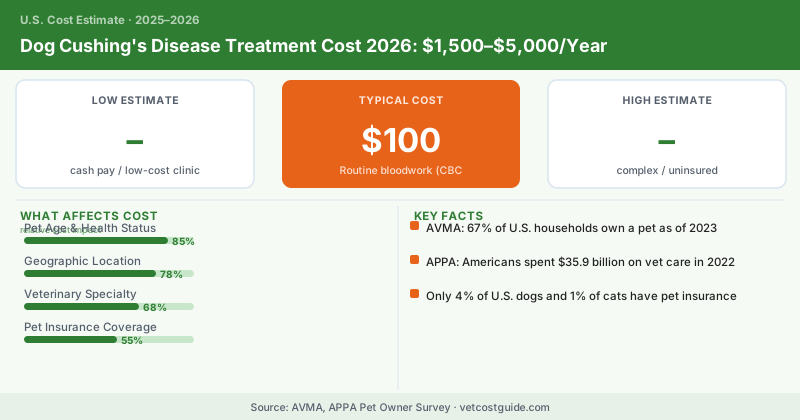
Most owners of dogs with pituitary Cushing’s spend $2,000–$5,000 per year once the diagnosis is confirmed and treatment is stable. That’s a real number — and it continues for the rest of the dog’s life.
Pet insurance is worth mentioning: Cushing’s diagnosed before enrollment is excluded as pre-existing. But dogs enrolled before diagnosis have real coverage potential, including for the expensive ACTH stim testing. According to AVMA surveys, endocrine disease is among the top five conditions driving high veterinary bills in dogs — the insurance argument for enrolling dogs early is strong.
If cost is a genuine constraint, have a frank conversation with your vet about mitotane versus trilostane, about monitoring frequency, and about what’s realistic for your dog’s age and overall health status. Untreated Cushing’s has a real quality-of-life cost even if it doesn’t show up on a bill.
Frequently Asked Questions
Most dogs with pituitary-dependent Cushing's are managed on trilostane (Vetoryl) at $100–$300/month, plus diagnostic monitoring every 3–6 months ($200–$500 per panel). Total annual cost typically runs $1,500–$5,000. Adrenal-dependent cases treated with surgery cost $3,000–$10,000 upfront. Mitotane (Lysodren) is a lower-cost alternative at $30–$80/month but requires careful monitoring.
Diagnosis requires specialized testing beyond routine bloodwork. The low-dose dexamethasone suppression test (LDDS) costs $150–$300 and is the most common screening test. ACTH stimulation testing runs $200–$400. An abdominal ultrasound ($200–$500) distinguishes pituitary from adrenal-dependent disease. Total diagnostic workup: $600–$1,500 depending on how many tests are needed.
Without treatment, Cushing's disease significantly shortens lifespan and reduces quality of life. The chronic cortisol excess causes diabetes, hypertension, recurrent infections, muscle weakness, blood clots, and neurological complications if the pituitary tumor grows large enough. According to veterinary internal medicine specialists, treated dogs can live 2–3 years or more after diagnosis with good quality of life — untreated cases typically decline much faster.