Imagine watching a German Shepherd — strong, athletic — gradually lose the use of his back legs over 12–18 months. That’s degenerative myelopathy. There’s no cure. No medication reverses it. But physical therapy and mobility support genuinely extend quality of life, and many DM dogs continue hiking with their owners — in wheelchairs — well into the disease’s progression. Annual costs range from $1,000 for home exercise programs and monthly PT to $5,000–$6,000 when you’re managing incontinence, full paralysis, and professional hydrotherapy several times a week.
- Genetic test for SOD1 mutation: $65–$100
- Neurology consultation: $200–$450
- MRI (to rule out other causes): $1,500–$3,000
- Canine physical therapy (per session): $60–$120
- Dog wheelchair (rear-support): $300–$600
- Hydrotherapy (per session): $50–$100
- Annual PT and mobility management: $1,000–$4,000
- Full care late-stage (professional PT + supplies): $4,000–$6,000+
DM Management Cost Overview
| Cost Category | Low | Average | High |
|---|---|---|---|
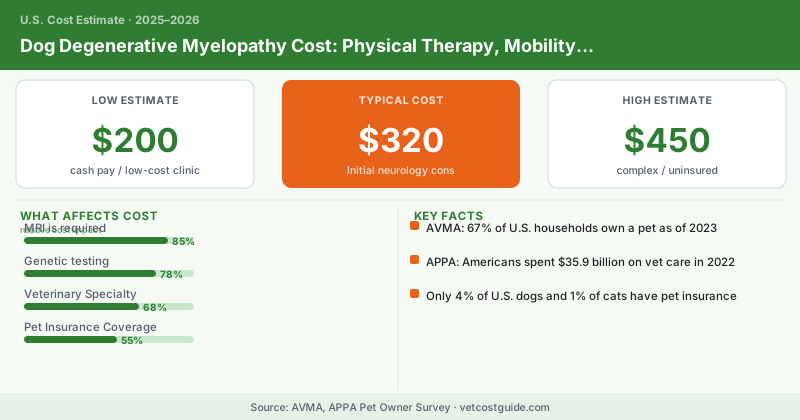
| Initial neurology consult | $200 | $320 | $450 |
| MRI (to rule out IVDD) | $1,500 | $2,200 | $3,000 |
| Genetic SOD1 testing | $65 | $85 | $100 |
| Physical therapy (monthly, 4 sessions) | $240 | $380 | $480 |
| Hydrotherapy (monthly, 4 sessions) | $200 | $320 | $400 |
| Rear-support wheelchair | $300 | $450 | $600 |
| Booties/drag protection | $25 | $40 | $60 |
| Incontinence supplies (monthly) | $30 | $60 | $100 |
| Annual cost (early DM, home PT program) | $800 | $1,400 | $2,000 |
| Annual cost (mid-stage, professional PT) | $2,500 | $3,800 | $5,500 |
Getting a Diagnosis (and Why It Costs More Than a Test)
DM looks identical to intervertebral disc disease (IVDD) on a physical exam. Both cause hind limb weakness, ataxia, and eventual paralysis. The critical difference: IVDD is often surgically treatable, while DM is not. Getting the diagnosis right matters enormously.
MRI is required to rule out spinal cord compression from disc disease before concluding a dog has DM. This is the expensive step — $1,500–$3,000 at a veterinary neurology center. Spinal cord compression from IVDD shows up clearly on MRI; DM doesn’t cause visible cord changes. A dog with neurological signs and a clear MRI in the right clinical context (right breed, right age, right progression pattern) meets the diagnostic criteria for presumptive DM.
Genetic testing for the SOD1 mutation (the gene associated with DM) is inexpensive ($65–$100) and useful for confirming a dog carries the high-risk genotype, but it doesn’t confirm disease — some mutation carriers never develop symptoms. The Canine Health Information Center (CHIC) database through OFA maintains breed-specific DM testing registries.
Affected breeds. German Shepherds, Boxers, Corgis (Pembroke and Cardigan), Chesapeake Bay Retrievers, and Rhodesian Ridgebacks are most commonly affected. The AVMA notes that DM progresses from the thoracolumbar region cranially, meaning it starts in the back legs and eventually affects the front legs and respiratory muscles in very advanced cases.
Physical Therapy: The Most Evidence-Supported Management
This is where your money has real impact. Multiple veterinary neurology studies show that dogs with DM who receive regular physical therapy maintain mobility significantly longer than dogs with sedentary care. One study found dogs receiving intensive PT remained ambulatory about twice as long as control dogs.
Professional canine physical therapists (CCRPs — certified canine rehabilitation practitioners) design individualized programs combining:
- Therapeutic exercises (balance board, proprioceptive work, cavaletti poles)
- Underwater treadmill sessions (reduces weight bearing, maintains muscle mass)
- Manual therapy and massage
- Home exercise programs for daily execution
Sessions run $60–$120 at specialty rehab centers. Most DM dogs benefit from 2–4 professional sessions per month supplemented by daily home exercises.
Hydrotherapy is particularly effective for DM because buoyancy allows continued walking movements even when the dog can’t support weight on land. Many owners drive significant distances to facilities with underwater treadmills. The per-session cost ($50–$100) adds up, but the benefit in maintaining muscle mass and neurological stimulation is real.
Wheelchairs and Mobility Aids
When a DM dog loses the ability to walk independently, a rear-support wheelchair extends quality of life substantially. Most dogs adapt quickly — within days. Wheelchairs are sized to the individual dog and cost $300–$600 for quality carts (Eddie’s Wheels, K9 Carts, and Walkin’ Wheels are established manufacturers).
Accessories matter too. Dogs who drag their paws before getting a wheelchair damage the top of their feet — boots or drag bags ($25–$60) protect the skin. As the disease advances and incontinence develops, belly bands, washable diapers, and waterproof bedding become standard supplies ($30–$100/month).
DM is painless — the spinal cord degeneration doesn’t cause pain, which means affected dogs often remain bright, engaged, and happy well into the disease. Don’t let the disability be the only metric you’re using to assess quality of life. A paralyzed dog in a wheelchair who’s excited about meals, interactions, and outdoor time may have excellent quality of life. Your veterinary neurologist or rehabilitation vet can help you use validated quality-of-life scales to make these assessments objectively.
Planning for the Long Term
DM progresses over 1–3 years from first signs to full paralysis. Most dogs reach end-stage — complete paralysis of all four limbs — within 2–3 years of diagnosis. Planning for this trajectory upfront reduces financial and emotional scrambling later.
Early stage (hind limb weakness): PT, home exercises, protective boots — $1,000–$2,500/year Mid stage (non-ambulatory hind limbs, wheelchair): PT + hydrotherapy + mobility aids — $2,500–$4,500/year Late stage (full paralysis, incontinence management): full care team + supplies — $3,000–$6,000/year
Pet insurance that includes rehabilitation care is particularly valuable here. Standard accident-and-illness policies often cover neurology consultations and MRI costs, but rehabilitation coverage requires add-on riders or specific policy types. Check your policy’s rehabilitation benefit before assuming coverage.
Frequently Asked Questions
How long do dogs live with degenerative myelopathy? Average survival from diagnosis to euthanasia is 1–3 years, though this varies widely. Dogs receiving good palliative care and physical therapy tend toward the longer end. Most dogs are euthanized when quality of life becomes significantly compromised — typically at the stage of front limb involvement or when incontinence management overwhelms the dog’s dignity and comfort.
Is DM hereditary and can it be prevented? Yes, it’s linked to an inherited SOD1 mutation. Breeders who test and don’t breed SOD1 mutation-positive dogs to each other reduce DM prevalence in offspring. For owners, it can’t be prevented once genetic risk is present — but knowing a dog is high-risk allows earlier monitoring and readiness to start PT at the first signs.
Can supplements help DM dogs? No supplement has been shown to slow DM progression in clinical trials. Vitamin E, B vitamins, and antioxidants are sometimes recommended supportively, but the evidence base is weak. Physical therapy and exercise are the only interventions with meaningful supporting evidence.
Frequently Asked Questions
Professional physical therapy sessions typically cost $75–$150 per session, with most owners scheduling 2–4 sessions monthly for a total of $150–$600 per month. Home exercise programs designed by a veterinary therapist cost less upfront ($200–$500 initial consultation) but require owner commitment and may need quarterly check-ins at $100–$200 each.
Most pet insurance plans classify degenerative myelopathy as a pre-existing condition and exclude it entirely if diagnosed before enrollment. Some policies may cover physical therapy or mobility aids if the dog was enrolled before symptoms appeared, but coverage limits are typically $1,000–$5,000 annually with 20–30% out-of-pocket costs.
Most dogs decline over 12–18 months from initial hind-leg weakness to loss of mobility, though some progress faster or slower depending on breed and age. Early intervention with physical therapy and mobility aids can extend comfortable quality of life by 6–12 months, often allowing dogs to remain active in wheelchairs or carts during mid and late stages.