“Your dog has a heart murmur.” For millions of American dog owners — especially those with small breeds — that sentence starts a years-long journey with myxomatous mitral valve disease (MMVD). It’s the most common heart disease in dogs, affecting an estimated 10% of all dogs and up to 40% of Cavalier King Charles Spaniels over age 10. Understanding what it costs at each stage — and when to spend and when to wait — is genuinely useful knowledge.
- Routine exam (murmur found): included in annual exam
- Thoracic X-rays: $150–$400
- Echocardiogram (staging): $400–$900
- NT-proBNP blood test: $80–$150
- Pimobendan (Vetmedin) Stage B2+: $60–$150/month
- ACE inhibitor (enalapril/benazepril): $20–$50/month
- Furosemide (Lasix) for CHF: $15–$40/month
- Cardiology specialist consult: $150–$300
MMVD: What Actually Happens
The mitral valve separates the left atrium from the left ventricle. In MMVD, the valve leaflets thicken, become nodular, and eventually fail to close properly — allowing blood to leak backward into the atrium with each heartbeat (mitral regurgitation). Over years, the heart compensates by enlarging, then eventually fails to compensate — leading to congestive heart failure.
The process is predictable and staged. The American College of Veterinary Internal Medicine (ACVIM) published consensus guidelines in 2019 that define exactly when to start treatment and what to use at each stage.
The ACVIM Stages: Why They Matter for Cost
Stage A: Breeds at risk, no current disease. No cost beyond routine exams.
Stage B1: Murmur present but no heart enlargement. No cardiac medications recommended. Annual echo monitoring: $400–$900/year.
Stage B2: Murmur plus cardiac enlargement on echo — but no symptoms of heart failure yet. Start pimobendan now. The landmark EPIC trial (2016) showed this delays onset of heart failure by an average of 15 months.
Stage C: Congestive heart failure signs (coughing, labored breathing, exercise intolerance). Full medication protocol required.
Stage D: End-stage, refractory to standard medications.
Diagnosis and Staging Costs
| Diagnostic Test | Typical Cost | When Needed |
|---|---|---|
| Physical exam + auscultation | Included in annual exam | Every year for at-risk breeds |
| Thoracic X-rays | $150–$400 | B2 staging; CHF diagnosis |
| Echocardiogram | $400–$900 | Definitive staging; monitors progression |
| NT-proBNP | $80–$150 | Blood biomarker; useful for monitoring |
| Blood pressure | $30–$60 | Rules out hypertension complicating factor |
| Blood chemistry + CBC | $80–$200 | Pre-medication screening; kidney function |
| Cardiology specialist consult | $150–$300 | Recommended for B2 diagnosis and staging |
The most important investment for small breed dogs over 5 years old: annual echocardiograms ($400–$900) to catch the B1-to-B2 transition before it becomes CHF. Catching B2 early means earlier pimobendan and an average 15-month delay in disease progression.
Cost by ACVIM Stage
Stage B1 (Murmur, No Enlargement)
- No cardiac medications
- Annual echocardiogram: $400–$900
- Routine exam every 6–12 months: $50–$100
- Annual cost: $450–$1,000
Stage B2 (Murmur + Enlargement, No Symptoms)
- Pimobendan (Vetmedin): $60–$150/month — the critical EPIC trial medication
- Optional ACE inhibitor (ACVIM now supports ACE inhibitor use at B2 per some evidence): $20–$50/month
- Echo recheck every 6 months: $400–$900
- Annual cost: $1,400–$3,500
Stage C (Active Heart Failure)
Full medication protocol:
| Medication | Role | Monthly Cost |
|---|---|---|
| Pimobendan (Vetmedin) | Inotrope + vasodilator | $60–$150 |
| Furosemide (Lasix) | Loop diuretic for fluid | $15–$40 |
| Enalapril or benazepril | ACE inhibitor | $20–$50 |
| Spironolactone | Potassium-sparing diuretic | $25–$60 |
| Sildenafil (if pulmonary hypertension) | Reduces right heart pressure | $50–$120 |
Monitoring: Chest X-rays every 2–3 months + blood panel (to check kidney function and electrolytes with diuretics): $150–$450 per visit
Annual Stage C cost: $3,000–$8,000
Stage D (Refractory Heart Failure)
End-stage management focuses on quality of life. Higher furosemide doses, supplemental oxygen concentrators (home rental: $150–$300/month), and palliative comfort care. Survival at this stage is typically weeks to months.
The EPIC Trial: Numbers That Justify the Cost
The EPIC (Effect of Pimobendan In dogs with Cardiomegaly) trial enrolled 360 dogs with Stage B2 MMVD at 36 cardiology centers across multiple countries. Dogs on pimobendan reached the primary endpoint (onset of CHF or cardiac death) an average of 15 months later than those on placebo. The number needed to treat to benefit one dog was approximately 1.6 — meaning almost every B2 dog benefits.
At $60–$150/month for pimobendan, 15 months of extended heart failure-free life costs roughly $900–$2,250 in drug costs. The quality-of-life value of 15 additional healthy months for most owners far exceeds that figure.
Resting respiratory rate (RRR) monitoring is one of the most valuable tools for Stage B2 and C owners. Count breaths per minute while your dog sleeps. Normal is under 30. Consistently over 35 — or any single measurement over 40 — is a signal to call your vet within hours, not days. Catching fluid accumulation early can prevent an emergency hospitalization. Ask your vet to teach you this technique.
Cavalier King Charles Spaniels: Early Screening Is Essential
The Cavalier Health Program and ACVIM recommend that Cavaliers be screened for heart murmurs starting at age 1–2. Due to the breed’s genetic predisposition, the Mitral Valve Disease Breeding Protocol advises that breeding Cavaliers be free of murmurs until at least age 2.5 (for males) or 2 (for females) and have parents who were clear until at least age 5.
Annual cardiac exams by a cardiologist: $150–$350/year for Cavaliers starting age 2. This early investment catches the B1-to-B2 transition — and the pimobendan start that changes the disease trajectory.
Pet Insurance Timing
MMVD is almost universally treated as a pre-existing condition once a murmur is detected, diagnosed, or documented in medical records. For Cavaliers and other cardiac-prone breeds (Dachshunds, Shih Tzus, Bichon Frises, Miniature Schnauzers), pet insurance should be purchased in the first year of life — ideally before the first murmur is found.
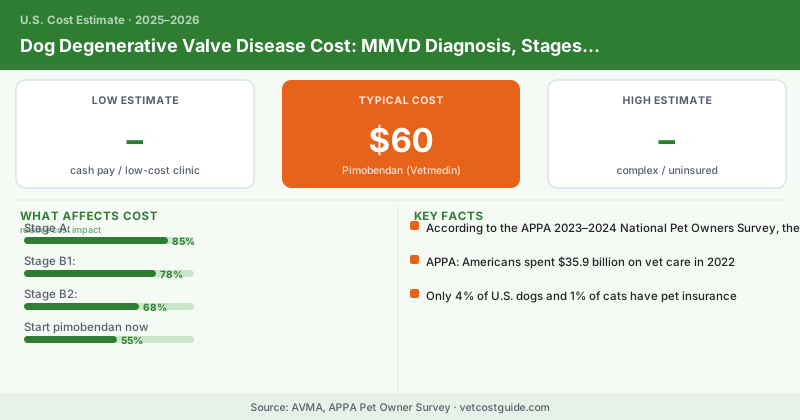
According to the APPA 2023–2024 National Pet Owners Survey, the average annual vet expenditure for dog owners is approximately $367 — far less than Stage C CHF costs. Pet insurance covering cardiac conditions can mean the difference between full treatment and difficult triage decisions.
When to Consider Cardiology Referral
Not every dog with a murmur needs a cardiologist — but there are clear situations where referral adds real value:
- Any murmur in a Cavalier King Charles Spaniel (annual screening)
- Any murmur grade 4/6 or higher
- Clinical signs developing in what was thought to be a mild case
- Need for definitive staging to decide on pimobendan timing
- Stage C dogs whose condition isn’t stabilizing on standard medications
Cardiologist consult + echo: $550–$1,200 total — often worthwhile for the staging accuracy it provides.
Frequently Asked Questions
Diagnosing MMVD typically costs $500–$3,000 and usually includes a veterinary exam, chest X-rays, and an echocardiogram to confirm the disease and determine the stage. The high end of the range reflects the cost of echocardiography at specialty or emergency clinics, while general practices may charge less.
Most pet insurance plans cover MMVD treatment if your dog is enrolled before diagnosis, though many policies classify it as a pre-existing condition if detected before coverage begins. Out-of-pocket costs for medication management typically run $80–$300 per month depending on your dog's stage and the specific drugs prescribed (ACE inhibitors, diuretics, or pimobendan).
Treatment timing depends on the disease stage: Stage B1 dogs typically need monitoring only, Stage B2 dogs may benefit from preventive medication like pimobendan (shown in the EPIC trial to delay symptom onset), and Stage C dogs require immediate medication. The EPIC trial found that starting pimobendan in asymptomatic Stage B2 dogs delayed the onset of clinical signs by an average of 15 months, helping owners and vets decide whether early intervention is worth the $80–$150 monthly cost.