Most breeders handle dewclaw removal in the first week of life. The puppy barely notices. It costs next to nothing. If that window passes — for any reason — you’re looking at a very different conversation with your vet.
Adult dewclaw surgery is a legitimate veterinary procedure: general anesthesia, surgical removal, sutures, and a recovery period. And the bill reflects that. What would have cost $35 at three days old now runs $300–$800, sometimes more.
Understanding when removal is actually necessary, and when it’s optional, is the first step in figuring out whether that cost is worth it for your dog.
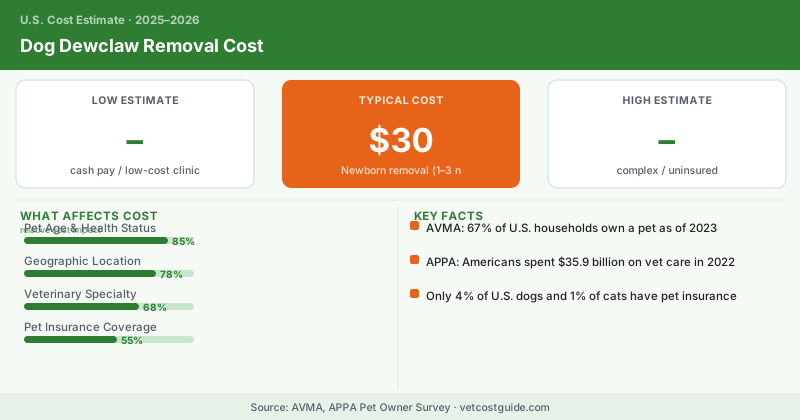
- Newborn dewclaw removal (3–5 days): $30–$40 per nail
- Adult surgical removal (single dewclaw): $300–$500
- Adult removal (multiple dewclaws, anesthesia included): $400–$800
- Torn or infected dewclaw emergency treatment: $200–$600
- Post-op complications (infection, re-suturing): $100–$300 additional
- E-collar + bandaging supplies: $20–$50
Why Timing Changes Everything
The AKC notes that dewclaw removal has traditionally been performed in the first few days of life, when the tissue is minimally developed and local anesthesia or no anesthesia is sufficient. At that stage, it’s a quick snip, a bandage, and the puppy is nursing within minutes.
Wait until adulthood and the anatomy has fully developed. The dewclaw — especially a front dewclaw — has bony attachment, functioning tendons, and a blood supply. Removing it is no different from any other surgical digit procedure. Your vet will need to:
- Perform a pre-anesthetic blood panel ($80–$150)
- Administer general anesthesia
- Surgically dissect and remove the nail, digit, and any associated tissue
- Close the wound with sutures
- Provide pain medication and an e-collar for recovery
That’s why adult dewclaw removal looks nothing like the newborn procedure on a price list.
Cost Breakdown by Scenario
| Scenario | Cost Range | Notes |
|---|---|---|
| Newborn removal (1–3 nails, same visit) | $30–$120 | Done at 3–5 days old; minimal anesthesia |
| Adult removal, single dewclaw | $300–$500 | Includes anesthesia and sutures |
| Adult removal, multiple dewclaws | $400–$800 | Combined procedure; anesthesia cost spread |
| Pre-anesthetic bloodwork | $80–$150 | Standard for adult surgical procedures |
| Emergency torn dewclaw treatment | $200–$600 | Removal or repair; depends on injury severity |
| Recheck + suture removal | $40–$80 | Usually 10–14 days post-surgery |
Front Dewclaws vs. Rear Dewclaws: Not the Same Decision
Here’s something that surprises a lot of owners: front and rear dewclaws are anatomically different, and the decision to remove them shouldn’t be made with the same logic.
Front dewclaws in most dogs have real skeletal attachment — they’re connected by bone, muscle, and tendons. They’re used during running, turning sharply, and even gripping. Injury is possible but less common than owners fear. Most veterinary and orthopedic specialists now recommend leaving front dewclaws intact unless there’s a recurring problem.
Rear dewclaws are more variable. In many dogs they’re loosely attached — little more than skin and nail with minimal bone structure. These are the ones most likely to snag on underbrush, fencing, or carpet and result in a traumatic tear. For active, outdoor, or working dogs, removal of loose rear dewclaws has a legitimate protective rationale.
Double dewclaws — two extra nails on the rear foot — are a breed characteristic in Great Pyrenees, Briards, and Beaucerons. Whether to remove them is a breed-specific decision and sometimes a breed standard requirement. A working Great Pyrenees herding livestock in rough terrain has different considerations than a companion dog who rarely leaves pavement.
The Torn Dewclaw: When Removal Becomes Urgent
A torn dewclaw is painful and can happen fast — a loop of wire, a crack in the deck boards, a too-energetic wrestling match. APPA data from pet insurance claims consistently places torn nails among the top ten most common veterinary injuries for dogs.
What you’ll see: limping, licking at the paw, visible nail at a wrong angle, sometimes bleeding. Don’t leave it. A partially torn dewclaw that’s still attached is an active source of pain and infection risk.
Treatment options depend on the severity:
- Partial tear (nail intact but damaged): Trim and bandage, antibiotics — $150–$300
- Full tear or avulsion: Surgical removal of the nail and sometimes the dewclaw itself — $200–$600
- Infected tear: Add culture, extended antibiotic course, possible additional debridement — $300–$600+
| Torn Dewclaw Treatment | Cost Range | Notes |
|---|---|---|
| Exam + trim + bandage | $150–$300 | For partial tears; no surgery required |
| Surgical removal under sedation | $250–$500 | Full avulsion or severely damaged nail |
| Infection treatment (antibiotics + recheck) | $80–$200 | Additional to surgical cost |
| Emergency/after-hours visit surcharge | $75–$150 | If it happens on a weekend or evening |
Does Breed Matter?
Yes, significantly. Several breeds carry dewclaw characteristics that affect both the likelihood of injury and the complexity of surgery:
- Great Pyrenees and Briards: Double rear dewclaws are a breed standard feature. These are often firmly attached with distinct bone structure — they’re not the loose, floppy kind. Removal in these breeds is more involved and generally costs toward the higher end.
- Rottweilers: Rear dewclaws, when present, are typically loosely attached and many breeders remove them in the newborn window. Adult removal in Rottweilers is straightforward.
- Saint Bernards and Beaucerons: Double dewclaws are common and breed-standard. Removal may or may not be appropriate depending on the individual dog’s attachment and lifestyle.
- Most sporting and working breeds: No double dewclaws, but rear single dewclaws if loosely attached are candidates for removal in active working dogs.
What to Actually Do: A Practical Framework
The AVMA’s position on elective procedures in companion animals emphasizes that any surgery carries anesthetic risk and should be weighed against the realistic benefit for the individual patient. That’s the right framework here.
If your adult dog has never had a dewclaw injury and the nail is healthy and trimmed regularly, removal for cosmetic or precautionary reasons alone may not be worth the surgical risk and cost. If your dog is a high-activity working or hunting dog with loose rear dewclaws, the calculus shifts.
Talk to your vet about:
- Is the dewclaw tightly or loosely attached?
- Has it caused problems before?
- What’s your dog’s activity level and environment?
That conversation will save you from an unnecessary procedure — or help you decide that the $400 surgery now is better than a $500 emergency visit later.
Don’t attempt to remove or trim a torn dewclaw at home beyond basic first aid (gentle cleaning, loose bandage to protect while you call your vet). A torn nail that’s partially attached is painful and bleeds significantly — improper handling can worsen the injury. If you can see the quick exposed or the nail is at a severe angle, get to a vet same day. Leaving an avulsed nail untreated overnight invites infection and significantly complicates the repair.
Frequently Asked Questions
No. For most dogs, the front dewclaws are firmly attached with bone and tendons and rarely cause problems. Removal is generally optional for front dewclaws unless there's a recurring injury. Rear dewclaws — particularly the loosely attached kind found on breeds like Rottweilers, some mixed breeds, and dogs with double dewclaws — are more likely to snag and tear, which is the stronger argument for removal. The AKC breed standards for certain breeds actually require dewclaw presence or removal, so check your breed's standard before making a decision.
At 3–5 days old, the procedure takes minutes, requires no general anesthesia, and heals within a week. Cost is typically $30–$40 per nail. As an adult, the dewclaw has developed full bone, muscle, and vascular attachments — it's a surgical procedure requiring general anesthesia, sutures, and 10–14 days of recovery. Adult cost is $300–$800, more if complications arise. The two aren't really comparable procedures.
Not automatically, but many veterinarians recommend it for breeds where double dewclaws are loosely attached — Great Pyrenees, Briards, Beaucerons. A firmly attached double dewclaw with good bone structure can often stay, but a floppy one that moves freely is a snagging risk, especially for working or active dogs. Your vet can assess attachment and advise based on your individual dog.