Most dogs get diarrhea. It’s one of the top five reasons dogs visit the vet, and for the majority, it resolves in 24–48 hours with bland food and maybe a probiotic. But some cases don’t resolve — and figuring out when “wait and see” becomes “go to the vet today” is where most owners get it wrong.
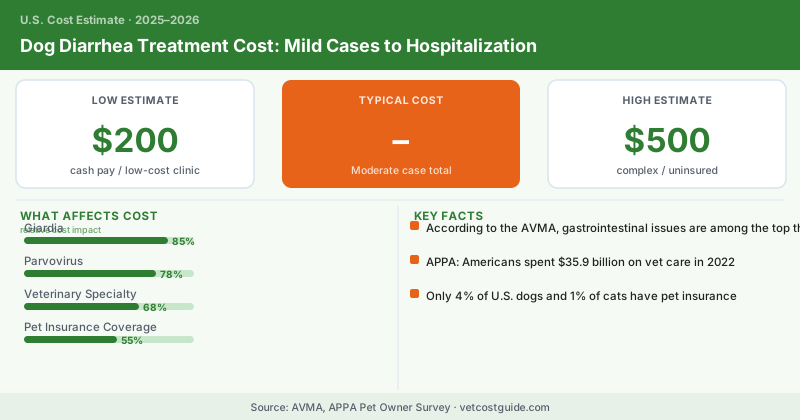
According to the AVMA, gastrointestinal issues are among the top three illness reasons for veterinary visits in dogs. A 2023 survey by VPI Pet Insurance found diarrhea claims represented roughly 11% of all dog illness claims filed — making it one of the most common conditions vets actually treat. Here’s what it costs and how the price jumps as severity increases.
Dog Diarrhea Treatment Cost by Severity
| Severity Level | What It Involves | Cost Range |
|---|---|---|
| Mild — home management | Bland diet, probiotics, fasting | $0–$30 |
| Mild — one vet visit | Exam, maybe fecal, take-home meds | $75–$250 |
| Moderate — workup + treatment | Fecal + bloodwork + deworming/metronidazole | $200–$500 |
| Severe — dehydrated or bloody | IV fluids, hospitalization, diagnostics | $500–$2,500 |
| Chronic — recurring or 2+ weeks | Full GI workup, possible endoscopy | $800–$3,500 |
When Is Diarrhea Just Diarrhea?
A single loose stool after your dog ate something weird? That’s not a vet trip. Dogs are opportunistic eaters, and dietary indiscretion — garbage, table scraps, found food on the trail — is the most common cause of acute, self-limiting diarrhea. These episodes typically resolve within 24–48 hours with a 12-hour fast followed by a bland diet (plain boiled chicken + white rice, or a prescription GI diet like Hill’s i/d).
You can manage at home if:
- One episode, not constant
- Dog is acting normal — eating, drinking, playful
- No blood in the stool (not even pink-tinged)
- Not a puppy, senior, or immunocompromised dog
- No known toxin ingestion
Add a probiotic like FortiFlora ($30–$50 for a box) or plain canned pumpkin (fiber, not pie filling) to help firm things up.
When You Need a Vet Visit
Call your vet same-day or head to the emergency vet if any of these are true:
- Bloody diarrhea (bright red blood or black, tarry stools)
- Diarrhea more than 5 times in 24 hours
- Signs of dehydration: lethargy, dry gums, skin that doesn’t snap back
- Vomiting + diarrhea together — this accelerates fluid loss fast
- A puppy or senior dog — they dehydrate much faster than healthy adults
- Suspected toxin ingestion (grapes, xylitol, certain plants, medications)
- No improvement after 48 hours of home management
What a Standard Vet Visit Includes
At a moderate-severity visit, expect:
Physical exam: The vet checks hydration status (skin turgor test, gum moisture), abdomen for pain or gas, temperature, and heart rate. A sick exam surcharge is common. Cost: $55–$120.
Fecal examination: Checking for parasites — Giardia, roundworms, hookworms, whipworms, Coccidia. The standard float test costs $25–$60. A Giardia ELISA (antigen) test is more sensitive and costs $40–$80. Most vets recommend both together.
CBC + chemistry panel: If your dog is symptomatic for more than 48 hours or showing signs of illness, a blood panel checks for infection, organ function, and electrolyte imbalances. Costs $80–$200.
Medications: Metronidazole (antibiotic/antiprotozoal) is the most common take-home for GI diarrhea — $15–$40 for a 5–10 day course. Anti-nausea medication (if also vomiting) adds $25–$60. Probiotic: $20–$50.
| Service | Low | High | Notes |
|---|---|---|---|
| Sick exam | $55 | $120 | Surcharge on top of base exam |
| Fecal float (parasite check) | $25 | $60 | Standard first test |
| Giardia ELISA antigen test | $40 | $80 | More sensitive than float alone |
| CBC + basic chemistry | $80 | $200 | If symptoms are significant |
| Parvovirus SNAP test | $40 | $80 | In puppies or unvaccinated dogs |
| Metronidazole (10-day course) | $15 | $40 | Most common GI antibiotic |
| Anti-nausea (take-home) | $25 | $60 | Maropitant or ondansetron |
| Probiotic (FortiFlora) | $20 | $50 | Supports gut recovery |
| Prescription GI diet | $30 | $70 | Hill's i/d or Royal Canin GI |
| Subcutaneous fluids (in-clinic) | $30 | $70 | If mildly dehydrated |
| Moderate case total | $200 | $500 | Exam + fecal + meds |
Hospitalization: When Diarrhea Becomes an Emergency
Severe or hemorrhagic diarrhea — particularly hemorrhagic gastroenteritis (HGE/AHDS), now called acute hemorrhagic diarrhea syndrome — can drop your dog’s packed cell volume dangerously in hours. This is a genuine emergency. Dogs with AHDS present with large volumes of bloody diarrhea, profound lethargy, and rapid dehydration. Without IV fluids, some dogs deteriorate and die within 24 hours.
Hospitalization for severe diarrhea includes:
- IV catheter and fluid therapy: $100–$250/day
- IV antibiotics (if sepsis risk): $80–$180/day
- Anti-nausea IV medications: $40–$80/day
- Nursing care and monitoring: $100–$300/day
- Daily bloodwork rechecks: $80–$180/day
A typical 2–3 day hospitalization for severe AHDS: $800–$2,500.
Parvovirus causes profuse, bloody, extremely foul-smelling diarrhea in unvaccinated puppies and dogs. It’s a separate (and more serious) emergency — mortality without treatment is over 80%. If your puppy is vomiting and has bloody diarrhea and wasn’t vaccinated on schedule, this is a same-hour emergency vet visit. Parvo hospitalization runs $1,500–$3,500. This is exactly why the dog vaccination schedule matters.
Chronic Diarrhea: The Expensive Workup
If your dog has had loose stools for more than 2–3 weeks, or if it keeps recurring, you’re no longer dealing with “dietary indiscretion.” Chronic diarrhea needs a systematic workup, which can get expensive:
- Repeat fecals (3 over 3 weeks): $75–$180 total — some parasites shed intermittently and one test misses them
- Full GI panel (trypsin-like immunoreactivity, folate, cobalamin, PLI): $200–$350 — screens for exocrine pancreatic insufficiency and small intestinal disease
- Abdominal ultrasound: $300–$600 — checks for thickened bowel walls (inflammatory bowel disease), masses, or lymph node changes
- Food elimination trial: 8–12 weeks on a novel protein or hydrolyzed diet. The diet itself costs $80–$130/month; the trial costs time, not just money.
- Endoscopy with biopsies: $1,000–$2,500 — the definitive test for inflammatory bowel disease (IBD), protein-losing enteropathy, or small cell lymphoma in older dogs
The full chronic diarrhea workup — from first diagnostics to definitive diagnosis — commonly runs $1,500–$3,500 across several vet visits.
The Parvo and Giardia Factor
Two specific infectious causes are worth calling out:
Giardia — a protozoan parasite — is common in dogs that drink from streams, puddles, or are in high-traffic environments. It causes soft, greasy, often pale stools. Treatment is metronidazole and/or fenbendazole (Panacur), costing $20–$60 for a course, plus the cost of reinfection prevention (environmental decontamination, rebathing the dog).
Parvovirus — only a real risk in unvaccinated dogs — causes bloody, severe diarrhea requiring hospitalization. The dog vaccination cost for the full puppy series ($150–$300) is a tiny fraction of the $1,500–$3,500 parvo hospitalization it prevents.
Does Pet Insurance Cover Dog Diarrhea?
Yes — acute diarrhea (illness) and parasite treatment are covered under comprehensive pet insurance plans. Chronic conditions like IBD may be covered if diagnosed after the policy was active. Repeated diarrhea episodes that establish a pattern before coverage begins may be flagged as a pre-existing condition. If your dog has a history of GI issues, read your policy carefully.
Bottom Line
Mild, self-limiting diarrhea costs $0–$30 to manage at home. One vet visit with a fecal test and medications runs $75–$250. Moderate workup with bloodwork: $200–$500. Hospitalization for severe or hemorrhagic cases: $800–$2,500. Chronic diarrhea with full GI diagnostics: $1,500–$3,500. The money-saving move is timing: don’t wait four days before going in when your dog is clearly dehydrated and declining — catching dehydration early keeps a $200 visit from becoming a $2,000 hospitalization.
Frequently Asked Questions
A vet visit for mild diarrhea typically costs $75–$300, which usually includes an exam and basic treatment like bland food recommendations or probiotics. Severe or chronic cases requiring diagnostics, hospitalization, or specialized treatment can range from $500–$2,500 or more depending on the underlying cause.
Most pet insurance plans cover diarrhea treatment, but many policies exclude pre-existing conditions and have deductibles ranging from $250–$1,000 and co-pays of 10–20%. Out-of-pocket costs for mild cases are often manageable, but severe cases with hospitalization can leave owners paying hundreds to thousands before hitting their annual out-of-pocket maximum.
Most cases resolve within 24–48 hours with bland food at home, so you can monitor your dog initially. However, you should visit the vet immediately if diarrhea lasts longer than 48 hours, contains blood, is accompanied by vomiting or lethargy, or if your dog is a puppy or senior, as these cases are more likely to require professional treatment.