Max is a five-year-old Labrador Retriever who’d been shaking his head and pawing at his left ear for about two weeks. His owner assumed it was minor — a little debris, maybe some water from his last swim. She picked up a bottle of over-the-counter ear cleaner at the pet store and called it good.
By the time she brought him in, the ear canal was thickened, red, and producing a dark brown discharge. His vet diagnosed Grade 2 otitis externa with concurrent Malassezia and bacterial infection — and during the exam, identified classic signs of atopic dermatitis, a chronic allergic skin condition. Max didn’t just have an ear infection. He had a dog who was going to keep getting ear infections unless the underlying allergy was addressed.
That one “minor” ear problem cost $380 for the initial visit, cytology, and prescription medication. Managing the underlying allergy added another layer. It’s a story that plays out in vet clinics every single day.
- Initial vet exam + ear cytology: $150–$250
- Prescription topical ear medication: $50–$150 per tube
- Ear culture and sensitivity test: $80–$200 (chronic or non-responsive cases)
- Ear cleaning under sedation: $150–$300
- Video otoscopy: $200–$400
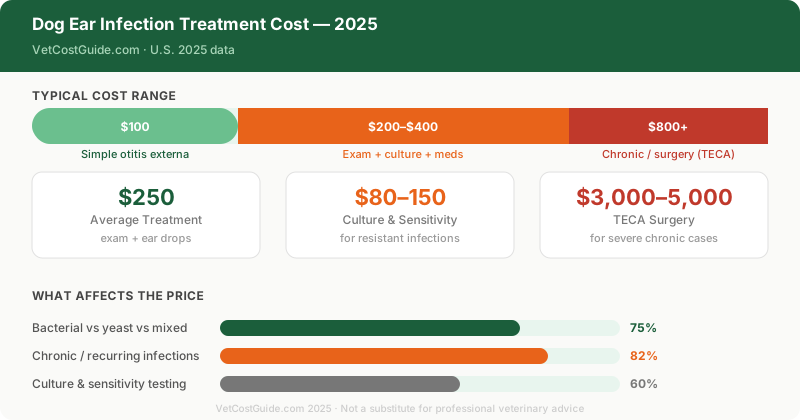
- TECA surgery (end-stage): $2,000–$5,000
- Allergy workup and management: $500–$2,000+ if underlying cause identified
How Vets Grade Ear Infections: The PSPP System
Not all ear infections are equal. The American College of Veterinary Dermatology (ACVD) uses a grading framework called PSPP to classify otitis externa severity and guide treatment decisions:
- Grade 1 (Mild): Normal canal architecture, mild exudate, minimal inflammation. Responds well to topical cleaning and a short medication course.
- Grade 2 (Moderate): Increased exudate, some erythema and swelling. Canal still open. Requires prescription topicals; may need sedated cleaning.
- Grade 3 (Severe): Significant inflammation, ulceration possible, canal partially occluded. Systemic antibiotics often required alongside topicals.
- Grade 4 (End-Stage): Canal calcified and closed. Topical medications physically cannot penetrate. Surgery is the only effective option.
Knowing the grade matters because it determines whether topical medication can even reach the infection. A dog in Grade 4 otitis who gets another round of ear drops isn’t being helped — the medication can’t get through calcified tissue.
Cost Breakdown: Otitis Externa
| Service | Cost Range | Notes |
|---|---|---|
| Physical exam | $60–$120 | Always required before treatment |
| Ear cytology (swab + microscopy) | $80–$150 | Identifies yeast vs. bacteria vs. mixed |
| Culture and sensitivity | $80–$200 | For resistant or recurrent infections |
| Prescription topical medication | $50–$150 | Multi-drug combo formulations common |
| Cleaning under sedation | $150–$300 | Often needed for severe or painful ears |
| Systemic antibiotics (oral) | $30–$100 per course | Grade 3+ cases; 4–6 week course typical |
| Recheck exam | $50–$100 | Required at 2–4 weeks to confirm resolution |
Cytology: The Step That Changes Everything
Cytology — a simple swab of the ear canal examined under a microscope — tells your vet what’s actually causing the infection. Yeast (Malassezia) looks and behaves differently from bacteria (Staphylococcus, Pseudomonas), and mixed infections are common. Treatment that works against yeast does nothing against bacteria, and vice versa.
Cost: $80–$150 for in-clinic cytology. It’s not optional — guessing at treatment without cytology wastes money and allows the infection to worsen.
For infections that don’t resolve after two courses of treatment, a culture and sensitivity test ($80–$200) identifies the specific bacterial strain and which antibiotics can kill it. Pseudomonas aeruginosa is notorious for antibiotic resistance and requires targeted, culture-guided treatment.
Why Over-the-Counter Ear Cleaners Sometimes Make Things Worse
This surprises most owners. The ear canal has a healthy microbiome — a balance of organisms that coexist with the dog’s anatomy. Aggressive or inappropriate cleaning disrupts that balance, removes cerumen that has protective functions, and changes the pH environment in ways that favor pathogen overgrowth.
The AVMA notes that ear disease is among the most common conditions seen in companion animal practice, with certain breeds having structural features — narrow canals, pendulous ear flaps, heavy hair growth in the canal — that make them inherently predisposed. Using any ear product without a vet diagnosis first is a gamble that often costs more in the long run.
Otitis Media: When Infection Reaches the Middle Ear
Otitis media means infection has spread through the eardrum into the middle ear cavity (the bulla). This happens most often in dogs with longstanding otitis externa — chronic inflammation eventually damages or ruptures the eardrum.
Signs suggesting middle ear involvement: head tilt, walking in circles, loss of balance, Horner’s syndrome (drooping eyelid), facial nerve paralysis. Your vet may recommend:
- Video otoscopy ($200–$400): visualizes the eardrum directly; identifies ruptures, polyps, or foreign material
- Myringotomy: deliberate puncture of the eardrum to allow drainage of the middle ear — adds $100–$300 to the procedure
- CT scan of the skull ($800–$1,500): best tool for assessing middle ear involvement and bulla disease
Total cost for diagnosing and treating otitis media: $500–$2,000, often spread over multiple visits.
TECA Surgery: The End-Stage Option
Total Ear Canal Ablation with Lateral Bulla Osteotomy (TECA-LBO) removes the entire external ear canal and cleans out the middle ear cavity. It’s done by a board-certified veterinary surgeon and carries a 4–6 week recovery.
Cost: $2,000–$5,000 depending on the surgeon, location, and whether one or both ears are involved.
This sounds extreme. For the right dog — one who’s been in chronic pain for years, failed multiple medical treatments, and has end-stage calcified canals — it’s genuinely life-changing. Most dogs recover without major complications and are dramatically more comfortable afterward.
High-Risk Breeds
Anatomy matters. These breeds have structural features that predispose them to chronic ear disease:
- Cocker Spaniels: narrow canals + pendulous flaps = poor air circulation; ceruminous gland hyperplasia is common
- Basset Hounds: extremely long, heavy ear flaps trap moisture and reduce ventilation
- Labrador Retrievers: love of water + floppy ears = moisture retention; atopy is also prevalent in the breed
- Shar-Peis: congenitally narrow ear canals make cleaning and treatment difficult
- Poodles: hair growth in the ear canal creates debris accumulation
If you own one of these breeds, build routine ear checks into your schedule — and ask your vet about appropriate maintenance cleaning to use between visits.
Never use cotton swabs (Q-tips) deep in your dog’s ear canal. You can push debris further in, damage the eardrum, and create exactly the warm, moist environment that infections thrive in. If your dog is shaking his head, scratching at his ear, or has visible discharge or odor, don’t wait — those are signs of active infection that need diagnosis. The longer an ear infection goes untreated, the worse the canal architecture becomes, and the more expensive the eventual treatment.
Treating the Root Cause
Here’s the part that saves money long-term: most recurrent ear infections have an underlying cause. The ACVD estimates that allergic skin disease — either environmental (atopy) or food-based — drives the majority of chronic otitis cases. Other common underlying factors include hypothyroidism and anatomical predisposition.
Treating the ear alone without addressing the root cause means you’ll be back in the clinic in six to eight weeks. Allergy workup (intradermal testing or serology) runs $300–$600. Food elimination trials cost little beyond the prescription food ($60–$100/month). But controlling the underlying allergy often eliminates ear infections entirely — or reduces them from six flares per year to one.
That math is worth doing.
Frequently Asked Questions
Not safely — at least not without a diagnosis first. Over-the-counter ear cleaners don't address the underlying cause, and using the wrong product can make things worse. More importantly, you need to know whether the eardrum is intact before putting anything in the canal. If the eardrum is ruptured, many standard ear preparations are ototoxic and can permanently damage hearing. Get a diagnosis first, then ask your vet about home care between visits.
Recurrence almost always signals an underlying condition that hasn't been addressed. Environmental or food allergies are the most common root cause — the ACVD estimates allergic skin disease is the primary driver in the majority of chronic otitis externa cases. Other contributors include hypothyroidism, anatomical factors like narrow canals or heavy ear flaps, excessive moisture from swimming, or overzealous cleaning that disrupts the ear's normal microbiome. Treating the infection without treating the cause is like mopping the floor without fixing the leaky pipe.
Surgery becomes necessary when the ear canal is so chronically inflamed and scarred that it's essentially closed — what vets call end-stage otitis. At that point, topical medications physically can't reach the affected tissue. Total ear canal ablation (TECA) with bulla osteotomy removes the entire ear canal and cleans out the middle ear cavity. It's a major surgery costing $2,000–$5,000 with a long recovery, but for dogs who've suffered for years, it often dramatically improves quality of life.