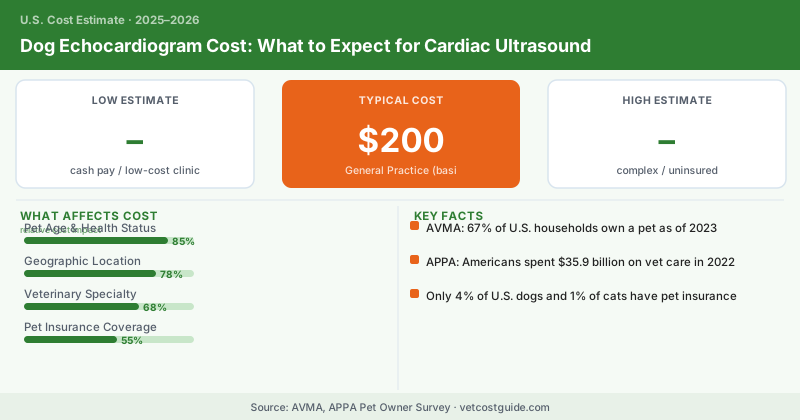
In 2010, a dog echocardiogram required a referral to a university hospital and cost upwards of $1,000. Today you can get the same test done by a board-certified cardiologist at a specialty clinic for $300–$700. That price drop has made cardiac diagnosis dramatically more accessible — and it matters, because heart disease is the leading cause of death in dogs over 10 years old.
Here’s what you’re paying for and when your vet will recommend it.
Echocardiogram Cost for Dogs
| Setting | Typical Cost | What's Included |
|---|---|---|
| General Practice (basic echo) | $200–$400 | Screening-level assessment, limited views |
| Veterinary Cardiologist (specialist) | $350–$700 | Full diagnostic echo, report, consultation |
| University/Teaching Hospital | $300–$600 | Full workup, often lower due to resident involvement |
| Mobile Cardiologist (comes to your vet) | $350–$600 | Specialist-level echo at your regular clinic |
| Echo + Consultation Bundle | $450–$800 | Combined cardiology consult and echo in one visit |
The difference between a general-practice echo and a specialist echo is significant. A cardiologist will measure chamber dimensions, wall thickness, valve function, and blood flow with Doppler — generating a comprehensive report that guides treatment decisions. A GP screening echo is a useful first look, but if there’s a real problem, you’ll likely be referred to a specialist anyway.
Why Your Vet Is Recommending an Echocardiogram
Murmur on auscultation. This is the most common trigger. The American College of Veterinary Internal Medicine (ACVIM) published consensus guidelines in 2019 establishing that dogs with Grade 3+ murmurs should have echocardiographic staging before starting medications. This was a big shift — it means many dogs now get echos that previously would have been put on medication based on murmur grade alone.
Breed screening. Cavalier King Charles Spaniels are the most affected breed — ACVIM data estimates that by age 10, nearly all Cavaliers will have some degree of mitral valve disease. Responsible breeders test breeding dogs by age 2.5 under the Cavalier Health Scheme. Other high-risk breeds include Doberman Pinschers (dilated cardiomyopathy affects up to 50% of the breed), Boxers, Great Danes, and Irish Wolfhounds.
Unexplained symptoms. Coughing, exercise intolerance, fainting, or labored breathing — all can have cardiac origins. An echo differentiates cardiac from respiratory causes and guides the right treatment path.
The ACVIM classifies mitral valve disease in dogs in four stages:
- Stage A: At-risk breed, no murmur yet. No treatment needed.
- Stage B1: Murmur present, no heart enlargement on echo. No treatment, monitor annually.
- Stage B2: Murmur + heart enlargement on echo. Pimobendan is now recommended to delay onset of heart failure.
- Stage C/D: Heart failure present. Multiple medications, frequent monitoring.
The echo is what moves a dog from B1 to B2 — and that distinction determines whether medication starts now or later. Getting the staging right matters.
What Happens During a Dog Echocardiogram
It’s a non-invasive ultrasound of the heart. Your dog lies on a padded table (usually on their side), a small amount of fur is clipped from the chest, and gel is applied for the transducer. The cardiologist moves the probe to visualize different cardiac structures.
Most dogs tolerate it well without sedation. The appointment takes 45–90 minutes including the consultation portion. A few anxious or large dogs may need mild sedation ($50–$100 extra) to get quality images.
You’ll receive a written report that your regular vet can use for ongoing management. Most cardiologists are happy to speak with your primary vet directly if there are questions about the findings.
Additional Costs to Anticipate
An echocardiogram is often part of a larger cardiac workup. Expect your cardiologist to also recommend:
- Chest X-rays: $150–$300 (assesses lung congestion, cardiac silhouette size)
- ECG/Holter monitor: $150–$600 (checks for arrhythmias; Holter is a 24-hour ambulatory ECG)
- Blood pressure measurement: $25–$60
- BNP/NT-proBNP cardiac biomarker test: $75–$150 (blood test that correlates with heart failure severity)
A complete cardiac workup including echo, X-rays, and biomarkers can run $700–$1,200.
Ongoing Monitoring Costs
Cardiac disease is a chronic condition. After the initial diagnosis, most cardiologists recommend:
- Stage B2: Recheck echo every 6–12 months ($300–$600/visit)
- Stage C/D: Every 3–6 months, plus medications and X-rays
Annual cardiac management for a dog in Stage B2 on pimobendan typically runs $800–$2,000/year including rechecks, medications, and monitoring labs.
Don’t delay an echocardiogram if your vet has heard a significant murmur and recommended one. The ACVIM B2 criteria — where starting pimobendan has been shown to delay heart failure by an average of 15 months — can only be determined by echo. Waiting to save $400 now could cost you a year of your dog’s healthy life.
Does Pet Insurance Cover Echocardiograms?
Yes — comprehensive pet insurance policies (Trupanion, Embrace, Figo, Nationwide) typically cover echocardiograms for conditions diagnosed after enrollment. The catch: cardiac murmurs noted in any exam before enrollment may be classified as pre-existing and excluded.
If you own a breed predisposed to heart disease, enroll in pet insurance while your dog is young and healthy, before any murmur appears on exam. Waiting until the murmur is found often means cardiac care is excluded from coverage entirely.
Frequently Asked Questions
A dog echocardiogram typically costs $300–$700 at a specialty clinic with a board-certified cardiologist. Costs may be higher at university veterinary hospitals or in major metropolitan areas, while rural clinics may charge toward the lower end of the range.
Most pet insurance plans cover echocardiograms if heart disease is not a pre-existing condition, typically reimbursing 70–90% after you meet your deductible. However, you should verify your specific policy, as some plans exclude cardiac diagnostics or have breed-specific heart condition exclusions.
The procedure typically takes 30–45 minutes and is non-invasive and painless—your dog lies on their side while a ultrasound probe is moved across their chest. Results are usually available within a few days, and your vet will discuss findings with you to determine if follow-up care or medication is needed.