3 things to know before your dog’s elbow dysplasia surgery — because most owners walk in knowing almost none of them.
1. Both elbows are often affected. Elbow dysplasia frequently occurs bilaterally. If you’re budgeting for one elbow surgery, you should budget for two. The second elbow may be caught at initial diagnosis or may emerge as the dog compensates and shifts weight.
2. Surgery treats the cause but not the existing arthritis. Even a perfect elbow surgery removes the fragment or corrects the joint surface — but osteoarthritis that developed while the lesion was present doesn’t reverse. Your dog may need lifelong arthritis management regardless of surgical success.
3. The earlier, the better. Large-breed dogs develop elbow dysplasia during rapid growth phases (4–12 months). Dogs diagnosed and treated before significant articular cartilage damage occurs have meaningfully better outcomes. Every month of delayed treatment is more arthritis.
- Diagnosis (X-rays + CT): $500–$1,500
- Arthroscopic surgery (per elbow): $1,500–$4,000
- Open surgery (osteotomy, PAUL): $2,500–$5,000 per elbow
- Post-op rehabilitation: $500–$2,000
- Long-term arthritis management: $100–$300/month
- Lifetime estimated cost: $5,000–$20,000+
What Is Elbow Dysplasia?
Elbow dysplasia is an umbrella term for several developmental abnormalities of the elbow joint. The most common forms:
- Fragmented medial coronoid process (FCP/FMCP): A piece of bone in the elbow fractures off and causes joint damage — the most common form
- Osteochondrosis dissecans (OCD): Abnormal cartilage development creates a flap that separates
- Ununited anconeal process (UAP): A growth center in the elbow fails to fuse to the main bone
- Elbow incongruity: Mismatch between the radius and ulna creates uneven joint loading
These conditions affect large and giant breeds disproportionately — Labrador Retrievers, German Shepherds, Rottweilers, Golden Retrievers, Bernese Mountain Dogs, and Newfoundlands are highest-risk. The Orthopedic Foundation for Animals (OFA) evaluates elbow radiographs for breeding dogs; approximately 19% of Bernese Mountain Dogs and 11% of Labrador Retrievers evaluated show elbow dysplasia.
Diagnosis Costs
Standard X-rays can show elbow dysplasia in moderate-to-severe cases, but CT scanning has become the gold standard because it shows joint incongruity and fragment details that X-rays miss:
| Diagnostic Test | Typical Cost | Notes |
|---|---|---|
| Physical exam + gait analysis | $50–$100 | Initial screening |
| Elbow radiographs (2 elbows) | $150–$400 | Required; may miss subtle FCP |
| CT scan (both elbows) | $600–$1,200 | Best for surgical planning |
| Sedation for imaging | $100–$250 | Positioning requires general anesthesia or heavy sedation |
| Orthopedic specialist consult | $150–$300 | Often recommended for surgical cases |
| Joint fluid analysis | $100–$200 | Rules out infectious arthritis |
Most surgeons want CT imaging before operating — it directly guides whether arthroscopy alone is sufficient or whether an osteotomy is needed.
Surgical Options and Costs
Arthroscopy
Minimally invasive camera-guided surgery is the standard treatment for FCP and OCD. The surgeon removes loose fragments, smooths rough cartilage surfaces, and assesses the joint. Recovery is faster than open surgery.
Cost per elbow: $1,500–$3,500 at a general orthopedic surgeon Cost at a specialist center: $2,500–$4,500
Proximal Abducting Ulnar Osteotomy (PAUL)
In dogs with elbow incongruity — where the mismatch is the primary problem — the PAUL osteotomy cuts the ulna to redirect forces away from the damaged medial coronoid area. It’s more complex than arthroscopy and not universally offered.
Cost per elbow: $2,500–$5,000
Sliding Humeral Osteotomy (SHO)
Another osteotomy technique for incongruity-based elbow dysplasia. Costs similarly to PAUL: $3,000–$5,500 per elbow at specialist centers.
If surgery is recommended for both elbows, most surgeons prefer to stage them 6–8 weeks apart rather than operating simultaneously. This allows the dog to bear full weight on one limb while the other heals. Budget and mentally prepare for two surgical episodes. Some surgeons offer a reduced fee for the second surgery when scheduled in advance.
Post-Surgical Rehabilitation
Physical rehabilitation accelerates recovery, reduces compensatory muscle wasting, and builds strength around the remodeled joint. It’s not optional for optimal outcomes — it’s part of the treatment.
| Rehab Component | Typical Cost |
|---|---|
| Initial rehab evaluation | $80–$150 |
| Underwater treadmill sessions | $50–$100 each |
| Land-based therapeutic exercises | $50–$100/session |
| Laser therapy | $30–$60/session |
| Full post-op rehab program (8–12 weeks) | $500–$2,000 |
| At-home exercise program design | $100–$200 one-time |
Long-Term Arthritis Management
Because some degree of osteoarthritis is almost always present at diagnosis — and surgery doesn’t reverse existing cartilage damage — dogs with elbow dysplasia typically need lifelong joint management:
Medications:
- Carprofen, meloxicam, or grapipant (NSAIDs): $30–$80/month
- Gabapentin (nerve pain): $20–$50/month
- Librela (bedinvetmab — anti-NGF monoclonal antibody): $100–$200/month injection
Supplements (modest evidence, low risk):
- Omega-3 fatty acids (fish oil): $20–$40/month
- Glucosamine/chondroitin: $25–$50/month
Therapeutic modalities:
- Veterinary acupuncture: $50–$100/session monthly
- Laser therapy: $30–$60/session, 2–4x/month initially
Realistic ongoing cost for well-managed elbow OA: $100–$300/month
Weight Management: High Value, Zero Cost
Every pound of excess body weight increases the load on arthritic elbows with every step. For a 90-pound Labrador with bilateral elbow disease, reaching a lean 80 pounds is one of the most effective interventions available — and costs nothing beyond feeding controlled amounts.
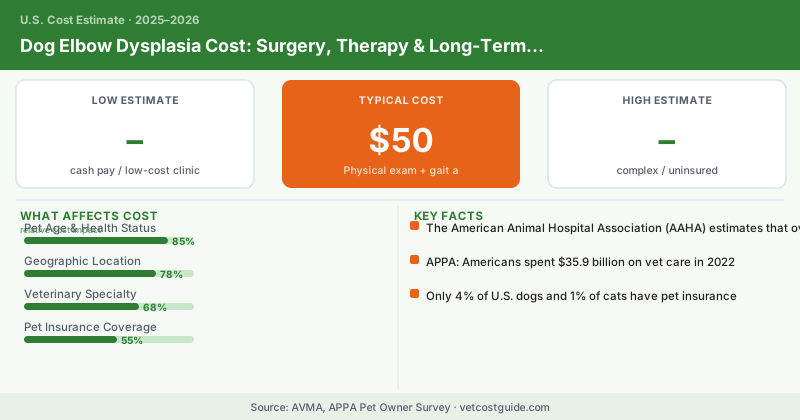
The American Animal Hospital Association (AAHA) estimates that over 50% of adult dogs in the United States are overweight or obese, making weight management the most widely underused tool in orthopedic management.
Lifetime Cost Projection
For a young Labrador diagnosed at 6 months:
- Diagnosis (CT + specialist consult): $900–$1,500
- Bilateral arthroscopic surgery: $3,000–$9,000
- Post-op rehabilitation: $1,000–$2,000
- Arthritis management for 8 years: $9,600–$28,800 ($100–$300/month)
- Estimated lifetime total: $14,500–$41,000+
This range explains why pet insurance purchased before diagnosis is so valuable for large-breed puppies from elbow-dysplasia-prone breeds. Orthopedic conditions are among the top claims categories for large breeds — enrollment before any limping or imaging is the only way to potentially get coverage.
OFA Health Testing for Breeding Dogs
The Orthopedic Foundation for Animals offers elbow evaluation from radiographs at $35–$60 per dog (for OFA registry submission). Responsible breeders screen breeding stock annually. When buying a large-breed puppy from an elbow-dysplasia-prone breed, ask to see OFA elbow clearances for both parents — it meaningfully reduces (though doesn’t eliminate) risk.
Frequently Asked Questions
Elbow dysplasia surgery typically costs $1,500–$5,000 per elbow. Since the condition often affects both elbows, you should budget $3,000–$10,000 for bilateral surgery, though the second elbow may not require immediate surgery if only one is symptomatic at diagnosis.
Most pet insurance policies do not cover elbow dysplasia because it is considered a pre-existing or hereditary condition, especially if diagnosed before coverage begins. You should contact your specific insurer to confirm, as coverage varies, but expect to pay the full surgical cost out-of-pocket in most cases.
Surgery addresses the underlying structural cause, but conservative management with physical therapy, weight management, and anti-inflammatory medications can slow arthritis progression and manage pain for dogs with mild dysplasia or those not eligible for surgery. However, surgery offers the best long-term outcome for dogs with moderate to severe disease.