Saturday night, 11pm. Your dog ate something and won’t stop retching. His belly looks bigger than usual. You pull up the emergency clinic’s website on your phone — and you’re already dreading the conversation at the front desk.
Here’s what I want you to know before that moment arrives: emergency veterinary costs are expensive, but they’re not random. They follow a predictable structure. The difference between a $500 visit and a $6,000 visit isn’t the clinic marking things up — it’s the specific nature of the emergency and how quickly it requires surgery. Knowing that structure doesn’t make an emergency cheaper, but it does help you think clearly when you’re exhausted and scared.
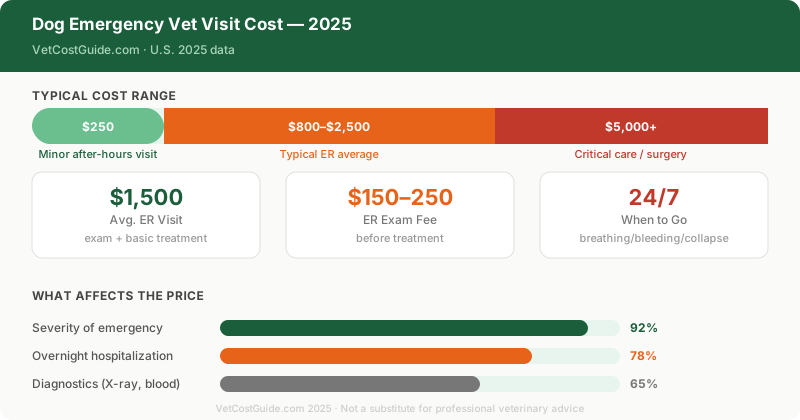
In 2025, emergency vet visits run from $300 for minor issues to $10,000 or more for surgical emergencies, with most moderate cases landing between $800 and $2,500.
- The ER exam fee alone is $150–$300 and is charged regardless of treatment — it covers the emergency veterinarian’s triage and assessment.
- IV fluids with overnight monitoring costs $600–$1,500 per night, which is often the baseline for any dog admitted to the ICU.
- Common surgical emergencies — GI obstruction, bloat (GDV), and hit-by-car — typically run $2,000–$10,000 including surgery and hospitalization.
- Diagnostic workup (X-rays and bloodwork) adds $350–$750 to almost any ER visit involving more than a minor wound.
Emergency Vet Cost Breakdown (2025)
| Service | Low | Average | High |
|---|---|---|---|
| ER exam / triage fee | $150 | $220 | $300 |
| X-rays (2–3 views) | $200 | $300 | $400 |
| Bloodwork (CBC + chemistry panel) | $150 | $250 | $350 |
| IV catheter placement + fluids | $200 | $350 | $600 |
| Overnight ICU monitoring | $600 | $1,000 | $1,500 |
| GI obstruction (surgery + hospitalization) | $3,000 | $5,000 | $7,000 |
| Bloat / GDV (surgery + ICU) | $3,000 | $4,500 | $6,000 |
| Hit by car (trauma, varies widely) | $2,000 | $5,000 | $10,000+ |
| Toxin ingestion treatment | $500 | $1,500 | $3,000 |
What the ER Exam Fee Actually Pays For
That $150–$300 exam fee gets charged before anyone has done a single thing to treat your dog. That feels wrong when you’re panicking. Here’s why it exists.
The ER exam covers the emergency veterinarian’s triage assessment, full physical examination, the diagnostic and treatment plan they formulate based on what they find, and the time they spend talking you through options. It’s the cost of getting a trained emergency specialist’s eyes on your dog immediately — at midnight, on a Sunday, on a holiday. No waiting for an appointment. No delay if your dog is critically unstable.
From the exam, everything else is built in real time. A laceration with no systemic signs might add only X-rays to rule out fractures, wound cleaning, and sutures. A dog with abdominal distension and unproductive retching gets bloodwork, abdominal radiographs, an IV catheter, fluid resuscitation, and emergency surgery prep — all within 30 minutes of walking in the door.
Overnight ICU: Why It Costs What It Does
$600–$1,500 per night sounds like hotel markup. It’s not. Overnight hospitalization at an emergency clinic means:
- Continuous monitoring by overnight technicians who don’t leave
- IV fluid management adjusted in real time based on your dog’s response
- Vital sign assessment every one to four hours depending on stability
- Medication administration on schedule throughout the night
- Immediate escalation if anything changes
That’s true critical care nursing. It’s not a boarding kennel with an IV bag hanging nearby.
What Drives the Cost Up
The emergency itself is the biggest variable. Mild GI upset that resolves with anti-nausea medication and a fluid bolus: $400–$900. A linear foreign body — string or fabric that’s threaded through the intestines, bunching them up like an accordion — requires exploratory surgery, probable intestinal resection, and three to five days of hospitalization. That’s a $5,000–$8,000 event.
Diagnostics aren’t optional in an unstable patient. Bloodwork tells the team whether your dog’s kidneys are failing, whether there’s significant anemia or infection, how serious the situation actually is. Abdominal X-rays identify foreign objects, fluid, the classic “double bubble” sign of GDV. Without these tests, the ER team would be guessing at treatment — and guessing wrong in an emergency is dangerous.
Geography and facility type matter. An emergency hospital in Manhattan or San Francisco charges 30–50% more than a comparable facility in a mid-sized Midwestern city. Facilities with board-certified criticalists (DACVECC specialists) on staff — the highest level of emergency training available in veterinary medicine — charge more than those staffed entirely by emergency general practitioners.
The overnight discharge question. If your dog is stable enough to go home with take-home medications and return to your regular vet in the morning, you can cut the bill significantly. A dog that requires IV fluids, continuous cardiac monitoring, or post-surgical nursing cannot be safely discharged until they’re truly stable. That decision is medical, not financial.
Asking for a lower estimate by declining diagnostics isn’t a strategy — bloodwork and X-rays are the information the emergency team needs to treat your dog safely. Declining them can lead to missed diagnoses, ineffective treatment, and larger costs or worse outcomes later. Also don’t wait on emergencies to see if they “get better” — GDV, urinary blockages, and respiratory distress are time-sensitive emergencies where delay of even a few hours dramatically worsens prognosis and increases treatment cost. When in doubt, call the ER and describe the symptoms; the triage team will tell you whether to come in immediately. And don’t assume your regular vet can handle it after hours — most general-practice clinics aren’t staffed or equipped for overnight critical care.
Pet Insurance: The Emergency Math
This is where pet insurance makes its clearest argument. A comprehensive policy with 80% reimbursement and a $500 deductible turns a $5,000 GDV surgery into $1,000 out of pocket. It turns a $3,000 moderate emergency into $700.
According to the North American Pet Health Insurance Association (NAPHIA), emergency and surgical claims consistently represent the largest single category of pet insurance payouts. The math works because a single serious emergency — GDV, obstruction, severe trauma — typically exceeds most dogs’ lifetime insurance premiums. For medium and large breeds where monthly premiums of $40–$80 are typical, coverage is almost always financially worth it.
Nuances to know: some insurers require treatment to begin within 24–48 hours of an emergency for the claim to qualify, and some have per-incident sublimits on emergency care. Review your policy’s emergency language before you need it.
Practical Ways to Manage the Cost
Call before you drive. Describe your dog’s symptoms to the ER triage team while you’re still at home. They’ll tell you whether it’s a true emergency, something urgent but not critical, or something that can wait for your regular vet. Avoiding an unnecessary ER visit saves $150–$300 in exam fees alone.
Ask what follow-up can go to your regular vet. Once your dog is stable after initial ER treatment, follow-up diagnostics and recheck exams at your primary care vet the next day cost significantly less. The ER team will tell you which follow-up is time-critical.
Apply for CareCredit at check-in. Most emergency hospitals accept it, and the application can run while your dog is being triaged. 0% APR financing for 6–18 months removes the immediate financial pressure without affecting your dog’s care.
Know your breed’s specific risks before a crisis. Great Danes, German Shepherds, Standard Poodles, Weimaraners, and other deep-chested breeds have dramatically elevated GDV risk. Brachycephalic breeds face airway emergencies. Dachshunds and other chondrodystrophic breeds face spinal emergencies. If you own a high-risk breed, read about that specific emergency now — not at 2am in a parking lot.
Frequently Asked Questions
What is actually included in the emergency exam fee? The ER exam fee ($150–$300) pays for the triage nurse’s initial assessment, the emergency veterinarian’s physical examination, the formulation of a diagnostic and treatment plan, and communication with the owner about findings and options. No medications, diagnostics, or treatments are included — those are billed separately on the itemized invoice.
Can I negotiate the bill at an emergency vet? Emergency clinics don’t typically offer discounts, but payment options are available. Most accept CareCredit, Scratchpay, or similar financing. Some practices have client advocates who can help identify charitable resources in genuine hardship situations. Asking calmly about payment options is always appropriate — just do it at intake, not after treatment.
What if I can’t afford the treatment estimate? Tell the team honestly and immediately. Emergency vets are ethically obligated to stabilize a suffering animal regardless of payment, and most practices will work with you on a plan for critical stabilization. Saying nothing and hoping for a lower bill at discharge isn’t a strategy.
How do I know if it’s truly an emergency? Classic emergency signs: difficulty breathing or choking, uncontrolled bleeding, suspected poisoning, inability to urinate (especially male dogs), abdominal bloating with retching, seizures lasting more than two minutes, collapse or inability to stand, suspected major trauma, pale or bluish gums. When in doubt — call the ER. They’d rather you call and be reassured than delay on something life-threatening.
Frequently Asked Questions
An emergency veterinary exam typically costs $150–$300, depending on the clinic's location and time of visit. Weekend and after-hours visits often carry a surcharge of 25–100% above standard clinic rates, so a midnight Saturday exam may cost closer to $250–$400 just for the initial assessment.
Most pet insurance plans do cover emergency vet visits, but you'll typically pay out-of-pocket at the clinic (ranging from $250–$5,000+ depending on treatment) and then file a claim for reimbursement. Reimbursement usually covers 70–90% of eligible charges after your deductible ($250–$1,000) is met, so budget for significant out-of-pocket costs upfront.
Call ahead if possible to alert the clinic and get an estimated wait time; many emergency clinics can give you a rough cost estimate over the phone based on your dog's symptoms. Have your pet's medical history and current medications ready, and bring your insurance card or payment method since emergency clinics typically require payment before or immediately after treatment.