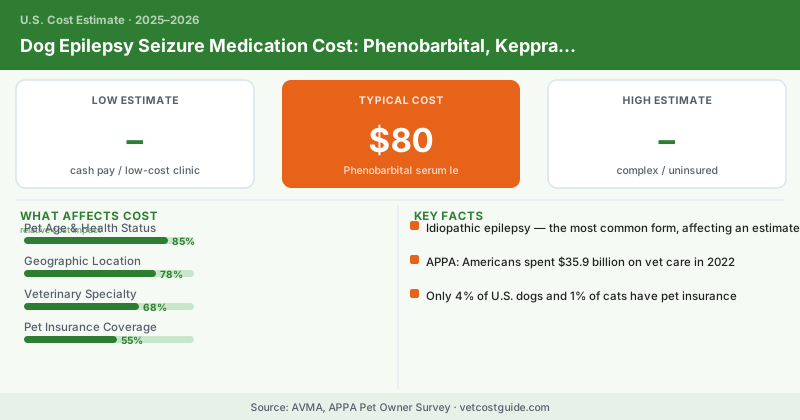
Thirty dollars a month. That’s what phenobarbital — the most prescribed seizure medication in dogs — costs for a medium-sized dog. It’s one of the few genuinely affordable aspects of managing canine epilepsy, and it’s also why vets often say the disease is livable. The hard part isn’t the medication price. It’s the monitoring, the occasional emergency, and the long-term commitment.
Here’s what you’re actually paying for when your dog is diagnosed with epilepsy.
Why Medication Matters So Much
Idiopathic epilepsy — the most common form, affecting an estimated 0.6–0.75% of all dogs according to the AVMA — doesn’t go away. It’s managed, not cured. The goal of anticonvulsant therapy is to reduce seizure frequency and severity to a level where your dog has a good quality of life, not to eliminate seizures entirely. Most neurologists aim for a 50% or greater reduction in seizure frequency as a treatment success.
Starting medication is typically recommended when a dog has had two or more seizures within six months, a single prolonged seizure (over 5 minutes), or cluster seizures.
Medication Costs Side by Side
| Medication | Monthly Cost (Medium Dog) | Monitoring Needed | Notes |
|---|---|---|---|
| Phenobarbital | $30–$80 | Liver panel every 6 months | First-line drug; generic available |
| Potassium bromide (KBr) | $20–$50 | Annual serum level check | Often added to phenobarbital; slow onset (6–8 weeks) |
| Levetiracetam (Keppra) | $50–$150 | Minimal monitoring needed | Short-acting; often dosed 3x daily |
| Zonisamide | $60–$150 | Occasional bloodwork | Good option if liver disease is a concern |
| Imepitoin (Pexion) | $80–$180 | Minimal monitoring | Licensed for dogs in Europe; used off-label in US |
| Extended-release Keppra | $80–$200 | Minimal monitoring | Twice-daily dosing; easier for owners |
Weight matters significantly here. A 10-pound dog might pay $20/month for phenobarbital. A 90-pound Labrador could pay $80–$100 for the same drug at the appropriate dose. Always calculate costs based on your dog’s actual weight.
The Monitoring Costs Nobody Mentions Upfront
Seizure medications aren’t set-and-forget. Phenobarbital is metabolized by the liver, and long-term use can cause hepatotoxicity in some dogs. The 2015 ACVIM Consensus Statement on Seizure Management in Dogs recommends liver panels every six months for phenobarbital-treated dogs — that’s a real recurring cost.
| Monitoring Test | Typical Cost | Frequency |
|---|---|---|
| Phenobarbital serum level | $80–$150 | Every 6 months |
| Liver function panel | $150–$250 | Every 6 months (phenobarbital patients) |
| CBC + chemistry panel | $100–$200 | Annual baseline |
| Potassium bromide serum level | $80–$150 | After initial dose adjustment, then annually |
| Full phenobarbital monitoring panel | $180–$350 | Every 6 months (includes serum level + liver values) |
For a dog on phenobarbital, add $360–$700/year just for monitoring bloodwork. That’s non-negotiable if you want to catch liver problems before they become serious.
Here’s what a stable epileptic dog on phenobarbital typically costs per year:
- Medication: $360–$960 (depending on weight and dose)
- Monitoring bloodwork (2 panels): $360–$700
- Routine vet visits: $150–$300
- Emergency episodes (if any): $500–$2,000 per event
Total for a well-controlled dog with no emergencies: $870–$1,960/year. Budget more if your dog has breakthrough seizures or requires combination therapy.
Combination Therapy Costs
Not all dogs respond adequately to a single medication. When phenobarbital alone doesn’t control seizures, vets add a second drug — usually potassium bromide. Combination therapy can effectively manage seizures in many treatment-resistant cases, but it does add to monthly costs.
Combination phenobarbital + KBr: $50–$130/month for a medium-sized dog. Combination phenobarbital + Keppra: $80–$230/month. Three-drug protocols exist but are less common and significantly more expensive.
Emergency Medication: Rectal Diazepam and Intranasal Midazolam
Most neurologists prescribe a “rescue” medication for cluster seizures at home — either rectal diazepam (Valium) or intranasal midazolam. These are used to break a cluster before it becomes status epilepticus.
- Rectal diazepam: $30–$80 for a supply (syringe pre-filled by compounding pharmacy)
- Intranasal midazolam: $25–$60 (compounded)
Having these on hand can prevent an emergency vet visit. An ER visit for cluster seizures runs $500–$2,000.
A seizure lasting more than 5 minutes is a medical emergency — status epilepticus can cause permanent brain damage. If your dog’s seizure doesn’t stop on its own within 3–5 minutes, use your rescue medication and get to an emergency vet immediately. Don’t wait to see if it stops.
Where to Fill Prescriptions
Here’s a cost-saving tip many owners don’t know: phenobarbital is a Schedule IV controlled substance, and many human pharmacies (CVS, Costco, GoodRx-participating pharmacies) carry it at lower prices than veterinary clinics. A 90-day supply for a medium dog can cost under $25 at Costco with a GoodRx coupon. Ask your vet for a written prescription you can fill elsewhere.
Levetiracetam (Keppra) is also available at human pharmacies and significantly cheaper than the brand-name version your vet might stock in-house.
Pet Insurance and Epilepsy Medication
Pet insurance covers epilepsy medication costs — but only if the condition wasn’t present before your enrollment date. If your dog had any documented seizures or neurological symptoms before you enrolled, it’ll be excluded as pre-existing.
For a dog diagnosed after enrollment, insurance can cover 70–90% of medication costs, monitoring bloodwork, and emergency visits after your deductible. That’s potentially $700–$1,500 per year back in your pocket. Enroll before symptoms appear.
Frequently Asked Questions
How long does a dog need seizure medication? In most cases, lifelong. Idiopathic epilepsy doesn’t resolve. Some dogs experience long seizure-free periods, and occasional dose reductions are attempted, but most dogs require medication for the rest of their lives.
Is Keppra better than phenobarbital for dogs? Not necessarily — they have different profiles. Phenobarbital is more effective at lower cost but requires liver monitoring. Keppra has fewer side effects and minimal monitoring but costs more and must be dosed more frequently. Many dogs end up on both. Your vet’s choice depends on your dog’s health profile, age, and seizure pattern.
Can I use human seizure medications for my dog? Yes, for some drugs — phenobarbital and levetiracetam are both used in humans, and your vet can write a prescription for human-pharmacy dispensing. Never give your dog any medication without veterinary guidance. Doses differ significantly from human doses, and some human anticonvulsants are toxic to dogs.
Frequently Asked Questions
Phenobarbital typically costs $30–$80 per month for a medium-sized dog, making it the most affordable seizure medication option. For larger dogs requiring higher doses, costs may reach $80–$120 monthly. Generic versions are widely available and help keep this medication one of the most cost-effective long-term epilepsy treatments.
Most pet insurance plans cover seizure medications like phenobarbital and Keppra after meeting your deductible, though some policies exclude pre-existing conditions or charge higher copays for chronic conditions. Routine blood work required for medication monitoring every 6 months typically costs $150–$300 and may have reduced coverage or require separate deductibles. Review your specific policy, as coverage varies significantly between insurers.
Blood panels monitor liver and kidney function since medications like phenobarbital can affect these organs over time, and dosages may need adjustment based on drug levels in the bloodstream. These tests typically cost $150–$300 per panel and are essential to prevent toxic buildup or medication failure. Skipping monitoring increases the risk of serious side effects or uncontrolled seizures.