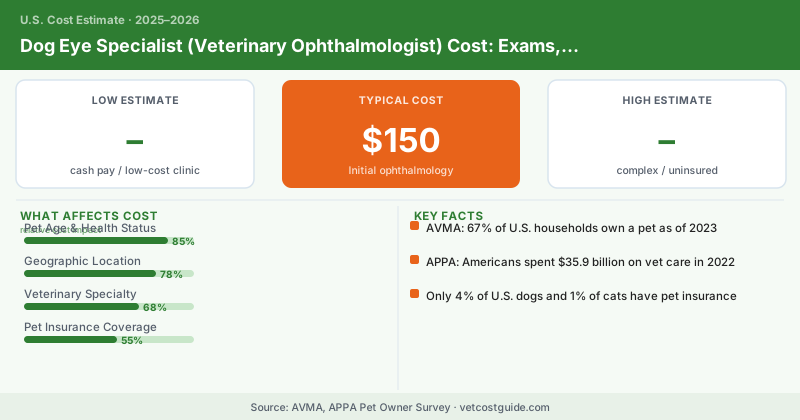
Your regular vet referred your dog to a veterinary ophthalmologist. Now you’re staring at a phone number for a specialty clinic and wondering what this is going to cost. Fair question — and the answer varies enormously depending on whether your dog needs a diagnostic exam, medication management, or actual eye surgery.
Here’s what to expect at each level.
The Specialist Exam: What You Pay Before Any Treatment
A veterinary ophthalmologist consultation typically costs more than a general practice exam. These are board-certified specialists who completed an additional 3–4 year residency after veterinary school, and the overhead for ophthalmic equipment (slit lamps, electroretinography units, tonometers) is significant.
| Service | Typical Cost | Notes |
|---|---|---|
| Initial ophthalmology consultation | $150–$350 | Includes slit-lamp exam and basic diagnostics |
| Follow-up exam | $80–$200 | Shorter; monitors known conditions |
| Tonometry (eye pressure test) | $30–$60 | Screens for glaucoma; often included in consult |
| Fluorescein staining | $20–$40 | Checks for corneal ulcers; often included |
| Electroretinography (ERG) | $300–$600 | Tests retinal function; progressive retinal atrophy diagnosis |
| Gonioscopy | $80–$150 | Evaluates drainage angle; glaucoma risk assessment |
Most initial consultations run $200–$300 all-in. Budget for a follow-up visit 4–6 weeks later for most conditions.
Common Conditions and Their Treatment Costs
Veterinary ophthalmologists treat everything from corneal ulcers to cataracts to glaucoma. Costs vary dramatically by condition.
| Condition | Treatment | Cost Range |
|---|---|---|
| Corneal ulcer (simple) | Topical antibiotics + atropine | $150–$400 total |
| Corneal ulcer (complicated/stromal) | Serum eye drops or surgery | $500–$2,000 |
| Entropion (eyelid rolls inward) | Surgical correction | $800–$2,000 |
| Ectropion (eyelid sags outward) | Surgical correction | $800–$1,800 |
| Distichiasis (extra eyelashes) | Electrolysis or cryotherapy | $600–$1,500 |
| Dry eye (KCS) | Cyclosporine or tacrolimus drops lifelong | $50–$120/month |
| Glaucoma (medical management) | Dorzolamide + timolol drops | $80–$200/month |
| Glaucoma (surgical) | Gonioimplant or laser | $2,000–$4,000 |
| Progressive retinal atrophy | No cure; antioxidants optional | $200–$400 (diagnostics only) |
| Cataract surgery | Phacoemulsification | $2,500–$5,000 per eye |
Dog Eye Surgery Costs in Detail
Surgery is where the bills get serious. Veterinary eye surgery requires specialized equipment and board-certified surgeons — costs reflect that.
Cataract surgery: The most common eye surgery in dogs. Phacoemulsification — the same technique used in humans — uses ultrasound to break up the lens. Success rates are high when performed early (before secondary complications like lens-induced uveitis develop). Cost per eye: $2,500–$4,000. Both eyes typically done in one procedure, but billed per eye.
Glaucoma implants: When pressure can’t be controlled medically, surgical implants (Ahmed valves or similar devices) improve drainage. $2,000–$4,000 per eye. In end-stage blind eyes, enucleation (eye removal) is $800–$1,500 and eliminates the chronic pain of uncontrolled glaucoma.
Corneal surgery: Grid keratotomy for persistent corneal erosions ($300–$600), superficial keratectomy for corneal sequestra in cats ($800–$1,500), or corneal grafting for deep ulcers ($1,500–$3,000).
The American College of Veterinary Ophthalmologists (ACVO) estimates that approximately 36% of dog breeds have one or more inherited eye disorders — making specialist consultation a realistic consideration for many purebred owners, particularly those with breeds predisposed to cataracts, progressive retinal atrophy, or glaucoma.
Cataract-prone: Cocker Spaniels, Boston Terriers, Miniature Schnauzers, Siberian Huskies, Standard Poodles
Glaucoma-prone: Basset Hounds, Chow Chows, Cocker Spaniels, Shar Peis, Beagles
Dry eye (KCS)-prone: Bulldogs, Shih Tzus, Pugs, Cavalier King Charles Spaniels, Boston Terriers
Progressive retinal atrophy: Labrador Retrievers, Golden Retrievers, Irish Setters, Miniature Schnauzers
If your dog is a predisposed breed, ask your regular vet about annual eye screening — catching problems early typically reduces treatment costs significantly.
Ongoing Medical Management Costs
Not all eye conditions require surgery. Many are managed long-term with medications.
Dry eye (keratoconjunctivitis sicca): Cyclosporine ophthalmic drops (Optimmune) or tacrolimus drops (compounded) improve tear production. These must continue for life — stopping causes the condition to return. Cyclosporine: $50–$90/month. Tacrolimus compounded: $40–$80/month.
Glaucoma drops: Combination dorzolamide-timolol is the most common medical management. $40–$100/month depending on whether you use brand-name or compounded versions. Intraocular pressure monitoring every 2–3 months: $80–$150 per visit.
Post-surgical eye drops: After cataract surgery, dogs typically receive anti-inflammatory drops, antibiotics, and systemic anti-inflammatories for 6–8 weeks. Budget $150–$300 for post-op medications.
Eye emergencies can’t wait for a Monday morning appointment. Sudden cloudiness, extreme squinting, red or bloody eyes, or a dog in obvious pain should be evaluated the same day. Acute glaucoma — sudden spike in eye pressure — causes rapid, irreversible damage within hours. Emergency ophthalmologist visits or ER triage for eye emergencies typically run $300–$600 before any treatment.
Finding a Veterinary Ophthalmologist
The ACVO maintains a searchable member directory at acvo.org. There are approximately 500 board-certified veterinary ophthalmologists practicing in the US. In urban areas, wait times run 1–2 weeks for non-emergency appointments. In rural areas, you may need to travel to a regional specialty center.
ACVO members include both those in private specialty practice and those at university teaching hospitals — and university hospitals often charge 10–20% less than private specialty centers for the same procedures, a worthwhile comparison if cost is a concern.
Pet Insurance for Eye Conditions
Eye conditions are covered by most pet insurance plans under illness/accident benefits — with the usual pre-existing condition exclusion. If your dog had documented eye problems before enrollment, those specific conditions will be excluded.
For predisposed breeds, enrolling before any eye symptoms appear is particularly valuable. Cataract surgery at $5,000 for both eyes is the kind of expense that makes insurance math work decisively in your favor.
Frequently Asked Questions
Does my dog need a referral to see a veterinary ophthalmologist? Most ophthalmology practices accept self-referrals, but your regular vet’s referral includes medical records and context that helps the specialist. If you’re concerned about your dog’s eyes, call the specialty clinic directly — they can advise whether a self-referral is appropriate for your dog’s symptoms.
Is eye surgery worth it for older dogs? Age alone isn’t the determining factor. A healthy 12-year-old dog with good cardiac and kidney function and manageable pain is often a reasonable surgical candidate. The ophthalmologist will evaluate anesthetic risk specifically. Blind dogs don’t necessarily need surgery — but dogs with painful glaucoma in blind eyes do, because the pain continues regardless of vision status.
How long does cataract surgery recovery take? Most dogs are back to normal activity within 4–6 weeks. The critical period is the first 2 weeks, when they need an e-collar, topical eye drops, and restricted activity. Vision improvement is often dramatic — many dogs show behavioral changes within days of surgery as their vision returns.
Frequently Asked Questions
A veterinary ophthalmologist consultation typically costs between $150 and $350 for the initial diagnostic exam. This exam may include specialized testing like tonometry, ultrasound, or retinal imaging, which can push the total toward the higher end of that range depending on what diagnostics your dog needs.
Most pet insurance plans cover veterinary ophthalmologist exams and eye surgery, but coverage varies by policy and pre-existing conditions are typically excluded. Many plans require you to pay out-of-pocket first and then reimburse you 70–90% of the cost, so you should review your specific policy before scheduling an appointment.
Dog eye surgery recovery typically takes 2–4 weeks, during which you'll need to prevent your dog from rubbing the eye and administer prescribed medications. Surgical costs range from $1,500 to $5,000 or more per eye depending on the condition (cataract removal, corneal surgery, glaucoma treatment, etc.), with additional expenses for post-operative medications and follow-up exams.