Here’s the number that should get your attention: the CDC reports that tick-borne diseases in the United States have more than doubled over the past two decades, with Lyme disease, Rocky Mountain spotted fever, and ehrlichiosis accounting for the bulk of cases in dogs. Prevention isn’t optional if your dog goes outside.
The range of options is genuinely wide — from a $20 Seresto collar to a $35/month prescription oral chew. Understanding what you’re actually getting at each price point matters.
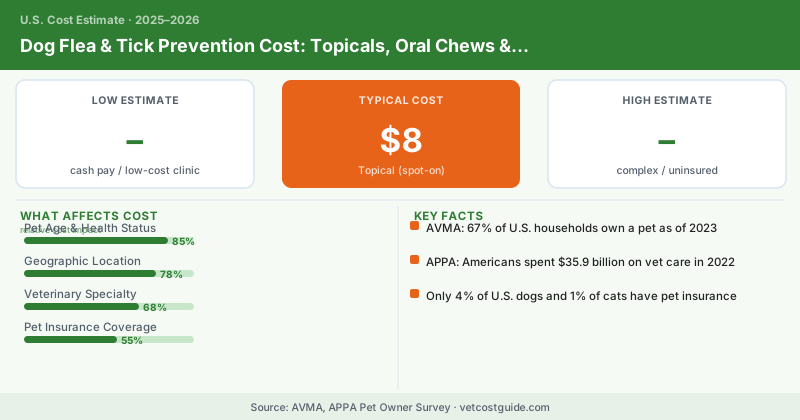
- Basic topical prevention (Frontline Plus): $8–$15/month
- Oral flea/tick chews (NexGard, Bravecto, Simparica): $15–$35/month
- Seresto collar: $50–$70 upfront, lasts 8 months (~$6–$9/month)
- Combination heartworm + flea + tick (Simparica Trio, NexGard Spectra): $20–$40/month
- Annual cost range: $35–$400+ depending on products and dog size
Flea and Tick Prevention Cost by Product Type
| Product Type | Example Brands | Monthly Cost | Coverage | Prescription? |
|---|---|---|---|---|
| Topical (spot-on) | Frontline Plus, Advantage II | $8–$15 | Fleas ± ticks | No |
| Oral chew (monthly) | NexGard, Credelio | $15–$25 | Fleas + ticks | Yes |
| Oral chew (every 3 months) | Bravecto | $30–$55 per dose | Fleas + ticks | Yes |
| Collar | Seresto | $6–$9/month equivalent | Fleas + ticks | No |
| Combination (HW + flea + tick) | Simparica Trio, NexGard Spectra | $20–$40 | Fleas + ticks + heartworm | Yes |
| Shampoos/sprays | Adams, Vet's Best | $5–$15 | Short-term kill only | No |
Topical (Spot-On) Products: The Budget Option
Products like Frontline Plus (fipronil + S-methoprene) and Advantage II (imidacloprid + pyriproxyfen) have been on the market for decades. They’re sold over the counter, no prescription needed, and run $8–$15/month for most dog sizes.
What you’re getting: proven, reliable flea control. Tick coverage varies — Frontline Plus kills ticks; Advantage II does not cover ticks at all. For dogs in low tick-pressure areas, Advantage II provides solid flea prevention at a low price point.
Downsides: some flea populations in certain US regions have developed resistance to fipronil. Topicals need to be applied consistently and the dog shouldn’t be bathed within 48 hours of application. Some dogs (and their human family members) dislike the greasy spot.
Oral Chews: The Current Standard of Care
NexGard (afoxolaner), Bravecto (fluralaner), Simparica (sarolaner), and Credelio (lotilaner) are isoxazoline-class drugs that work systemically — the drug is in your dog’s bloodstream, and parasites are killed when they bite. There’s no topical residue, no fading after bathing, and coverage is consistent throughout the month.
These require a prescription, which means an annual vet visit.
NexGard: Monthly chew. Covers fleas and ticks (American dog tick, deer tick, lone star tick, brown dog tick). $15–$25/month depending on dog size.
Bravecto: Given every 3 months. $35–$55 per dose (roughly $12–$18/month equivalent). Convenient for owners who struggle with monthly compliance. Covers the same tick species plus an additional 12-week coverage window for sarcoptic mange.
Simparica Trio: Covers fleas, ticks, and heartworm prevention in one monthly chew. $20–$40/month. If you’re already buying heartworm prevention, the premium over Simparica alone may be minimal.
All isoxazolines carry an FDA label advisory for neurological events (tremors, ataxia, seizures) in a small percentage of dogs — particularly those with pre-existing seizure history. Discuss this with your vet if your dog has any seizure history.
The Seresto Collar: Best Value for Low-Maintenance Owners
The Seresto collar (imidacloprid + flumethrin) is a legitimate sleeper option. One collar lasts 8 months and retails for $50–$70 — roughly $6–$9/month equivalent. It provides continuous flea and tick prevention through sustained-release polymers, no topical application required.
For many owners, the convenience of not remembering a monthly treatment is worth the upfront cost. Waterproof (withstands bathing and swimming). Safety release mechanism reduces strangulation risk.
Note: the collar releases prevention from the contact point outward — not systemic coverage. Some ticks may survive if not in prolonged contact with collar-treated fur.
Combination Products: When One Chew Does Everything
Simparica Trio (sarolaner + moxidectin + pyrantel) and NexGard Spectra (afoxolaner + milbemycin oxime) provide fleas, ticks, and heartworm prevention — plus roundworms and hookworms — in a single monthly chew.
If you’re already buying separate heartworm prevention ($8–$18/month) plus flea/tick coverage, a combination product may cost roughly the same or slightly more while simplifying your routine. $20–$40/month for most dog sizes.
The math: separate Heartgard Plus ($10/month) + NexGard ($18/month) = $28/month. Simparica Trio often runs $28–$35/month. The value proposition is real.
Over-the-counter flea “shampoos” and grocery store flea collars are not adequate prevention for tick-borne disease prevention. They provide temporary kill of existing fleas — not continuous prevention. A dog that wades through tick-infested grass needs prevention that maintains efficacy between treatments. Don’t rely on drugstore prevention if your dog is in a moderate-to-high tick-exposure area.
Year-Round vs. Seasonal Prevention
Some owners stop prevention in winter. The AVMA recommends year-round prevention for most dogs in most of the United States, and here’s why:
Ticks remain active in temperatures above 35–40°F. In most US climate zones, that’s most of the year. Deer ticks (the primary Lyme vector) are actually most active in fall and early spring — not summer. And flea pupae can survive indoors year-round, making indoor re-infestation possible at any time.
The cost of treating flea infestation — including home treatment (foggers, sprays: $50–$200), vet visits for flea allergy dermatitis ($100–$300), and restarting prevention — typically exceeds a year of year-round prevention.
Regional Tick Pressure and What It Means for Product Choice
If you live in a high Lyme disease area (Northeast, Great Lakes, Pacific Northwest), an isoxazoline oral chew or the Seresto collar is the appropriate standard of care — not just Frontline. The CDC’s Lyme disease surveillance maps show dramatically higher risk in these regions than in the South or Mountain West.
In the Gulf Coast states, where heartworm mosquito pressure is highest, the combination chews (Simparica Trio, NexGard Spectra) give you single-product coverage for the two biggest parasitic threats.
Frequently Asked Questions
Annual flea and tick prevention costs between $35 and $250 depending on the product type. Oral chews like NexGard typically run $15–$25 per month ($180–$300/year), while topical treatments and collars range from $20 for a Seresto collar to $35 per month for prescription options.
Most standard pet insurance plans do not cover preventative medications like flea and tick treatments, as these are considered routine/wellness care rather than illness treatment. Some insurers offer optional wellness add-ons that may partially reimburse prevention costs, but you'll need to check your specific plan details.
Most oral chews and topical treatments are given monthly, requiring 12 doses per year for year-round protection. Seresto collars last up to 8 months, so you may need 1–2 collars annually depending on your dog's outdoor exposure and local tick season duration.