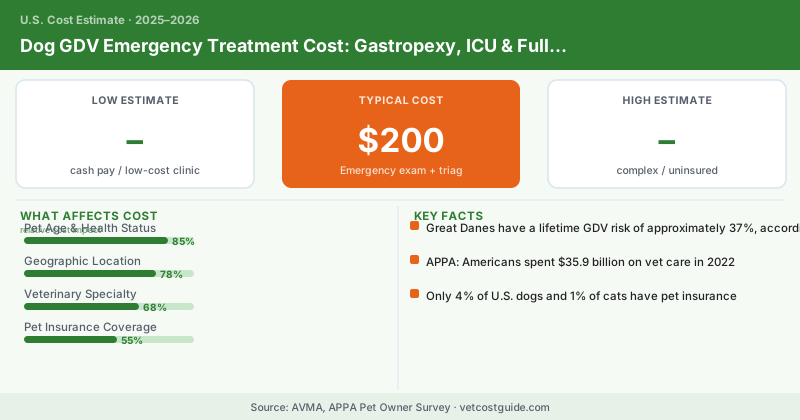
Great Danes have a lifetime GDV risk of approximately 37%, according to a study published in the Journal of the American Veterinary Medical Association. For Standard Poodles, it’s around 14%. Weimaraners, Irish Setters, German Shepherds — all in double digits. If you own a large deep-chested breed, GDV isn’t a remote possibility. It’s a statistical near-certainty over a long enough lifetime. And the emergency treatment bill starts at $3,000 — on a good night.
What Happens During GDV
Gastric dilatation-volvulus is a two-part emergency. First the stomach distends with gas (dilatation). Then it rotates on its own axis (volvulus), cutting off blood supply to the stomach and spleen. Within 4–6 hours of rotation, parts of the stomach wall begin to die. Shock follows. Without surgery, GDV is almost universally fatal.
Time from symptom onset to surgery is the most critical factor in outcomes — and in total bill. A dog that makes it to surgery within 2 hours has far better prognosis and a lower complication rate than one that arrives at 6 hours with necrotic stomach tissue.
Emergency GDV Treatment Cost Breakdown
| Service | Typical Cost | Notes |
|---|---|---|
| Emergency exam + triage | $200–$500 | Includes initial assessment |
| IV fluids + shock stabilization | $300–$800 | Pre-surgical stabilization |
| Bloodwork + imaging | $300–$600 | CBC, chemistry, radiographs |
| Gastric decompression (pre-surgical) | $100–$300 | Trocharization or stomach tube |
| Abdominal surgery (GDV correction) | $1,500–$4,000 | Derotation, assessment for necrosis |
| Splenectomy (if spleen involved) | $500–$1,500 | Required in ~30–40% of GDV cases |
| Partial gastrectomy (if stomach necrotic) | $500–$2,000 | Adds significantly to complexity |
| Gastropexy (performed during GDV surgery) | $300–$600 | Prevents recurrence — always done |
| ICU hospitalization (2–4 nights) | $600–$2,500 | Intensive monitoring post-op |
| Post-op medications | $150–$400 | Pain control, antibiotics, GI support |
Total emergency GDV treatment: $3,000–$10,000+
Cases with gastric or splenic necrosis, prolonged surgery time, or post-operative complications (arrhythmias, DIC) can run significantly higher.
The Preventive Gastropexy Alternative
Here’s what a lot of large-breed dog owners don’t know: you can prevent the volvulus (the deadly rotation) from ever happening by having a prophylactic gastropexy performed. This surgical procedure tacks the stomach to the abdominal wall so it physically can’t rotate.
Prophylactic gastropexy cost:
- Standalone laparoscopic procedure: $300–$800
- Combined with spay or neuter: $200–$500 added to the base procedure cost
A dog that’s had a gastropexy can still develop gastric dilatation (bloat), but without the volvulus, it’s a much less acute emergency — often manageable without surgery.
For breeds with GDV risk above 15%, most veterinary internists and surgeons strongly recommend discussing prophylactic gastropexy. The math is straightforward: $400–$600 preventive procedure vs. $3,000–$10,000 emergency treatment.
Strong evidence for prophylactic gastropexy in: Great Danes, Standard Poodles, German Shepherds, Weimaraners, Doberman Pinschers, Irish Setters, Gordon Setters, Rottweilers, Basset Hounds. Discuss timing with your vet — it’s often done at the same time as spay/neuter surgery at 6–18 months of age, which reduces cost and anesthetic events.
Post-Discharge Costs
After your dog comes home from GDV surgery, expect:
- Follow-up exam at 10–14 days: $60–$120
- Suture removal: often included in the surgical fee
- Recheck bloodwork: $120–$250 if liver enzymes were elevated post-op
- Prescription GI diet (transition period): $30–$80/month
Most dogs recover fully from GDV surgery within 3–4 weeks if there was no necrotic tissue involved.
GDV Warning Signs — Know These Cold
If your large-breed dog shows any of these signs, go to an emergency vet immediately:
- Unproductive retching or attempting to vomit without producing anything
- Distended, hard, or drum-like abdomen
- Restlessness, inability to get comfortable
- Excessive drooling or salivation
- Pale, white, or grayish gums
- Weakness or collapse
Do not drive to your regular vet’s office if they’re closed. GDV requires emergency care. Every hour matters.
GDV is one of the few veterinary emergencies where “watch and wait” is not an option. A dog that’s bloating will die without intervention. If you even suspect GDV — especially in a large deep-chested breed — go directly to a 24-hour emergency veterinary hospital. Call ahead so they can prep.
Insurance and Financing
GDV is covered by all major pet insurance policies under accident coverage — it’s an acute, non-pre-existing emergency. If you own a high-risk breed and don’t have insurance, get it now before the first episode. Trupanion, Healthy Paws, and Embrace all cover GDV surgery and hospitalization at 80–90% after deductible.
For uninsured owners, most 24-hour emergency hospitals accept CareCredit. Have the app downloaded and your application ready before an emergency happens — you’ll appreciate not having to do it in a waiting room at 2 a.m.
Frequently Asked Questions
Emergency GDV surgery typically costs $3,000–$10,000, depending on severity, ICU stay length, and your geographic location. This price includes emergency stabilization, surgery, anesthesia, diagnostics (X-rays, bloodwork), and post-operative monitoring, but does not include extended hospitalization or complications.
Most pet insurance plans cover GDV emergency surgery after the deductible and co-pay are met, typically reimbursing 70–90% of eligible costs. However, many policies exclude or limit coverage if gastropexy (preventive surgery) was not performed beforehand, and some insurers classify GDV as a pre-existing condition if your dog showed prior symptoms.
Preventive gastropexy is strongly recommended for large deep-chested breeds like Great Danes (37% lifetime GDV risk) and costs only $300–$600 when performed electively. Since emergency GDV surgery costs 5–16 times more and carries higher mortality risk, preventive gastropexy typically pays for itself within a single emergency event.