42% of dogs diagnosed with primary glaucoma lose vision in the affected eye within the first year — even with treatment. That statistic from the American College of Veterinary Ophthalmologists doesn’t mean you shouldn’t treat it. It means you need to understand what you’re paying for and why, before the pressure spikes again at 2 a.m.
- Initial diagnosis + emergency stabilization: $300–$800
- Long-term medical management: $80–$200/month in eye drops indefinitely
- Laser (cyclophotocoagulation) therapy: $1,200–$2,500 per eye
- Enucleation (eye removal, end-stage): $500–$1,500
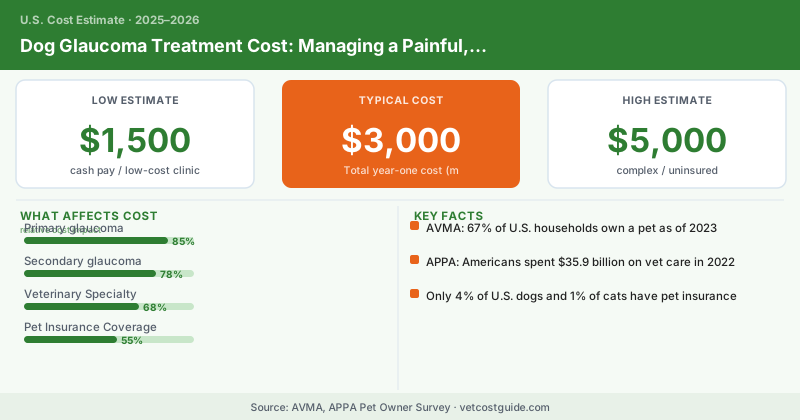
- Total first-year cost for medically managed glaucoma: $1,500–$5,000+
- Beagles, Cocker Spaniels, Basset Hounds, and Chow Chows face the highest hereditary risk.
Full Glaucoma Cost Breakdown
| Service | Low | Average | High |
|---|---|---|---|
| Emergency exam + tonometry | $150 | $300 | $500 |
| IV mannitol + initial stabilization | $100 | $200 | $400 |
| Specialist ophthalmology consult | $150 | $250 | $450 |
| Daily eye drop medications (per month) | $80 | $130 | $200 |
| Laser cyclophotocoagulation (per eye) | $1,200 | $1,750 | $2,500 |
| Glaucoma drainage implant surgery | $2,000 | $3,000 | $5,500 |
| Enucleation (end-stage, per eye) | $500 | $900 | $1,500 |
| Annual recheck exams (4–6 visits) | $400 | $700 | $1,200 |
| Total year-one cost (medical mgmt.) | $1,500 | $3,000 | $5,000 |
What Glaucoma Is — and Why It Costs So Much
Glaucoma means the fluid inside the eye (aqueous humor) isn’t draining correctly. Pressure builds, compresses the optic nerve, and destroys vision. It’s not slow or subtle — an acute glaucoma spike can permanently damage the retina within 24–48 hours.
There are two types:
Primary glaucoma is hereditary. The drainage angle is structurally abnormal from birth, and the other eye will almost certainly develop it too — usually within 1–2 years. This is the most expensive long-term scenario because you’re treating two eyes over a dog’s lifetime.
Secondary glaucoma follows another eye problem: uveitis, lens luxation, tumor, or trauma. Treat the cause and you may control the pressure; sometimes you can’t, and enucleation becomes the humane endpoint.
The Ongoing Drug Cost Most People Underestimate
Here’s what catches owners off guard: glaucoma eye drops aren’t a one-time prescription. Most dogs need:
- A carbonic anhydrase inhibitor (dorzolamide or brinzolamide): $40–$80/month
- A prostaglandin analog (latanoprost or travoprost): $30–$70/month
- Possibly a beta-blocker (timolol): $20–$40/month
That’s $80–$200 per month, every month, for the rest of your dog’s life. For a dog diagnosed at age 5 with a 7-year life expectancy ahead, you’re looking at $6,720–$16,800 in medications alone. That context matters when you’re weighing laser surgery upfront.
Laser Surgery: The Middle Ground
Cyclophotocoagulation (CPC) laser treatment targets the ciliary body — the tissue that produces eye fluid — and partially destroys it to reduce pressure. It doesn’t cure glaucoma, but it can reduce or eliminate the medication burden for 1–3 years. A single session costs $1,200–$2,500; most dogs need a repeat procedure eventually.
For owners facing years of expensive drops, laser is often economically competitive over a 3–5 year horizon while also improving comfort. It’s performed by board-certified veterinary ophthalmologists, so you’ll need a referral.
When Enucleation Is the Right Answer
A blind, painful eye serves no quality-of-life purpose. If glaucoma has destroyed vision and pressure cannot be controlled medically or surgically, enucleation — removing the eye — is both humane and definitive. Dogs adapt remarkably well with one eye. The surgery costs $500–$1,500 and eliminates all future glaucoma management costs for that eye.
Some owners avoid enucleation emotionally. Vets who specialize in ophthalmology often say it’s the most underutilized procedure in terms of improving comfort.
Does Pet Insurance Cover Glaucoma?
Primary (hereditary) glaucoma is covered by most comprehensive plans — Trupanion, Nationwide, Fetch, Embrace — if enrolled before symptoms appear. ACVO notes that certain breeds are so high-risk that some insurers flag glaucoma as a breed-specific exclusion. Review your policy’s hereditary and ophthalmologic exclusions before enrolling a Cocker Spaniel or Beagle.
Secondary glaucoma arising from an injury or unrelated illness is typically covered as a standard medical condition under any comprehensive plan.
Glaucoma is a veterinary emergency. A red, painful eye with a fixed (unresponsive) pupil and cloudiness is a same-day emergency call — not a “schedule something this week” situation. Every hour of elevated pressure shortens the window to save vision. If your regular vet is closed, go to an emergency clinic.
Ways to Lower Your Costs
Veterinary school hospitals. Cornell, UC Davis, University of Wisconsin, and other teaching hospitals offer ophthalmology services at significant discounts — often 30–50% below private specialists. Appointment lead times are longer but worth it for stable, non-emergency management.
Human generics. Dorzolamide, timolol, and latanoprost are all available as human generics at Costco, Sam’s Club pharmacy, or GoodRx for $10–$25 per bottle — far cheaper than pet-specific formulations. Ask your vet if the concentration and dosing transfers appropriately.
Compounded medications. Some veterinary pharmacists compound multiple drugs into a single drop. One bottle instead of three simplifies the schedule and can cut monthly costs by 20–30%.
The Real Long-Term Picture
Dog glaucoma is a chronic, progressive condition. The $300 emergency visit is the smallest line item in this story. For most owners the realistic 5-year cost of managing primary bilateral glaucoma falls between $8,000 and $20,000, depending on how aggressively it’s managed and whether surgery is added. Getting pet insurance before your at-risk breed shows symptoms — and talking with a veterinary ophthalmologist early — are the two decisions that have the biggest impact on both outcome and cost.
Frequently Asked Questions
Initial diagnosis and emergency stabilization typically costs $300–$800, while long-term medical management runs $80–$200 per month for eye medications and monitoring. Laser therapy or surgical options can range from $1,500–$6,000+ depending on the procedure and your veterinarian's location and expertise.
Most pet insurance plans cover glaucoma treatment if it's not a pre-existing condition, though you'll typically pay out-of-pocket and submit for reimbursement (usually 70–90% after deductible). Some policies exclude or limit coverage for chronic eye conditions, so review your plan details before treatment begins.
Delaying treatment significantly increases the risk of permanent vision loss; the American College of Veterinary Ophthalmologists reports that 42% of dogs with primary glaucoma lose vision in the affected eye within the first year even with treatment. Early intervention with medications or laser therapy can slow disease progression and preserve sight longer than waiting for symptoms to worsen.