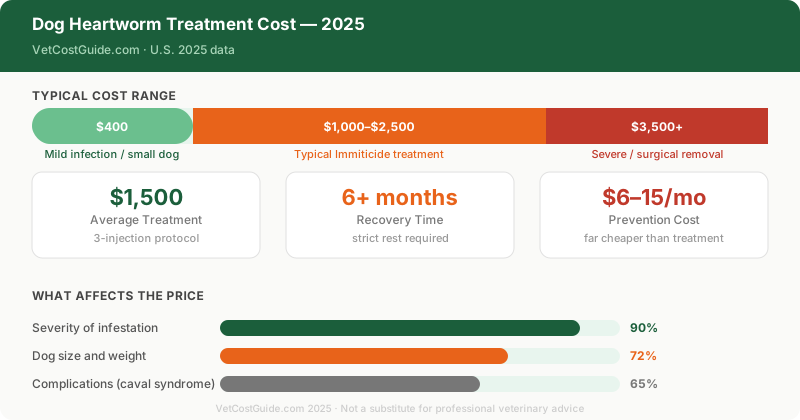
Prevention: $6–$18/month. Treatment: $400–$1,500.
That $12 monthly Heartgard starts to look very different once you’ve seen what the treatment protocol actually involves — three melarsomine injections into the lumbar muscles over two months, strict cage rest for 6–8 weeks, and the very real risk of a fatal pulmonary embolism if your dog exercises too hard while the dead worms are being absorbed.
The American Heartworm Society (AHS) estimates that more than 1 million dogs are currently infected with heartworms in the United States. Incidence is highest in the Gulf Coast states and Mississippi River valley, but the AHS has documented positive cases in all 50 states. Mosquitoes carry heartworm larvae, and mosquitoes are everywhere.
The prevention math is genuinely obvious. But for dogs that are already infected, here’s exactly what treatment involves and what it costs.
- Pre-treatment testing and workup: $150–$300
- Full AHS 3-injection Immiticide protocol: $400–$1,500 total for Class 1–2 disease
- Class 3–4 disease with hospitalization: $1,500–$3,500+
- Caval syndrome surgical extraction: $3,000–$5,000+
- Annual prevention: $75–$215/year depending on product and dog size
Heartworm Treatment Cost by Disease Class
| Disease Class | Description | Estimated Treatment Cost |
|---|---|---|
| Class 1 (mild) | Few worms; no symptoms | $400–$800 |
| Class 2 (moderate) | Some cardiopulmonary signs; exercise intolerance | $600–$1,200 |
| Class 3 (severe) | Significant cardiopulmonary disease | $1,200–$3,500 |
| Class 4 (caval syndrome) | Massive worm burden; surgical extraction required | $3,000–$5,000+ |
The AHS 3-Injection Protocol in Detail
The American Heartworm Society recommends what’s called the “slow kill” or staged protocol rather than giving all treatment at once. Here’s the full sequence:
Pre-treatment phase (1–2 months before injections):
- Confirmatory antigen testing and microfilariae testing ($50–$100)
- Chest radiographs to assess cardiopulmonary damage ($150–$300)
- Bloodwork to confirm organ function ($80–$200)
- Doxycycline for 4 weeks ($30–$60): targets Wolbachia bacteria that live inside heartworms and modulates the inflammatory response when worms die
- Ivermectin monthly: starts killing circulating microfilariae
Injection phase:
- First melarsomine injection (Day 0): deep intramuscular injection into lumbar muscles — $100–$200
- Strict rest for 30 days
- Second melarsomine injection (Day 30): $100–$200
- Third melarsomine injection (Day 31, 24 hours after second): $100–$200
- Prednisone prescribed to reduce pulmonary inflammation during worm die-off: $20–$40
Post-treatment:
- Continued strict rest for 6–8 weeks total
- Post-treatment antigen testing at 6 months to confirm clearance ($50–$100)
Total medication and injection costs for an uncomplicated Class 1–2 case: $400–$900. Add pre-treatment workup and a vet exam at each stage, and total cost typically runs $700–$1,500 for a healthy dog caught early.
What Melarsomine Actually Does — and Why Rest Is Non-Negotiable
Melarsomine dihydrochloride (Immiticide) kills adult heartworms by disrupting their metabolic function. Dead worms break apart in the pulmonary vasculature. The body then needs to absorb those fragments over several weeks.
Physical exertion elevates heart rate and blood pressure, which can propel worm fragments into the pulmonary arteries and cause pulmonary thromboembolism — a potentially fatal complication. This is not a theoretical risk. Dogs who exercise during the recovery period die.
“Strict rest” means leash walks to the yard for bathroom breaks only. No fetching. No stairs if avoidable. No playing with other dogs. Many active dogs need sedatives or anti-anxiety medications ($20–$60/month) to stay calm during this period. It’s genuinely one of the most challenging parts of treatment for owners.
Class 3–4 Disease: When Costs Escalate Significantly
Class 3 dogs have significant cardiovascular compromise — labored breathing, exercise intolerance, weight loss, possibly heart failure signs. Before injections can safely proceed, stabilization may require:
- Diuretics for fluid management ($20–$40/month)
- Cardiac medications ($30–$80/month)
- Oxygen supplementation during hospitalization ($50–$150/hour)
Treatment costs for Class 3 dogs typically run $1,200–$3,500 depending on the extent of stabilization needed.
Class 4 disease (caval syndrome) is a medical emergency. The worm burden is so massive it physically obstructs blood flow through the right ventricle and vena cava. Treatment requires surgical extraction of worms via jugular vein — a specialist procedure at a referral center. Cost: $3,000–$5,000+. Even with surgery, prognosis is guarded.
“Slow kill” using only monthly ivermectin prevention products without melarsomine injections is no longer recommended by the American Heartworm Society. Ivermectin kills microfilariae but not adult worms. Using prevention products alone in an infected dog leaves adults alive and causes ongoing lung damage for years. It also selects for drug-resistant microfilariae. The 3-injection protocol is the standard of care.
Prevention: The Only Rational Financial Choice
AHS data shows heartworm prevalence has been increasing nationally, with regional hotspots across the Southeast, Gulf Coast, and Mississippi Valley. But cases exist in all 50 states.
Monthly prevention options:
- Heartgard Plus (ivermectin + pyrantel): $6–$15/month depending on dog size — most commonly prescribed, decades of safety data
- Interceptor Plus (milbemycin + praziquantel): $8–$18/month — also covers tapeworms
- Simparica Trio or Nexgard Spectra (also cover fleas/ticks): $15–$30/month
- ProHeart 6 or 12 (injectable, given at clinic): $45–$75 per injection, lasts 6 or 12 months — eliminates monthly compliance concerns
All of these are dramatically less expensive than treating the infection they prevent. Annual prevention cost: $75–$215/year. Annual testing adds $35–$60. The total is still less than the first injection of a treatment protocol.
Frequently Asked Questions
Yes — absolutely. After melarsomine injections kill adult heartworms, the dead worms break apart and must be absorbed by the body. Physical exertion increases blood pressure and cardiac output, which can cause worm fragments to embolize to the lungs and cause potentially fatal pulmonary thromboembolism. 'Strict rest' means leash walks only for bathroom breaks — no running, no jumping, no playing — for 6–8 weeks. Many dogs on restricted activity need sedatives to stay calm. This is the non-negotiable part of treatment.
Class 1 and Class 2 dogs who complete treatment and rest protocols typically recover well with no lasting functional impairment. Class 3 dogs (severe disease with cardiovascular involvement) often have some degree of permanent scarring or reduced exercise tolerance. Class 4 (caval syndrome) dogs face a more guarded prognosis even with surgical intervention. The earlier the disease is caught, the more complete the recovery. This is another reason annual testing matters even for dogs on prevention.
All FDA-approved monthly macrocyclic lactone preventives are highly effective when given consistently. Heartgard Plus (ivermectin + pyrantel) and Interceptor Plus (milbemycin oxime + praziquantel) are the most commonly prescribed oral options. Both cost roughly $6–$18/month depending on dog size. Revolution Plus and Simparica Trio cover additional parasites and run $15–$30/month. There's no meaningful efficacy difference between brands when given monthly on schedule. The 'best' prevention is the one you'll actually give every month.