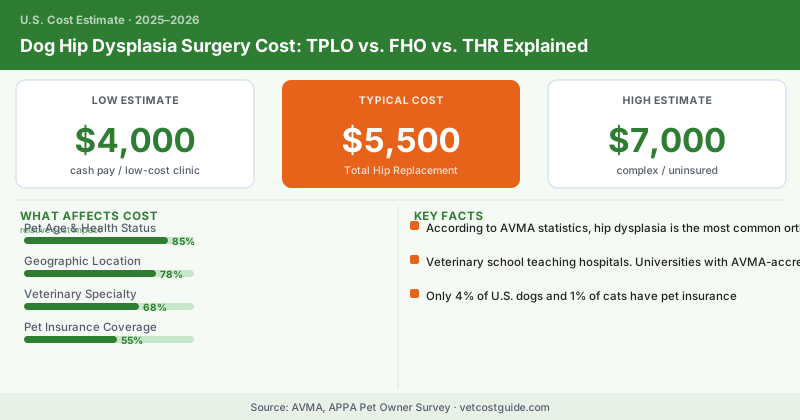
42% of dogs diagnosed with hip dysplasia will eventually need surgery — and the procedure you choose will determine both the price and your dog’s long-term quality of life. Surgery costs range from $1,500 for a femoral head ostectomy in a small dog to $7,000 per hip for a total hip replacement in a large breed. Here’s how to understand the options before you’re sitting in a surgeon’s office with a shocked look on your face.
- FHO (Femoral Head Ostectomy): $1,500–$3,000 per hip — removes the femoral head; best for small dogs under 50 lbs
- DPO/TPO (Triple/Double Pelvic Osteotomy): $2,500–$4,500 per hip — best for dogs under 10 months with mild laxity, prevents arthritis
- BioMedtrix THR (Total Hip Replacement): $4,000–$7,000 per hip — best long-term function, especially for large/giant breeds
- Bilateral (both hips): Costs are roughly double for most procedures; some surgeons discount the second hip slightly
Full Surgical Cost Breakdown
| Procedure | Low | Average | High |
|---|---|---|---|
| FHO — small dog (<50 lbs) | $1,500 | $2,000 | $2,800 |
| FHO — large dog (50+ lbs) | $2,000 | $2,600 | $3,500 |
| DPO/TPO (per hip) | $2,500 | $3,500 | $4,500 |
| Total Hip Replacement (per hip) | $4,000 | $5,500 | $7,000 |
| Pre-surgical diagnostics (X-rays, exam) | $300 | $500 | $800 |
| Anesthesia + monitoring | $400 | $650 | $1,000 |
| Hospitalization (1–3 nights) | $300 | $600 | $1,000 |
| Physical therapy (post-op, 6–8 wks) | $800 | $1,500 | $2,500 |
The Three Main Surgical Options
FHO — Femoral Head Ostectomy
The surgeon removes the ball of the ball-and-socket hip joint entirely. Scar tissue forms a “false joint” over time. FHO is cost-effective — around $2,000 for most dogs — but there’s a catch: it works best in dogs under 50 pounds. Lighter dogs can build enough supportive muscle mass around the false joint to have near-normal function. In large breeds, the joint is carrying too much weight for scar tissue to compensate well, and chronic lameness is more common.
Recovery takes 8–12 weeks of rehabilitation. Full function, if it comes, typically appears at the 3–6 month mark.
DPO/TPO — Pelvic Osteotomy
This procedure — a double or triple pelvic osteotomy — cuts and rotates the pelvic bones to improve how the femoral head sits in the socket. It’s a preventive surgery, done in dogs under 10 months of age who have hip laxity but haven’t yet developed significant arthritis. The goal is to stop the damage before it starts.
It’s genuinely excellent surgery for the right patient — young dogs with confirmed hip laxity, clean joint surfaces on X-ray, and no arthritic changes. Miss that window and the surgery becomes inappropriate. Older dogs with established arthritis aren’t candidates.
Total Hip Replacement (THR)
THR swaps out the entire hip joint — socket and ball — with a prosthetic implant. It’s the closest thing to what humans get, and outcomes in dogs are excellent: 90–95% of patients return to near-normal activity. A 2022 study in Veterinary Surgery found that dogs who underwent THR had significantly lower pain scores and higher activity levels at 12 months compared to dogs managed medically.
The tradeoff is cost. At $4,000–$7,000 per hip, THR is out of reach for many families without pet insurance. And the surgery requires a board-certified surgeon — this is not a general practice procedure.
What Pushes Costs Higher
Dog size. Larger dogs need more anesthesia, larger implants (for THR), and longer surgical times. A Great Dane’s THR costs meaningfully more than a Labrador’s, which costs more than a Cocker Spaniel’s FHO.
Bilateral disease. Many dogs with hip dysplasia have both hips affected. Some surgeons will do one hip, allow recovery, then do the second 3–6 months later. A few perform bilateral procedures in one surgery on appropriately healthy dogs. Either way, you’re looking at roughly double the cost.
Geographic location. Specialty surgery centers in major metros charge 30–60% more than comparable facilities in smaller markets. The implant cost for a THR is standardized, but surgeon fees, facility costs, and hospitalization rates vary significantly.
Complications. Post-surgical infection, implant loosening (rare in THR), or inadequate rehabilitation can require additional procedures. Reputable surgeons have low complication rates, but they’re never zero.
According to AVMA statistics, hip dysplasia is the most common orthopedic condition in dogs, affecting up to 20% of large and giant breeds over their lifetime. German Shepherds, Labrador Retrievers, Golden Retrievers, and Rottweilers are among the most frequently affected.
Medical Management vs. Surgery
Not every dog with hip dysplasia needs surgery. Dogs with mild-to-moderate disease are often managed with:
- NSAIDs (prescription pain management): $30–$80/month
- Joint supplements (glucosamine, omega-3s): $20–$60/month
- Weight management and controlled exercise
- Physical therapy: $600–$1,500 for an initial program
- Veterinary acupuncture: $50–$120 per session
Medical management doesn’t slow the progression of arthritis — it manages symptoms. Most dogs on long-term medical management eventually reach a pain threshold where quality of life declines despite medication, and surgery becomes the better option. Getting there on a timeline that allows for pelvic osteotomy (the best early intervention) requires early X-ray screening, ideally at 6–9 months for at-risk breeds.
Don’t delay surgical evaluation hoping the dog will “grow out of it.” Hip dysplasia doesn’t resolve on its own. Early diagnosis opens the door to pelvic osteotomy — which is only possible before arthritis sets in. Once arthritis is established, the only surgical options are FHO or THR, both of which are more expensive and more involved than DPO/TPO in a young dog.
Reducing the Financial Burden
Pet insurance. For large and giant breeds, hip dysplasia coverage is the single most valuable benefit of a comprehensive policy. Most policies cover hip dysplasia as long as it wasn’t diagnosed or symptomatic before enrollment. Enroll before the puppy’s first birthday, ideally before any limping appears.
Veterinary school teaching hospitals. Universities with AVMA-accredited programs often perform orthopedic surgery — including THR — at significantly reduced rates, sometimes 30–50% less. Care is provided by residents supervised by board-certified surgeons.
CareCredit and Scratchpay. Both offer medical financing with promotional interest-free periods (6–24 months depending on the amount). Apply at the time of consultation, not after the procedure.
Frequently Asked Questions
Can hip dysplasia be cured without surgery? There’s no cure — only management. Surgery offers the best long-term outcome for dogs with significant functional impairment. Medical management can be effective for years in mild cases but rarely prevents eventual deterioration.
At what age should hip dysplasia surgery happen? DPO/TPO: ideally 6–10 months. FHO: any age for appropriate candidates. THR: typically not before 9–12 months (skeletal maturity). There’s no upper age limit for THR or FHO if the dog is otherwise healthy.
Is rehabilitation required after hip surgery? Yes — it dramatically affects outcomes. Dogs that complete a structured rehabilitation program after FHO or THR return to function faster, build more supporting muscle mass, and have better long-term gait than dogs that just rest at home.
Frequently Asked Questions
Surgery costs range from $1,500 to $7,000 per hip depending on the procedure type and dog size. Femoral head ostectomy (FHO) is the most affordable option at $1,500–$3,000 per hip for small to medium dogs, while total hip replacement (THR) is the most expensive at $4,000–$7,000 per hip for larger breeds.
Most pet insurance plans exclude coverage for hip dysplasia if it's considered a pre-existing condition or congenital issue, leaving owners responsible for the full surgical cost. However, some policies cover hip dysplasia surgery if diagnosed after the policy start date and waiting periods have passed—review your specific plan or contact your insurer before scheduling surgery.
Dogs are typically evaluated for surgery between 8–12 months of age once growth plates have closed, though some may benefit from earlier intervention if severe pain or lameness develops. Recovery time ranges from 6–12 weeks depending on the procedure, with most dogs returning to normal activity within 3–4 months after surgery.