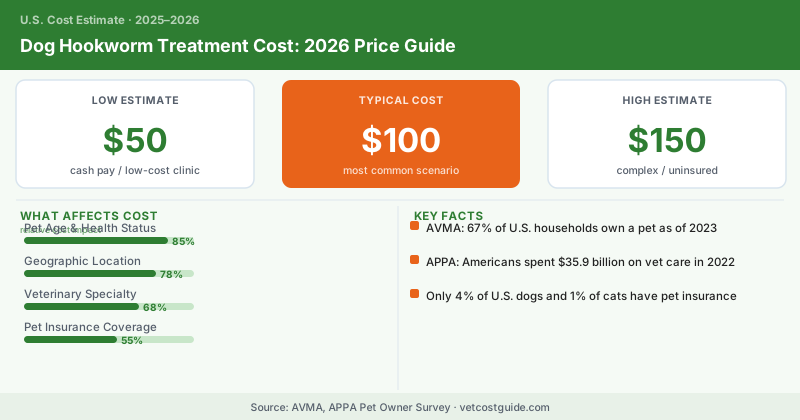
CAPC (Companion Animal Parasite Council) surveillance data consistently shows hookworm infection rates above 5–10% in dogs tested across parts of the southeastern United States, with some counties reporting even higher positivity in shelter and stray populations. If your dog just tested positive, here’s what you’re actually looking at cost-wise: $50–$150 for a standard case, climbing to $500–$1,500 or more if a puppy develops hookworm-related anemia severe enough to need hospitalization.
Hookworms are small intestinal parasites that attach to the gut lining and feed on blood, which is exactly why puppies — with their much smaller blood volume — are at the highest risk of serious complications.
Standard treatment costs
For most dogs, hookworm treatment is one of the more affordable parasite fixes in veterinary medicine:
| Service | Low Cost | High Cost | Notes |
|---|---|---|---|
| Fecal exam | $25 | $45 | Confirms diagnosis |
| Dewormer (pyrantel/fenbendazole) | $20 | $60 | Usually 2 rounds needed |
| Follow-up fecal test | $25 | $45 | Confirms it's cleared |
| Total straightforward case | $70 | $150 | Typical adult dog |
Dewormers like pyrantel pamoate or fenbendazole are cheap and effective against adult hookworms, but they don’t kill the larval stages migrating through tissue. That’s why your vet will schedule a second dose 2–3 weeks later — skipping it is the number one reason “cured” dogs test positive again.
When it gets expensive
The cost story changes entirely for young puppies with a heavy hookworm burden. Blood loss from hookworms can cause anemia severe enough to require hospitalization, iron supplementation, and in the worst cases, a blood transfusion.
- Standard hookworm treatment costs $50–$150 including two rounds of dewormer.
- Severe anemia in puppies can push costs to $500–$1,500+ with hospitalization.
- Two treatments 2–3 weeks apart are standard — a single dose won’t fully clear it.
- Monthly heartworm preventives that also cover hookworms cost $10–$25/month.
Pale gums, unusual lethargy, or dark, tarry stool in a puppy are signs of significant blood loss and warrant an immediate vet visit, not a wait-and-see approach. Hookworm anemia in young puppies can become life-threatening within days if untreated.
A puppy hospitalized for hookworm anemia typically needs bloodwork to assess red blood cell counts ($80–$150), IV fluids or a transfusion ($300–$900 depending on severity), plus supportive care during recovery. Combined with the dewormer itself, total costs for a severe case regularly land between $500 and $1,500.
Prevention costs less than treatment
Nearly every monthly heartworm preventive on the market — Heartgard, Interceptor Plus, Simparica Trio, and similar products — also protects against hookworms as a built-in benefit. At $10–$25 per month, keeping your dog on a year-round preventive costs less over a year than a single round of treatment plus the extra fecal tests needed to confirm it worked.
Yards where dogs regularly defecate, dog parks, and areas with sandy or moist soil are higher-risk environments for hookworm larvae, which can survive in soil for weeks. Picking up waste promptly and keeping your dog on preventive medication are the two most cost-effective things you can do.
Bottom line
For most adult dogs, hookworm treatment is a manageable $70–$150 expense that clears up in a few weeks with two rounds of dewormer and a confirmatory fecal test. The real financial risk is in unprotected puppies, where a heavy infection can spiral into a $500–$1,500 hospitalization — which is exactly why starting preventive medication as early as your vet recommends is worth the monthly cost.
Frequently Asked Questions
Yes. Hookworm larvae can penetrate human skin, usually through bare feet or hands in contaminated soil or sand, causing an itchy rash called cutaneous larva migrans. It's rarely dangerous but is uncomfortable and typically requires a doctor's visit and topical or oral medication to resolve. Wearing shoes in areas where dogs defecate and washing hands after yard work reduces the risk.
Most vets recommend at least two rounds of dewormer spaced two to three weeks apart, since a single dose won't kill larvae that hatch after treatment. Puppies from high-risk environments sometimes need a third round. A follow-up fecal exam 2–4 weeks after the last dose confirms the infection is actually gone rather than just suppressed.
Hookworm larvae can pass from a mother dog to her puppies through nursing, meaning puppies can be infected within days of birth before they've even been outside. Combined with their smaller blood volume and developing immune systems, this is why hookworm-related anemia is far more dangerous in puppies than in adult dogs, who typically build up some resistance over time.