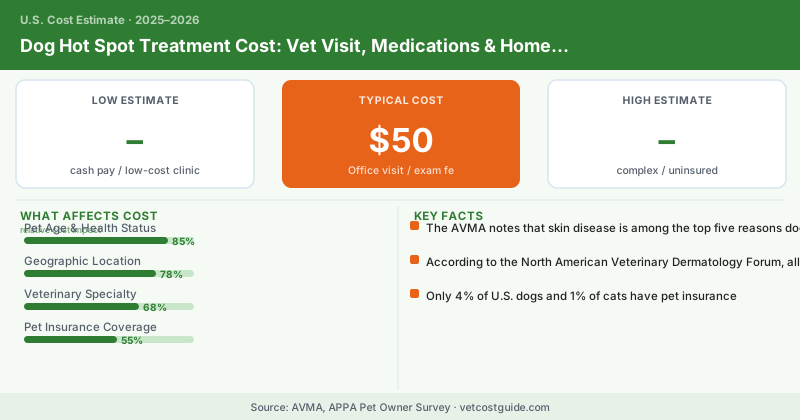
What does a dog hot spot actually cost to treat? The honest answer: anywhere from $20 to $400, depending on whether you catch it early, whether your dog needs sedation to be examined, and whether there’s an underlying cause driving the whole thing. Hot spots can go from quarter-sized and manageable to softball-sized and infected in 24 hours. Here’s what you’re looking at.
- Basic vet visit + exam: $50–$100
- Clipping, cleaning, and initial treatment at vet: $30–$80
- Topical antibiotic/steroid spray or ointment: $20–$45
- Oral antibiotics (if severe): $25–$60 for a 7–14 day course
- E-collar (cone): $10–$25
- Sedation (if dog is too painful to examine): $50–$150 extra
- Total typical treatment: $75–$250
What Is a Hot Spot?
A hot spot — formally called acute moist dermatitis — is a localized area of bacterial skin infection that develops rapidly when a dog scratches, licks, or chews at a spot repeatedly. The moisture from saliva and the broken skin create ideal conditions for bacteria (typically Staphylococcus pseudintermedius) to multiply. What starts as a small red patch can become a weeping, oozing, painful lesion within hours.
Hot spots appear most commonly on the:
- Cheeks and base of ear (often from an ear infection or foreign body causing head shaking)
- Hip and rump area (often from flea allergy or anal gland issues)
- Neck and chest (often from collar irritation or poor grooming)
- Top of tail base (flea allergy is extremely common here)
Golden Retrievers, Labrador Retrievers, Saint Bernards, and German Shepherds get hot spots disproportionately — thick coats trap moisture, and underlying allergies are common in these breeds.
Vet Visit Cost Breakdown
| Service | Typical Cost | Notes |
|---|---|---|
| Office visit / exam fee | $50–$100 | Standard consult |
| Clipping the hot spot area | $15–$30 | Removes hair that traps bacteria |
| Cleaning and wound care | $15–$30 | Chlorhexidine wash; debridement if needed |
| Sedation/restraint (painful dogs) | $50–$150 | Some dogs can't tolerate handling without sedation |
| Topical spray (Gentaspray or similar) | $20–$45 | Antibiotic + steroid combo |
| Oral antibiotics (cephalexin or similar) | $25–$60 | For deep or extensive hot spots |
| Oral prednisone (anti-itch/anti-inflammatory) | $10–$25 | Short course to stop the itch cycle |
| E-collar | $10–$25 | Prevents further self-trauma |
| Allergy workup (if recurrent) | $200–$500 | Skin or blood allergy testing |
| Ear treatment (if ear infection triggered it) | $30–$80 | Ear cleaner + prescription ear drops |
When Can You Treat at Home?
If the hot spot is small (less than a quarter in size), not deep, caught within the first 12–24 hours, and your dog tolerates handling — a careful home approach is reasonable:
- Clip the fur around and beyond the edges with blunt scissors or clippers
- Clean gently with dilute chlorhexidine solution (0.05% — available at pharmacies) or saline
- Apply an over-the-counter topical like Vetericyn Plus or a dilute betadine solution
- Prevent licking with an e-collar or soft cone
- Watch for 24 hours — if it grows or doesn’t start improving, see a vet
You can buy chlorhexidine solution for under $10 and a basic cone for $10–$15. Home treatment when appropriate can genuinely cost under $25.
Do NOT put hydrogen peroxide, rubbing alcohol, or human antibiotic ointments containing neomycin (like Neosporin) on hot spots. These damage tissue and can worsen the wound. Chlorhexidine and saline are the appropriate cleaning agents.
When You Must See a Vet
Go in if:
- The hot spot is larger than a silver dollar
- You can see pus, deep ulceration, or the wound is oozing heavily
- Your dog is in obvious pain or won’t let you near it
- The spot hasn’t improved significantly in 24 hours of home care
- Your dog has had multiple hot spots (underlying allergy or other cause needs evaluation)
- The hot spot is on or near the ear, face, or neck
Deep hot spots can develop into skin fold pyoderma or require systemic antibiotics. Don’t delay if there’s any question — hot spots that look manageable on the surface can have significant tissue involvement underneath.
Recurrent Hot Spots: The Bigger Cost
The average once-in-a-lifetime hot spot costs $75–$250 to treat and resolves without further issue. The problem is when they keep coming back.
Recurrent hot spots almost always indicate an underlying driver:
- Flea allergy dermatitis — the most common cause of rump and tail-base hot spots
- Environmental allergies (atopy) — seasonal or year-round
- Food allergies — less common but possible
- Ear infections — the head-shaking and scratching create cheek hot spots
- Anal gland problems — discomfort causes the dog to scoot and chew at the rump
If your dog has had 2+ hot spots in a year, an allergy workup makes economic sense. Allergy testing costs $200–$500, but immunotherapy (allergy shots or sublingual drops) at $50–$150/month can dramatically reduce flare-ups — ultimately cheaper than repeated emergency hot spot treatments.
The AVMA notes that skin disease is among the top five reasons dogs visit veterinarians, with allergic skin conditions representing a significant proportion of those visits. According to the North American Veterinary Dermatology Forum, allergic skin disease affects an estimated 10–15% of the dog population in the United States.
Flea Prevention: The Cheapest Hot Spot Prevention
If your dog gets hot spots on the rump or tail base, get them on year-round flea prevention — full stop. Modern oral preventives (Simparica, NexGard, Bravecto) cost $15–$35/month or $100–$150 for a 3-month oral dose and are far cheaper than repeated hot spot treatments. Flea allergic dogs react to a single flea bite — you don’t need to see fleas on the dog to have a flea allergy problem.
Total Annual Cost Scenarios
Single hot spot (first-time, no underlying issue):
- Vet visit + treatment: $75–$250
- E-collar: $10–$25
- Follow-up products: $15–$40
- Total: $100–$315
Recurrent hot spots with underlying allergy workup:
- 2–3 hot spot treatments: $150–$750
- Allergy testing: $200–$500
- Ongoing immunotherapy or medication: $50–$150/month
- Total first year: $1,000–$3,000
Prevention-focused (flea allergy dogs):
- Year-round flea prevention: $100–$200/year
- Occasional spot treatment if needed: $75–$150
- Total: $175–$350/year
The math is clear: if your dog is prone to hot spots, identifying and addressing the root cause is almost always cheaper than treating each episode reactively.
Frequently Asked Questions
A basic vet exam for a hot spot runs $50–$100, with total treatment costs ranging from $75–$350 depending on severity. If your dog needs sedation for examination or additional diagnostics to identify underlying causes, you may pay closer to $300–$400.
Most pet insurance plans cover hot spot treatment as an acute condition, but you typically pay the vet upfront and submit a claim for reimbursement at 70–90% of eligible costs. However, if the hot spot is tied to an underlying chronic condition like allergies, that may fall under an exclusion depending on your policy.
Small, early-stage hot spots (quarter-sized) can sometimes be managed at home with clipping, cleaning, and topical treatments costing $20–$50, but a vet visit is recommended to rule out infection and underlying causes. Hot spots can expand rapidly—from quarter-sized to softball-sized in 24 hours—so professional evaluation within 1–2 days is safest to prevent serious complications.