Most hypothyroid dogs don’t look sick at first. They’re just… slower. A little heavier than they used to be. Coat not quite right. Owners often chalk it up to age before bloodwork reveals a thyroid TSH that’s off the charts.
Hypothyroidism is one of the most common endocrine disorders in dogs, affecting an estimated 0.2–0.8% of the canine population according to AVMA clinical data. Certain breeds — Golden Retrievers, Doberman Pinschers, Labrador Retrievers, Boxers — are significantly over-represented.
The good news: it’s one of the most manageable chronic conditions in veterinary medicine. Once you’re past the diagnostic phase, maintenance costs are low.
- Initial thyroid panel (T4, TSH, Free T4): $100–$250
- Full diagnostic workup with comprehensive bloodwork: $200–$400
- Levothyroxine (generic): $20–$50/month depending on dog size
- Thyroid monitoring recheck (every 6 months): $100–$200
- Annual total ongoing cost (medication + monitoring): $400–$800
Hypothyroidism Treatment Cost Breakdown
| Service | Cost | Frequency |
|---|---|---|
| Initial exam + history | $50–$100 | Once at diagnosis |
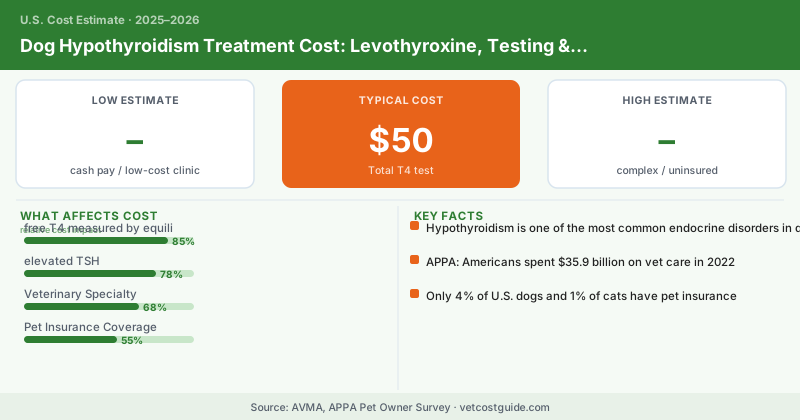
| Total T4 test | $50–$100 | Diagnosis; then every 6 months |
| Free T4 (equilibrium dialysis) | $80–$150 | Confirmatory testing if T4 borderline |
| TSH (canine thyroid stimulating hormone) | $50–$100 | Diagnosis |
| Complete blood count + chemistry panel | $100–$200 | At diagnosis; annually |
| Levothyroxine (generic, small dog <30 lbs) | $15–$30/month | Daily, lifelong |
| Levothyroxine (generic, large dog >70 lbs) | $35–$60/month | Daily, lifelong |
| Post-start monitoring recheck (4–8 weeks) | $100–$200 | Once after starting medication |
| Ongoing semiannual monitoring | $100–$200 | Every 6 months, lifelong |
Why Diagnosis Costs More Than Treatment
Diagnosing hypothyroidism correctly is harder than it looks. Total T4 is the standard screening test, but it has a meaningful false-positive rate in dogs with non-thyroidal illness (called “euthyroid sick syndrome”). A sick dog with normal thyroid function can look hypothyroid on a basic T4 alone.
The gold standard is free T4 measured by equilibrium dialysis (Free T4 ED), which is more expensive but far more specific. Paired with an elevated TSH (the pituitary’s signal that it’s demanding more thyroid hormone), a low Free T4 ED is a definitive diagnosis.
For straightforward cases with classic clinical signs and a clearly low T4, some vets skip straight to treatment and use treatment response as confirmation. This is a reasonable approach in classic presentations and saves diagnostic cost.
What the diagnostic workup typically includes:
- Total T4 and TSH ($100–$200 for the panel)
- Free T4 ED if T4 is borderline ($80–$150 additional)
- CBC and chemistry panel to rule out other conditions and establish a baseline ($100–$200)
- Urinalysis ($40–$80)
- Exam and history ($50–$100)
Total first-visit cost: $300–$550 for a complete diagnostic workup. Some vets start with T4 alone ($50–$100) and only run confirmatory tests if results are ambiguous.
Levothyroxine: The Only Approved Treatment
Levothyroxine sodium (synthetic T4) is the treatment. There’s no surgical option, no diet that reverses it, no supplement that substitutes. Dogs need oral levothyroxine twice daily — once-daily dosing is less effective for most dogs because canine thyroid hormone metabolism is faster than in humans.
Generic levothyroxine is available at compounding pharmacies and standard pharmacies. Cost scales with dose, which scales with body weight:
- Small dogs (under 20 lbs): $15–$25/month
- Medium dogs (20–50 lbs): $20–$40/month
- Large dogs (50–90 lbs): $30–$55/month
- Giant breeds (90+ lbs): $45–$70/month
Soloxine (brand-name veterinary levothyroxine) costs more — typically $40–$90/month — and is rarely necessary given generic availability. The FDA notes that veterinary levothyroxine formulations may have slightly different bioavailability from human generics, so don’t switch between products without rechecking levels.
Human generic levothyroxine from pharmacy chains (Walgreens, CVS, Costco) is sometimes prescribed. The $4–$10/month human prescription is tempting, but human tablets are not always formulated for dogs and the different bioavailability can make dosing tricky. Discuss with your vet before using human formulations.
The Ongoing Monitoring Cost
The first monitoring recheck happens 4–8 weeks after starting medication. Your vet needs to draw blood 4–6 hours post-pill to measure peak T4 levels. The goal is a post-pill total T4 in the upper half of the normal range. Getting the dose right sometimes takes one or two adjustments.
After stabilization, monitoring is every 6 months — a T4 and TSH check, usually with an exam. This runs $100–$200 per visit. Annual cost of ongoing monitoring: $200–$400.
Annual total cost once stable: $400–$800 for most dogs. This compares favorably to many other chronic conditions. A well-controlled hypothyroid dog on levothyroxine has a normal life expectancy and quality of life.
Don’t skip the monitoring rechecks. Under-dosing leaves dogs with ongoing weight gain, skin problems, and poor quality of life. Over-dosing causes signs of hyperthyroidism — restlessness, weight loss, increased heart rate, and in severe cases cardiac arrhythmias. The 4–6 hour post-pill blood draw is the only way to confirm the dose is right. A saved $150 on a monitoring visit isn’t worth months of an under-dosed dog.
Breed Risk and Early Detection
Breeds with elevated hypothyroidism risk include Golden Retrievers, Doberman Pinschers, Labrador Retrievers, Boxers, Irish Setters, and Cocker Spaniels. If you own one of these breeds and your dog is between 4–10 years old with subtle signs — weight gain despite normal eating, lethargy, cold intolerance, dull coat, recurring skin infections — a thyroid panel is a reasonable preventive screen.
The Orthopedic Foundation for Animals (OFA) maintains a thyroid registry for dogs. For breeds with known hypothyroidism prevalence, OFA recommends annual thyroid screening starting at age two. This isn’t mainstream practice at most clinics, but it’s something breed-specific owners can consider.
FAQ
Does my dog need to be on levothyroxine for life? Yes, in almost all cases. Hypothyroidism from lymphocytic thyroiditis (the most common cause) involves progressive destruction of thyroid tissue. It doesn’t reverse. The dose may need adjustment over time as remaining thyroid function changes.
Can I use a compounding pharmacy to reduce costs? Yes. Compounding pharmacies can formulate levothyroxine in flavored chewables or suspensions, often at lower cost than commercial tablets. Quality varies — use only PCAB-accredited compounding pharmacies. Note that the FDA has not approved compounded levothyroxine, so consistent potency is a consideration.
What happens if hypothyroidism goes untreated? Untreated hypothyroidism causes progressive weight gain, skin and coat deterioration, cold intolerance, lethargy, and — in severe or long-standing cases — myxedema (accumulation of mucopolysaccharides in the skin), megaesophagus, peripheral neuropathy, and cardiac dysfunction. The condition isn’t acutely life-threatening in most dogs, but quality of life declines significantly and some complications become serious over time.
Frequently Asked Questions
Levothyroxine medication typically costs $20–$60 per month, depending on your dog's weight, dosage, and whether you use brand-name or generic formulations. Initial diagnostic testing (bloodwork and TSH panels) runs $200–$400, so expect a first-month total of $220–$460 before settling into the ongoing monthly medication cost.
Most pet insurance plans cover hypothyroidism treatment once diagnosed, including medication and routine monitoring bloodwork, though coverage varies by provider and policy tier. However, if your dog is diagnosed before enrollment, many insurers classify it as a pre-existing condition and exclude it from coverage, so enrollment before diagnosis is critical.
Your vet will typically recheck TSH levels 4–6 weeks after starting medication to confirm proper dosing, then annually thereafter if stable. Each monitoring bloodwork visit costs $75–$150, so budget an additional $100–$200 per year for ongoing management beyond the monthly medication expense.