About 10 to 15 percent of dogs suffer from environmental allergies, according to veterinary dermatology data, and most of them get stuck on lifelong itch-control drugs. But there’s another path that actually targets the root cause: allergen-specific immunotherapy, the dog version of human allergy shots. It’s the only treatment that can retrain the immune system instead of just masking symptoms.
The catch is the upfront investment. Here’s what immunotherapy costs and how it compares to staying on daily meds forever.
What Allergy Immunotherapy Costs
Immunotherapy starts with allergy testing to identify what your dog reacts to, then a custom serum is made and given as either injections (ASIT) or under-the-tongue drops (sublingual). The first year carries the heaviest cost because of testing and serum formulation.
| Component | Cost | Frequency | Notes |
|---|---|---|---|
| Allergy testing (blood or skin) | $200-$500 | Once at start | Skin testing costs more |
| Custom serum (injectable) | $150-$300 | Every 4-8 months | Refilled as used |
| Monthly serum cost | $40-$120 | Ongoing | Spread across the year |
| Sublingual drops | $60-$150/month | Daily | Needle-free option |
| Dermatology consult | $150-$300 | Initial | Specialist if referred |
Year one often lands at $700-$1,500 once testing and serum are combined. After that, ongoing serum runs roughly $500-$1,000 a year.
Why It’s Worth the Upfront Cost
Here’s the math that surprises people. Daily drugs like Apoquel or monthly Cytopoint injections often run $700-$2,000 every single year, forever. Immunotherapy costs about the same in year one, but it can reduce or eliminate the need for those drugs over time. Veterinary dermatology sources report that a majority of dogs on immunotherapy improve, and some come off symptom drugs entirely.
The AVMA recognizes immunotherapy as the only treatment that addresses the underlying allergy rather than just the symptoms. For a young dog facing a decade of itch meds, the long-term savings can be substantial.
How to Lower the Cost
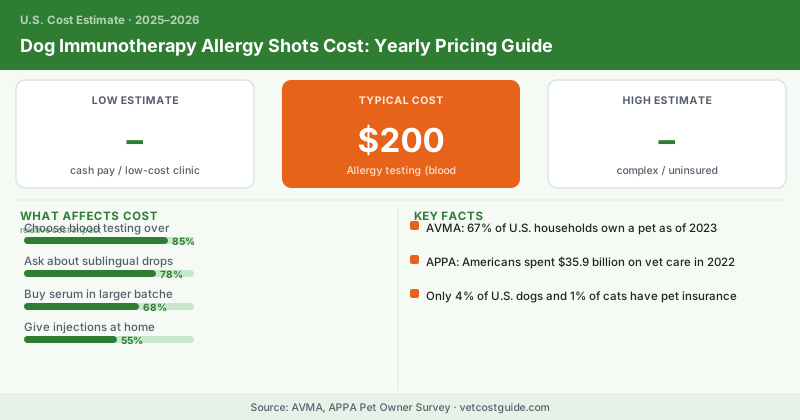
- Choose blood testing over skin testing. Blood allergy panels are often cheaper and don’t require sedation.
- Ask about sublingual drops. They skip injection visits, though the monthly serum cost is comparable.
- Buy serum in larger batches. Longer-supply vials usually cost less per month.
- Give injections at home. Once trained, you administer the shots yourself, avoiding clinic fees.
- Start young. Earlier intervention can mean fewer years of expensive symptom drugs.
- Immunotherapy costs $700-$1,500 in year one, then roughly $500-$1,000 a year ongoing.
- It’s the only treatment targeting the cause of allergies, not just the symptoms.
- A majority of dogs improve, and some come off daily itch drugs entirely.
- Home injections and blood testing over skin testing are the biggest savings moves.
Immunotherapy vs. Lifelong Symptom Drugs
Think of it as paying now to save later. Symptom drugs are easier to start but never stop costing you. Immunotherapy is a bigger commitment up front, takes 6-12 months to show full benefit, and requires patience, but it can shrink your forever-cost dramatically. Our complete dog allergy treatment cost guide compares all the options side by side.
Immunotherapy isn’t instant. It typically takes 6 to 12 months before you see real improvement, and you’ll usually keep your dog on symptom meds during that ramp-up. Don’t stop the other treatments cold the day you start, and don’t give up if month two looks unchanged. This is a slow-burn fix.
Financing and Help
The front-loaded year-one cost is where owners feel the pinch. If your dog is young and already showing allergies, weighing whether pet insurance is worth it before symptoms become a recorded condition can pay off.
For the upfront testing and serum, CareCredit for vet bills spreads the cost, and free vet care programs may help qualifying households get started.
The Bottom Line
Dog allergy immunotherapy costs $700-$1,500 in year one and $500-$1,000 a year after that. It’s the only treatment that targets the root cause, and over a dog’s lifetime it can cost less than years of daily itch drugs. Start young, use home injections, and be patient, because the payoff is a dog that may not need expensive symptom meds at all.
Frequently Asked Questions
Dog allergy immunotherapy typically costs $150 to $300 for the initial allergy testing and serum preparation, plus $40 to $120 per month for injections, bringing the total first-year cost to $700 to $1,500. Ongoing annual maintenance costs are generally lower at $300 to $800 per year after the first year.
Most standard pet insurance plans exclude or limit coverage for allergy immunotherapy since it is often classified as a preventive or elective treatment, leaving owners responsible for out-of-pocket costs. You should review your specific policy or contact your insurer, as some plans with wellness or dermatology riders may offer partial reimbursement of 10 to 50 percent.
Initial immunotherapy involves a build-up phase of weekly or bi-weekly injections over 3 to 6 months, followed by maintenance injections every 2 to 4 weeks for life, making it a long-term commitment. Most dogs show improvement in symptoms within 6 to 12 months, with about 60 to 80 percent experiencing significant relief compared to lifelong itch-control medications.