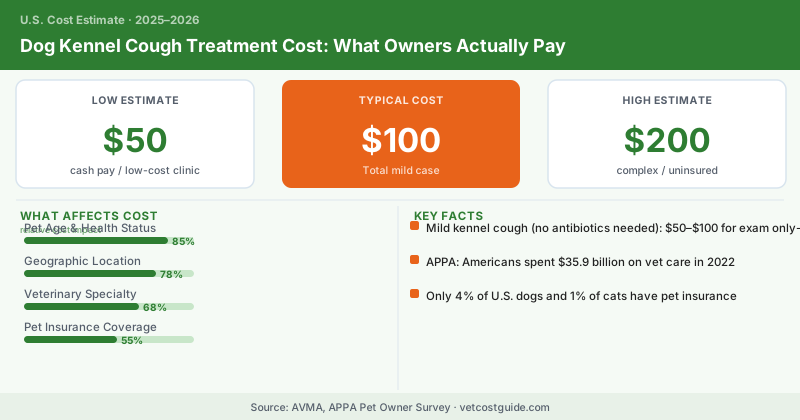
Your dog comes home from boarding, starts honking like a goose, and you’re immediately online at midnight searching “kennel cough cost.” The good news: most kennel cough cases cost $50–$150 to treat, and many mild cases need nothing more than rest. The bad news: a small percentage turn into pneumonia — and that’s a different price entirely.
- Mild kennel cough (no antibiotics needed): $50–$100 for exam only
- Moderate kennel cough with antibiotics: $100–$250
- Severe kennel cough or pneumonia: $500–$3,000
- The AVMA notes that infectious tracheobronchitis (kennel cough) is one of the most highly contagious respiratory diseases in dogs — a single infected dog in a boarding facility can infect the entire population within 24–48 hours
- AAHA 2022 guidelines estimate that up to 20% of dogs exposed in high-density settings develop clinical signs
- The Bordetella vaccine costs $25–$40 and is required by most boarding facilities — the most effective prevention available
Kennel Cough Treatment Cost by Severity
| Treatment | Low | Average | High |
|---|---|---|---|
| Vet exam (diagnosis only, mild case) | $50 | $85 | $150 |
| Doxycycline antibiotics (2-week course) | $30 | $60 | $120 |
| Cough suppressant (hydrocodone/butorphanol) | $20 | $40 | $80 |
| Nebulization therapy (severe cases) | $100 | $200 | $400 |
| Chest X-rays (pneumonia concern) | $150 | $250 | $450 |
| Hospitalization per day (pneumonia) | $300 | $500 | $800 |
| IV antibiotics + fluids (3–5 day admit) | $900 | $1,500 | $3,000 |
| Total mild case | $50 | $100 | $200 |
| Total moderate case (antibiotics + exam) | $100 | $200 | $350 |
| Total severe/pneumonia case | $600 | $2,000 | $4,000 |
What Kennel Cough Actually Is
“Kennel cough” isn’t one disease — it’s a syndrome caused by a mix of pathogens. The main players:
- Bordetella bronchiseptica (bacteria) — the most common
- Canine parainfluenza virus
- Canine adenovirus type 2
- Mycoplasma species (increasingly implicated)
Most cases involve multiple pathogens acting together. The characteristic sound — a harsh, honking cough, sometimes followed by gagging or white foam — comes from inflammation of the trachea and bronchi.
Incubation: 3–10 days after exposure. Dogs pick it up anywhere other dogs congregate: boarding facilities, groomers, dog parks, training classes, even a 10-second sniff through a fence.
When You Actually Need a Vet Visit
Mild kennel cough in a healthy adult dog often resolves in 1–2 weeks with rest and humidity (a steamy bathroom or humidifier helps). You don’t strictly need antibiotics for viral-predominant cases. However, see your vet if:
- Your dog is a puppy, senior, or immunocompromised
- The cough lasts more than 7 days without improvement
- Your dog develops fever, lethargy, reduced appetite, or labored breathing
- Your dog is a brachycephalic breed (Bulldog, Pug, French Bulldog) — their anatomy makes respiratory illness riskier
Those scenarios indicate possible bacterial pneumonia, which requires antibiotics, possible chest imaging, and sometimes hospitalization.
The Pneumonia Risk
Here’s what escalates a simple kennel cough into a serious (and expensive) illness: secondary bacterial pneumonia. The initial infection damages the mucociliary elevator — the respiratory tract’s natural defense system. This lets bacteria descend into the lungs, causing consolidation, reduced oxygen exchange, and systemic illness.
Signs of pneumonia in a dog with kennel cough:
- Breathing faster than normal at rest (over 30–40 breaths per minute)
- Blue tinge to gums (cyanosis)
- Won’t get up, not eating
- Fever over 103.5°F
- Gurgling sounds when breathing
Pneumonia requires chest X-rays ($150–$450), IV antibiotics, possibly supplemental oxygen, and hospitalization — $600–$3,000 total depending on severity. Don’t wait on these symptoms.
Treatment Options
Rest and supportive care works for mild cases. No strenuous exercise, avoid smoke and irritants, use a harness instead of collar to reduce tracheal pressure. Many dogs improve in 7–10 days without medication.
Doxycycline is the most common antibiotic prescribed — broad-spectrum, affordable at $30–$60 for a 2-week course, and effective against Bordetella and Mycoplasma. Amoxicillin-clavulanate is an alternative.
Cough suppressants (hydrocodone, butorphanol) provide comfort but don’t address the infection. They’re useful when the cough is severe enough to prevent sleep or cause dry heaving.
Nebulized antibiotics (gentamicin delivered via nebulizer) are used in severe cases or when systemic antibiotics haven’t worked. Typically administered in-clinic.
Prevention: The Bordetella Vaccine
The intranasal Bordetella vaccine (administered as a nasal spray) provides the fastest protection — immunity within 3–5 days. The injectable version takes 7–14 days. Cost: $25–$40, typically given annually or every 6 months for dogs with high boarding/social exposure.
Most boarding facilities and groomers require proof of Bordetella vaccination within the past 6–12 months. If you’re getting your dog vaccinated specifically for an upcoming boarding stay, give yourself at least a week of lead time.
Keep a coughing dog away from other dogs until fully recovered — at least 2–3 weeks after symptoms resolve. Kennel cough spreads through airborne droplets and contact with nasal secretions. Bringing a recovering dog to the dog park can spark an outbreak affecting dozens of animals.
Does Pet Insurance Cover Kennel Cough?
A simple kennel cough exam and antibiotic course is usually below most insurance deductibles ($100–$500), so insurance rarely pays out for mild cases. For pneumonia requiring hospitalization, comprehensive illness coverage applies after your deductible — potentially saving $500–$1,500 on a serious case. The practical lesson: don’t file a claim for a $100 vet visit; save insurance for the pneumonia scenario.
The Bottom Line
Kennel cough treatment costs $50–$250 for most dogs — an uncomplicated, manageable illness. The cases that become expensive are the ones where owners wait too long on symptoms of pneumonia, or where puppies and seniors develop serious secondary infection. Vaccinate for Bordetella, watch for escalating symptoms, and don’t hesitate to call your vet if your dog seems genuinely sick rather than just honky.
Frequently Asked Questions
A basic vet exam for kennel cough typically costs $50–$100, while a visit that includes antibiotics runs $100–$200. If your dog requires hospitalization or develops pneumonia, costs can jump to $300–$500 or more depending on treatment intensity and your location.
Most pet insurance plans cover kennel cough treatment as an illness claim, though you'll typically pay 10–30% out-of-pocket after your deductible is met. However, some policies exclude contagious respiratory diseases or charge higher copays, so review your plan details before your vet visit.
Mild kennel cough usually resolves on its own within 1–3 weeks with just rest, fluids, and a humidifier—no vet visit or medication needed. If your dog still has symptoms after 2 weeks, develops a fever, or starts coughing up mucus, that's when a $50–$150 exam becomes worthwhile to rule out pneumonia.