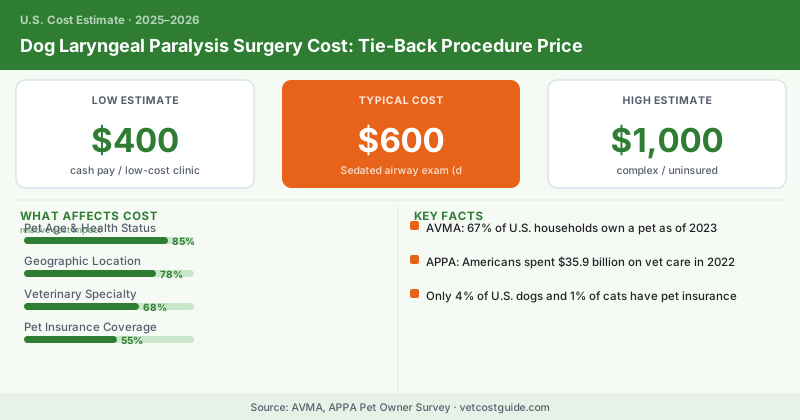
“Lar par.” If you own an aging Labrador, you may hear those two words from your vet someday. Laryngeal paralysis is when the muscles that open a dog’s airway stop working, leaving them gasping, especially in heat or after exercise. The fix is a surgery called a laryngeal tie-back, and it costs $2,500 to $5,500 — more if your dog arrives in a breathing crisis first.
It’s a frightening condition because the symptom is your dog struggling to breathe. But the surgery has a good track record, and understanding the cost helps you act before it becomes an emergency.
- Laryngeal tie-back surgery (unilateral arytenoid lateralization): $2,500–$5,500
- Diagnostic exam under sedation (to confirm): $400–$1,000
- Emergency stabilization (if in respiratory distress): $800–$2,500
- Post-op care + aspiration monitoring: $200–$700
- Laryngeal paralysis classically affects older large-breed dogs, with Labrador Retrievers, Golden Retrievers, and Saint Bernards most commonly affected
- The American College of Veterinary Surgeons reports that the tie-back procedure improves breathing in the large majority of dogs, though it carries a lifelong risk of aspiration pneumonia
- Heat and humidity dramatically worsen symptoms — many crises happen in summer
Laryngeal Paralysis Surgery Cost Breakdown
| Item | Low | High | Typical |
|---|---|---|---|
| Sedated airway exam (diagnosis) | $400 | $1000 | $600 |
| Pre-op blood work + chest X-rays | $200 | $600 | $350 |
| Tie-back surgery | $1800 | $4000 | $2800 |
| Anesthesia + monitoring | $400 | $1000 | $650 |
| Hospitalization (1–3 days) | $300 | $1500 | $700 |
| Emergency stabilization (if needed) | $800 | $2500 | $1400 |
| Post-op meds | $50 | $200 | $100 |
| Follow-up recheck | $80 | $250 | $150 |
What the Surgery Actually Does
The tie-back (formally “unilateral arytenoid lateralization”) permanently holds one side of the larynx open with a suture, giving the dog a clear airway to breathe through. Surgeons deliberately open only one side — opening both would leave the dog unable to protect its airway when swallowing, dramatically raising pneumonia risk.
It’s a specialist procedure done by a board-certified surgeon, which is a big part of why it costs what it does. The surgery itself is the main expense, with anesthesia and a short hospital stay rounding out the bill.
The Emergency That Drives Up Cost
Many dogs aren’t diagnosed until a crisis. On a hot day or after exertion, the narrowed airway can’t move enough air, the dog panics, panting makes it worse, and you end up racing to the dog emergency vet with a dog in genuine respiratory distress. Stabilizing that — oxygen, sedation, sometimes cooling and a temporary breathing tube — is an expensive add-on before surgery is even possible.
This is the strongest argument for acting on early signs (a raspy, changed bark; noisy breathing; exercise intolerance) rather than waiting. Elective surgery on a stable dog is far cheaper and safer than emergency surgery on a crashing one.
The Lifelong Trade-Off: Aspiration Risk
Here’s the honest part. The surgery fixes the breathing, but holding the airway open permanently means food and water can occasionally slip in, raising the lifelong risk of aspiration pneumonia. That’s a real, recurring potential cost — pneumonia treatment can mean hospitalization, dog x-ray imaging, and antibiotics down the road.
Owners manage this by feeding meatball-sized portions, elevating food bowls, and avoiding swimming. It’s a manageable trade for a dog that can finally breathe.
Budgeting Strategies
- Act on early symptoms — elective surgery beats emergency surgery on cost and outcome
- Keep your dog cool and lean — heat and excess weight both worsen symptoms and can trigger a crisis
- Get the chest X-rays — they screen for the megaesophagus that sometimes accompanies lar par and changes the prognosis
- Use financing or insurance — a tie-back is a textbook use case for CareCredit for vet bills or a pet policy; see pet insurance cost per month
Because this hits older large breeds predictably, it’s worth weighing whether is pet insurance worth it while your dog is still young and healthy. A routine average vet visit gives no warning of a five-figure-adjacent surgery like this one.
Frequently Asked Questions
Laryngeal tie-back surgery typically costs $2,500 to $5,500 in the US. Emergency procedures performed when a dog is in acute respiratory distress may exceed $5,500 due to additional stabilization care and after-hours surgical fees.
Most pet insurance plans cover laryngeal tie-back surgery if laryngeal paralysis is not a pre-existing condition, though your out-of-pocket cost depends on your deductible and co-insurance percentage. Some policies may exclude the procedure or charge higher premiums for senior dogs, so review your specific plan terms before scheduling surgery.
Most dogs recover within 2 to 3 weeks after surgery, with gradual return to normal activity recommended over that period. Your vet will typically schedule a follow-up exam at 10-14 days post-op to monitor healing and clear your dog for increased exercise.