The $800-a-year arthritis dog is a very familiar situation for American pet owners. Pain medications help, but many owners are looking for something that reduces medication dependence and keeps their dog moving — and that’s where veterinary laser therapy comes in. It’s not magic, and it’s not free, but for the right conditions it offers real, measurable benefit.
Here’s the actual cost picture and what you need to know before booking.
What Dog Laser Therapy Costs
| Service | Low | Typical | High |
|---|---|---|---|
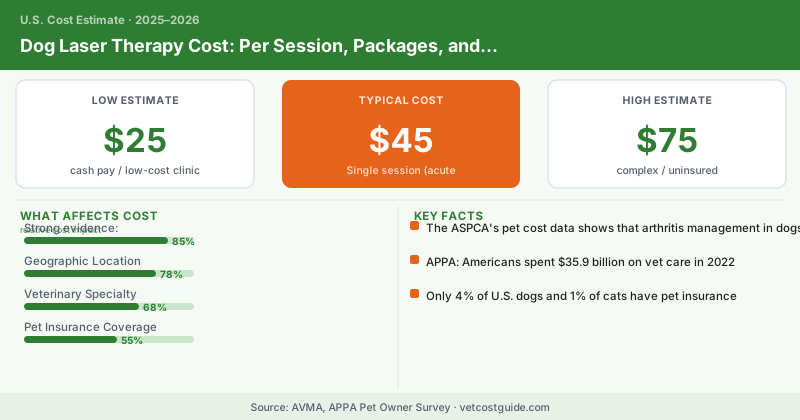
| Single session (acute condition) | $25 | $45 | $75 |
| Single session (chronic condition) | $35 | $55 | $80 |
| Initial consultation/assessment | $50 | $80 | $150 |
| Package deal (6 sessions) | $150 | $270 | $420 |
| Package deal (12 sessions) | $270 | $480 | $720 |
| Maintenance session (monthly) | $35 | $55 | $80 |
| Full acute treatment course (6 sessions) | $200 | $350 | $550 |
| Chronic management (annual cost) | $500 | $840 | $1,400 |
Most practices offer package pricing that’s 10–20% cheaper per session than individual visits. If your vet recommends a full treatment course — which is typical — buying a package upfront saves real money.
How Laser Therapy Works
Veterinary laser therapy (also called photobiomodulation or PBMT) uses specific wavelengths of light to penetrate tissue and stimulate cellular energy production, reduce inflammation, and accelerate healing. It doesn’t hurt — most dogs relax or fall asleep during treatment. Sessions typically run 5–20 minutes depending on the area treated.
Class IV therapeutic lasers (the standard in veterinary practice) deliver higher power than older Class III units and can treat deeper tissue. The AVMA has recognized photobiomodulation as a legitimate therapeutic modality, and a growing body of peer-reviewed research supports its use for musculoskeletal pain, wound healing, and post-surgical recovery.
Strong evidence:
- Osteoarthritis and hip dysplasia
- Post-surgical incision healing
- Intervertebral disc disease (IVDD) — often combined with surgery or as an alternative for mild cases
- Wound healing (hot spots, lacerations, surgical sites)
Good clinical evidence:
- Ear infections (otitis externa)
- Nerve pain and neuropathy
- Muscle strains and sprains
- Lick granulomas
Supportive/adjunctive use:
- Dental extractions (reduces post-op swelling and pain)
- Chronic skin conditions
- Spinal cord injury rehabilitation
How Many Sessions Does Your Dog Actually Need?
This is the question that determines total cost. Most vets follow a pattern like this:
Acute conditions (wound healing, post-surgical recovery, hot spots): 4–8 sessions over 2–4 weeks is typical. Once resolved, you’re done.
Chronic conditions (arthritis, IVDD, hip dysplasia): Initial treatment phase of 6–12 sessions over 3–6 weeks, followed by maintenance sessions every 2–4 weeks indefinitely. This is where annual costs add up — $500–$1,400/year for an arthritic dog on regular maintenance.
Post-surgical support: Typically 4–6 sessions in the weeks following orthopedic or spinal surgery, often reducing recovery time and pain medication needs.
Is It Worth the Cost?
The honest answer: for chronic pain conditions in older dogs, the ROI is real but depends heavily on your dog’s response. A 2023 systematic review published in Frontiers in Veterinary Science analyzed 16 studies on PBMT for canine osteoarthritis and found statistically significant improvements in pain scores and mobility in the majority of studies — though effect sizes varied.
The ASPCA’s pet cost data shows that arthritis management in dogs costs an average of $350–$700 per year in medications alone. Laser therapy doesn’t replace NSAIDs for most dogs, but many owners report being able to reduce NSAID dose frequency after establishing a laser routine — which has real value both financially and in terms of reducing long-term GI and kidney risks from chronic NSAID use.
For acute conditions like wound healing or post-surgical recovery, the cost-benefit calculation is more clear-cut: shorter healing time, less pain, lower risk of complications.
| Condition | Sessions Needed | Estimated Total Cost | Expected Benefit |
|---|---|---|---|
| Post-surgical wound healing | 4–6 | $150–$400 | Faster healing, less swelling |
| Hot spot (acute) | 3–5 | $100–$300 | Faster resolution |
| Acute muscle strain | 4–6 | $150–$400 | Pain relief |
| Arthritis (initial phase) | 8–12 | $350–$650 | Pain reduction, improved mobility |
| Arthritis (annual maintenance) | 12–24 sessions/yr | $500–$1,400/yr | Sustained mobility improvement |
| IVDD (post-surgery support) | 4–8 | $200–$500 | Faster nerve recovery |
| Otitis externa (ear infection) | 3–5 | $100–$300 | Reduced inflammation |
Where to Get Dog Laser Therapy (and Where to Save)
Your regular vet: Many general practices now have Class IV lasers. If yours does, that’s the most convenient option — and may be slightly cheaper than a specialist referral.
Veterinary rehabilitation centers: These specialize in physical therapy, laser, hydrotherapy, and other modalities. They typically have the most experienced laser therapists but charge slightly more per session.
Veterinary schools: Vet school teaching hospitals often offer rehabilitation services at reduced rates. Wait times can be longer, but the quality is supervised by board-certified specialists.
Package discounts: Always ask about package pricing. Most practices offer 10–20% off per session when you buy a block of sessions. For a chronic condition dog, buying a 12-session package upfront can save $60–$150 over individual sessions.
Not all lasers are equal. Some practices use older Class III (cold laser) units with lower power output that can’t penetrate deep enough to treat joint or disc conditions effectively. If your dog’s condition involves a joint, disc, or deep muscle, ask specifically whether the practice uses a Class IV therapeutic laser and what wavelength (810–1064nm is the therapeutic range). A Class III unit might be fine for a surface wound but won’t do much for a hip joint.
Does Pet Insurance Cover Laser Therapy?
It depends on the policy. Some comprehensive pet insurance plans cover laser therapy as part of rehabilitation and physical therapy benefits. Policies that cover “alternative or complementary care” sometimes include it; policies that don’t have that rider typically won’t.
Check your policy’s “complementary care” or “rehabilitation” section. If you don’t yet have insurance and you have a dog breed prone to arthritis or IVDD (Dachshunds, Corgis, Basset Hounds, German Shepherds, Labs, Golden Retrievers), choosing a policy that covers rehabilitation therapy is worth the slightly higher premium.
Frequently Asked Questions
Does laser therapy hurt dogs? No. Most dogs tolerate it easily — many relax or nap during sessions. There’s mild warmth at the treatment site, which most dogs find pleasant, especially arthritic dogs who often seek heat.
How soon will I see results? For acute conditions, often within 2–3 sessions. For chronic arthritis, most owners notice improvement after 4–6 sessions — but the full effect builds over the initial treatment course.
Can laser therapy replace my dog’s arthritis medication? For most dogs, no — it’s best used alongside NSAIDs and joint supplements, not instead of them. Some owners are able to reduce NSAID frequency with regular laser maintenance, but this should always be done with vet guidance.
My dog is on Apoquel/Cytopoint — can they still get laser therapy? Yes, no interaction. Laser therapy is compatible with essentially all common veterinary medications.
Frequently Asked Questions
Dog laser therapy typically costs $25 to $75 per session, though many veterinarians offer package deals ranging from $150 to $600 for a full treatment course. The total cost depends on your location, the veterinary clinic, and the number of sessions your dog needs, which usually ranges from 6 to 12 sessions for optimal results.
Most standard pet insurance plans do not cover laser therapy because it is considered an alternative or complementary treatment rather than conventional medicine. You should check your specific policy or contact your insurer directly, as a few comprehensive plans may offer partial coverage; expect to pay the full session cost out-of-pocket in most cases.
Most dogs require between 6 and 12 sessions spaced 2 to 7 days apart, depending on the condition being treated and your dog's response to therapy. Acute injuries may resolve in 4 to 6 sessions, while chronic conditions like arthritis typically need 8 to 12 sessions followed by occasional maintenance treatments.