You’re petting your dog and your hand lands on a soft, squishy lump under the skin. Your stomach drops. The vet says: “It’s probably just a lipoma — a fatty tumor. Most are benign.” Probably. That word does a lot of work.
Lipomas are the most common soft tissue tumors in dogs. The AVMA notes that middle-aged to senior dogs, especially heavier breeds, develop them frequently — and many dogs accumulate several over their lifetime. The key question isn’t whether to panic (you don’t need to) but whether this particular lump needs to come out now, later, or never.
Dog Lipoma Removal Cost at a Glance
| Scenario | Low | Typical | High |
|---|---|---|---|
| Fine needle aspirate (diagnosis) | $50 | $100 | $200 |
| Small lipoma removal (outpatient) | $200 | $400 | $700 |
| Medium lipoma removal (1–5 cm) | $400 | $700 | $1,200 |
| Large or infiltrative lipoma | $800 | $1,500 | $3,000 |
| Multiple lipomas removed at once | $600 | $1,200 | $2,500 |
| Histopathology (lab biopsy) | $100 | $200 | $400 |
Step One: Is It Actually a Lipoma?
Not every soft lump is benign. Before you decide anything about removal, your vet will recommend a fine needle aspirate (FNA) — a quick, typically sedation-free procedure where a thin needle pulls a small sample of cells from the lump. The sample goes under a microscope, and within minutes (or a few days if sent to a lab), you know what you’re dealing with.
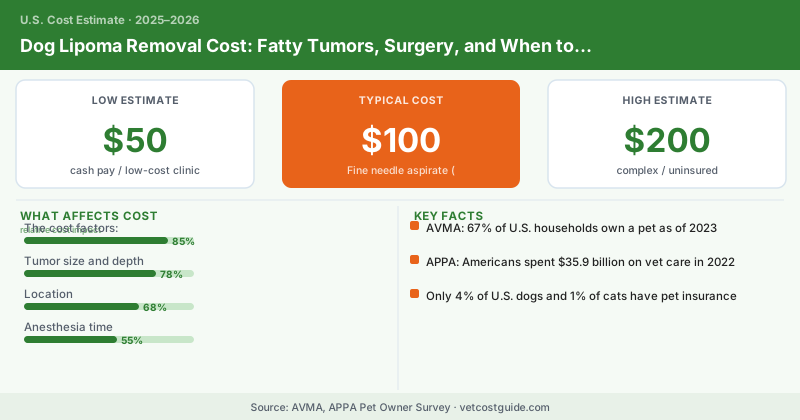
FNA costs $50–$200. It’s the most important $100 you’ll spend on a lump, because it separates “watch and wait” from “take this out immediately.”
- Lipoma: fat cells only — typically benign, monitor or remove based on location and growth rate
- Mast cell tumor: must be removed with wide margins — these are dangerous
- Soft tissue sarcoma: requires referral and aggressive removal
- Sebaceous cyst or hematoma: different treatment entirely
- Inconclusive: tissue sent to an external lab (adds $100–$200)
When Should a Lipoma Be Removed?
Here’s where most owners get confused — the vet says it’s benign and tells you to “monitor it.” What does monitoring actually mean, and when does monitoring turn into surgery?
Remove it if:
- It’s growing quickly (doubling size in under 3 months)
- Location impairs movement — armpits (axillary), between leg muscles (intramuscular), or over the spine
- It’s uncomfortable for the dog — causing limping, skin irritation, or affecting gait
- It’s large enough that removal will only get harder and riskier over time (>5 cm)
- It’s interfering with function — near an eyelid, in the groin, or compressing tissue
Watch and wait if:
- It’s been stable in size for 6–12 months
- It’s soft, freely movable under the skin, and not near joints or the spine
- Your dog is older and/or has anesthetic risk factors
- It’s small (<2 cm) and away from any functional structures
What Drives the Cost of Lipoma Removal
Size matters most. A golf ball-sized lipoma on the flank is a 20-minute outpatient surgery. A softball-sized lipoma deep in the armpit — an area called an axillary or infiltrative lipoma — can take 60–90 minutes, requires more anesthesia, carries more bleeding risk, and costs 2–3x more.
The cost factors:
- Tumor size and depth: superficial vs. intramuscular is a massive price difference
- Location: armpits and between muscles require more surgical skill
- Anesthesia time: billed per hour or half-hour in most practices
- Pre-anesthetic bloodwork: $80–$200, often required for dogs over 7
- Whether histopathology is sent: the excised tissue can be formally biopsied to confirm the diagnosis ($100–$200 extra, but worth it for larger or atypical masses)
- Number of lumps removed in one session: removing 2–3 lipomas at once is far cheaper than separate procedures
Infiltrative lipomas are a special category. Unlike regular lipomas that sit in a neat capsule under the skin, infiltrative lipomas grow into muscle tissue and don’t have clean margins. They’re still benign but can recur after removal, and they can compress nerves and cause pain or lameness. If your vet says “infiltrative,” the removal is significantly more complex — expect $1,500–$3,000 and possibly a referral to a surgical specialist.
Breeds Most Commonly Affected
According to the American College of Veterinary Surgeons, Labrador Retrievers, Golden Retrievers, Doberman Pinschers, Miniature Schnauzers, and mixed large-breed dogs are disproportionately represented in lipoma cases. Overweight and spayed female dogs also develop lipomas more frequently than their lean or intact counterparts. If you have a 9-year-old Lab, you’re almost certainly going to have this conversation with your vet at some point — probably more than once.
Pre-Surgical Costs to Plan For
Beyond the surgery itself, most vets require:
- Pre-anesthetic exam: included in many surgery fees, otherwise $50–$100
- Pre-anesthetic bloodwork (CBC + chemistry): $80–$200 — non-negotiable for dogs over 7 or with health conditions
- IV catheter and fluids during anesthesia: $50–$120
- E-collar to prevent licking the incision: $15–$30
A realistic budget for a mid-sized lipoma removal in an older dog, including pre-surgical workup, is $700–$1,500.
Recovery and Post-Op Care
Lipoma removal is generally a routine outpatient procedure — most dogs go home the same day. Recovery involves:
- Activity restriction: 10–14 days of leash walks only
- Incision monitoring: checking for redness, swelling, or discharge twice daily
- Antibiotics and pain medication: typically 5–7 days ($30–$80 take-home)
- Suture removal: at a follow-up visit 10–14 days post-surgery ($50–$100)
Complications are uncommon but include seroma formation (fluid accumulation at the surgery site), which may need to be drained, and delayed wound healing in overweight dogs.
Does Pet Insurance Cover Lipoma Removal?
Most comprehensive pet insurance policies cover lipoma removal as an illness/surgical condition — with one important catch: if your dog has ever had a lump examined by a vet, insurers may classify it as a pre-existing condition. This is why timing matters with pet insurance — ideally you’re insured before the first lump appears on the radar. For dogs that have already been diagnosed with a lipoma, CareCredit for vet bills and vet payment plans are practical alternatives.
The Bottom Line
Most dog lipomas don’t need to be removed — they’re benign, stable, and harmless. But some need to come out, and the longer you wait on a growing lipoma, the bigger and more expensive the surgery becomes. Start with a fine needle aspirate ($50–$200) to confirm it’s a lipoma, not something else. Then make a removal decision based on location and growth rate, not just the fact that there’s a lump. Simple removal runs $200–$700. Complex, large, or infiltrative cases run $1,000–$3,000. When in doubt, ask your vet: “Is this location one where waiting makes the surgery harder?” If the answer is yes, sooner is cheaper.
Frequently Asked Questions
Dog lipoma removal typically costs $200–$1,500 per tumor, depending on size, location, and your veterinarian's experience level. Larger lipomas or those in difficult-to-access areas (like the chest or limbs) tend toward the higher end, while small, superficial ones may cost closer to $200–$400. If your dog has multiple lipomas, many vets offer modest discounts for removing several in one procedure.
Most pet insurance plans cover lipoma removal if deemed medically necessary, but many classify it as an elective procedure with limited coverage or higher deductibles. You typically pay $200–$500 out-of-pocket after your deductible ($250–$1,000), and coverage ranges from 70–90% of remaining costs depending on your plan. Review your policy's fine print, as some insurers exclude fatty tumors entirely or cap payouts at $100–$300 per claim.
Surgery is recommended if the lipoma is growing rapidly, interfering with movement or comfort, becoming infected, or located where it could rupture or cause problems. Many vets suggest monitoring stable, non-bothersome lipomas with photos and periodic check-ups rather than removing them immediately, since benign lipomas pose minimal risk. Recovery from removal takes 10–14 days of restricted activity and suture removal at two weeks.