The quote was $2,800 — and that was just for one knee. For many small-breed dog owners, a luxating patella diagnosis comes with sticker shock, especially when the vet mentions the other knee might need surgery too. Here’s the honest breakdown of what you’re facing, what grade actually determines treatment, and where costs vary most.
- Luxating patella surgery costs $1,500–$3,000 at a general practice and $2,500–$4,000 at a board-certified surgical specialist.
- Grade 1–2: often monitored conservatively. Grade 3–4: surgery is almost always recommended.
- About 50% of affected dogs have both knees involved — potentially doubling total costs.
- Post-op physical therapy runs $75–$150/session and is strongly recommended for full recovery.
- Recovery takes 8–12 weeks of strict activity restriction.
What Is a Luxating Patella?
The patella — your dog’s kneecap — sits in a groove at the bottom of the femur called the trochlear groove. In dogs with luxating patella (LP), that groove is too shallow or the bone alignment is off, causing the kneecap to pop in and out. You’ve probably seen it: the dog takes a few hops on three legs, then shakes the leg and trots off normally. That’s the kneecap relocating itself.
It’s the most common orthopedic condition in small dogs. The American College of Veterinary Surgeons (ACVS) identifies it as a primary cause of hind-limb lameness in small breeds, with Pomeranians, Chihuahuas, Toy Poodles, Yorkshire Terriers, and French Bulldogs at highest risk. Larger breeds can develop it too, though less commonly.
The Grading System Drives Treatment Decisions
Your vet grades the luxation on a 1–4 scale during a hands-on exam. The grade determines almost everything about treatment and cost.
Grade 1: The patella can be pushed out of the groove manually but immediately pops back. The dog rarely shows symptoms. Conservative management — weight control, low-impact exercise, joint supplements like glucosamine/chondroitin — is usually sufficient. Surgery isn’t indicated at this stage.
Grade 2: The patella luxates spontaneously but can be manually replaced. Intermittent lameness is present. Many Grade 2 dogs do fine long-term without surgery, but those with frequent episodes or progressive symptoms are good surgical candidates. Your vet will help you decide.
Grade 3: The patella is permanently out of the groove and can be manually replaced only briefly. The dog compensates with an abnormal gait. Surgery is almost always recommended — without it, the joint degrades rapidly and arthritis sets in permanently.
Grade 4: The patella is permanently and severely luxated, and the leg may be structurally deformed. Surgery is required, though outcomes vary depending on severity. These cases often need a surgical specialist.
Cost Breakdown
| Service | Low | Average | High |
|---|---|---|---|
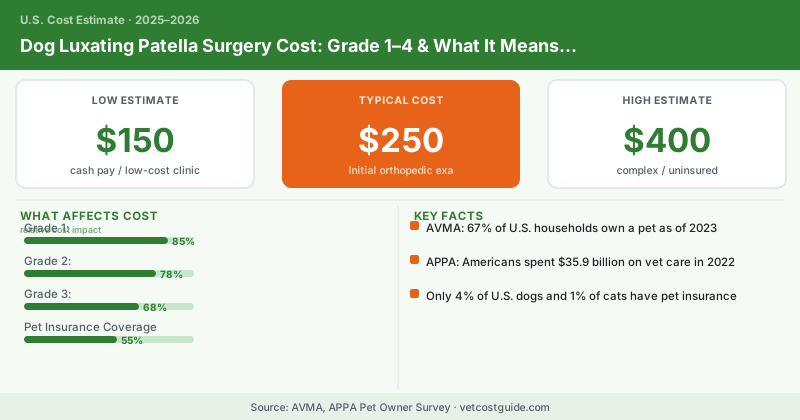
| Initial orthopedic exam + X-rays | $150 | $250 | $400 |
| General practice LP surgery (per knee) | $1,500 | $2,200 | $3,000 |
| Specialist surgeon LP surgery (per knee) | $2,500 | $3,200 | $4,000 |
| Bilateral surgery (both knees, specialist) | $4,500 | $6,000 | $8,000 |
| Post-op recheck visits (2–3 visits) | $100 | $175 | $250 |
| Physical therapy (per session) | $75 | $110 | $150 |
| Initial PT series (6–8 sessions) | $450 | $660 | $1,200 |
The difference between a general practice surgeon and a board-certified veterinary surgeon (DACVS) is real. Specialists charge more, but they perform these procedures far more frequently and have access to advanced imaging. For Grade 3–4 cases or bilateral surgeries, many vets refer directly to a specialist — and that’s usually the right call.
Surgical Options Your Vet May Discuss
Two main techniques are used, often in combination:
Trochleoplasty deepens the trochlear groove so the patella has a proper track to sit in. It’s the foundational procedure for most LP surgeries.
Tibial tuberosity transposition (TTT) realigns the attachment point of the patellar ligament. When the bone geometry is the root cause of the luxation — which it often is — TTT addresses the structural problem directly.
Some cases also need a lateral imbrication (tightening the joint capsule on one side) to keep the patella centered post-op. Your surgeon will determine the right combination based on your dog’s specific anatomy.
Both Knees: The Bilateral Reality
ACVS data indicates approximately 50% of dogs with luxating patella have bilateral involvement — both knees affected, though often at different grades. Your vet will evaluate both legs at diagnosis.
Staging is common: surgeons often operate on the worse knee first, then the second knee 6–8 weeks later once the dog can bear weight and compensate during the second recovery. Trying to do both at once leaves the dog with no functional leg to stand on.
Budget accordingly. If both knees need surgery with a specialist, you’re realistically looking at $5,000–$8,000 all-in with exams and post-op care.
Post-Op Recovery: Don’t Skip Physical Therapy
Recovery takes 8–12 weeks of strict activity restriction — no jumping, no stairs, no off-leash running. This is non-negotiable. Too much activity before the bone has healed causes surgical failure and a do-over.
Physical therapy isn’t optional fluff. Controlled underwater treadmill sessions, range-of-motion exercises, and progressive weight-bearing help dogs recover faster and with less long-term stiffness. Expect $75–$150 per session and 6–8 sessions for a standard recovery course. A good surgical outcome followed by poor rehab compliance wastes the investment.
Delaying Grade 3–4 surgery doesn’t save money — it costs more. Dogs living with chronic luxation develop progressive arthritis, muscle atrophy, and sometimes cruciate ligament tears (because the abnormal gait stresses the CCL). Cruciate repair adds another $3,500–$5,500 per knee on top of everything else. Early surgery protects the joint.
Pet Insurance and Luxating Patella
Most comprehensive pet insurance policies cover LP surgery if the condition is first diagnosed after your policy’s enrollment date. The AVMA notes orthopedic conditions are among the top reasons dogs see veterinary specialists, and LP surgery is a well-recognized covered procedure under most illness policies.
Watch for: breed-specific exclusion riders (some policies exclude congenital orthopedic conditions in predisposed small breeds), and bilateral clauses that limit coverage to one knee. Read your policy’s definitions of “bilateral conditions” carefully — some insurers treat bilateral LP as one condition with a single payout cap.
If your dog isn’t insured yet and has shown early signs of LP, disclose honestly — insurers will likely exclude the condition. But a healthy dog enrolled before any symptoms develop has good coverage prospects for this exact scenario.
Frequently Asked Questions
How much does luxating patella surgery cost for dogs? Surgery at a general practice typically runs $1,500–$3,000 per knee. A board-certified veterinary surgeon charges $2,500–$4,000 per knee. Since roughly 50% of affected dogs have both knees involved, total costs can reach $3,000–$8,000.
Does a dog always need surgery for a luxating patella? No. Grade 1 and most Grade 2 cases are often managed conservatively with weight control, joint supplements, and physical therapy. Grade 3 and Grade 4 cases almost always require surgery to prevent permanent joint damage and ongoing pain.
Does pet insurance cover luxating patella surgery? Most comprehensive accident-and-illness policies cover luxating patella surgery if the condition is diagnosed after enrollment. Bilateral surgery on both knees is usually covered as two separate claims. Policies with orthopedic riders or breed-exclusion clauses for small breeds may deny coverage — read your policy carefully before assuming it’s covered.
Frequently Asked Questions
Surgery at a general practice typically runs $1,500–$3,000 per knee. A board-certified veterinary surgeon charges $2,500–$4,000 per knee. Since roughly 50% of affected dogs have both knees involved, total costs can reach $3,000–$8,000.
No. Grade 1 and most Grade 2 cases are often managed conservatively with weight control, joint supplements, and physical therapy. Grade 3 and Grade 4 cases almost always require surgery to prevent permanent joint damage and ongoing pain.
Most comprehensive accident-and-illness policies cover luxating patella surgery if the condition is diagnosed after enrollment. Bilateral surgery on both knees is usually covered as two separate claims. Policies with orthopedic riders or breed-exclusion clauses for small breeds may deny coverage — read your policy carefully before assuming it's covered.