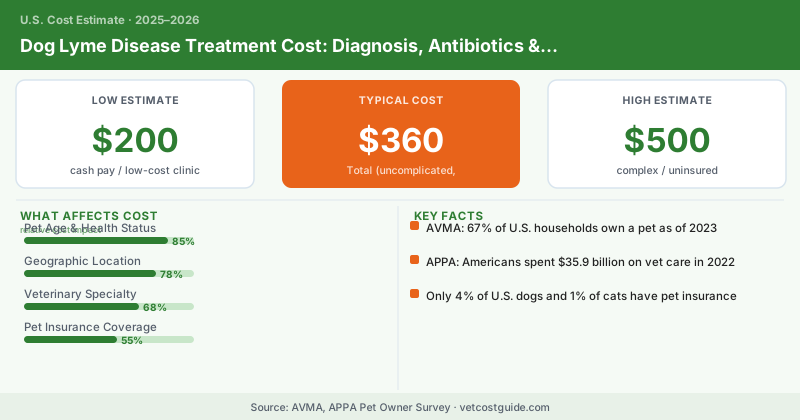
Most dogs with Lyme disease don’t limp dramatically or spike a fever. The CDC estimates that only 5–10% of infected dogs ever show clinical signs — but when they do, joint pain, fatigue, and kidney complications can follow. Treating a confirmed case costs $200–$500 for a standard antibiotic course, rising sharply to $1,000–$3,000+ if Lyme nephritis develops. Here’s exactly what you’re paying for at each stage.
- Lyme C6 antibody test (in-clinic): $45–$85
- Quantitative C6 test (send-out lab): $80–$150
- Doxycycline 30-day course: $50–$150
- Urine protein:creatinine ratio (kidney monitoring): $50–$100
- Full treatment course (uncomplicated): $200–$500
- Lyme nephritis hospitalization and management: $1,000–$3,000+
Lyme Disease Treatment Costs at Each Stage
| Service | Low | Average | High |
|---|---|---|---|
| Wellness exam | $55 | $85 | $140 |
| 4Dx/SNAP test (tick-borne panel) | $45 | $65 | $85 |
| Quantitative C6 (send-out) | $80 | $120 | $150 |
| Doxycycline (30-day course) | $50 | $95 | $150 |
| Urinalysis + UPC ratio | $60 | $100 | $145 |
| Follow-up exam + retest (6 months) | $100 | $165 | $250 |
| Lyme nephritis hospitalization (3 days) | $900 | $1,600 | $2,800 |
| Total (uncomplicated, early) | $200 | $360 | $500 |
| Total (nephritis case) | $1,000 | $2,100 | $3,200 |
Understanding What You’re Paying For
Most Lyme diagnoses start with a routine wellness visit — often during a heartworm/tick-borne disease screening with a 4Dx or SNAP test. These in-clinic tests detect antibodies to Borrelia burgdorferi (the Lyme bacterium) alongside heartworm, Ehrlichia, and Anaplasma.
A positive result doesn’t automatically mean treatment is needed. Vets typically order the quantitative C6 antibody test to measure the antibody level — a value above 30 U/mL with clinical signs is the standard treatment threshold per ACVIM (American College of Veterinary Internal Medicine) guidelines. Dogs with low C6 values and no symptoms are often monitored rather than treated immediately.
Doxycycline is the first-line antibiotic for Lyme in dogs — 30 days at 10 mg/kg daily. It’s inexpensive and effective for clearing the bacteria and resolving clinical signs. Most dogs improve within 3–5 days of starting treatment.
Kidney monitoring matters. Lyme nephritis — a protein-losing kidney disease triggered by Lyme — is the most serious complication and the most expensive outcome. It’s not common, but certain breeds (Golden Retrievers, Labs, Bernese Mountain Dogs, Shelties) are disproportionately affected. A baseline urinalysis and urine protein:creatinine (UPC) ratio test before or during treatment is standard practice. If proteinuria is present, the dog needs nephrology-level evaluation and ongoing management.
The Prevention Math
Lyme disease prevention is dramatically cheaper than treatment. According to AVMA data, tick-borne diseases affect dogs in all 50 states, but Lyme risk is concentrated in the Northeast, upper Midwest, and Pacific Northwest. In high-risk areas, prevention includes:
- Lyme vaccine: $25–$45 per dose (initial series + annual booster)
- Tick preventives (oral or topical): $15–$65 per month depending on product and dog size
- Annual tick-borne disease screening: included in most wellness exam packages
Total annual prevention cost for a high-risk dog: $150–$350. That’s well below the $350–$500 average treatment cost for even an uncomplicated infection — and dramatically below the potential cost of nephritis.
Lyme disease in dogs doesn’t behave like Lyme disease in humans. Dogs don’t develop the classic “bull’s-eye” rash. Most infected dogs are asymptomatic for months before lameness or kidney signs appear. Annual tick-borne disease testing — not just visual tick checks — is the only reliable way to catch it. If you live in a high-risk area and your dog isn’t on a tick preventive year-round, talk to your vet about starting one.
When Costs Escalate: Lyme Nephritis
Lyme nephritis is the scenario that makes Lyme disease expensive. The immune response to Borrelia can damage the kidney’s filtering structures, causing progressive protein loss in the urine. Affected dogs often show non-specific signs — lethargy, decreased appetite, weight loss, increased thirst and urination — that look like many other conditions.
Diagnosis requires bloodwork (BUN, creatinine, phosphorus), urinalysis with UPC ratio, and often abdominal ultrasound. Treatment is multi-pronged: immunosuppressive therapy, kidney-protective diet, doxycycline, and ACE inhibitors or angiotensin blockers to reduce protein loss. Management is ongoing and expensive, often running $500–$1,000 per month in active disease phases.
Pet insurance that was in place before Lyme diagnosis covers most of this. Tick-borne disease treatment is categorized as an illness, so accident-only policies don’t apply — you need accident-and-illness coverage.
Frequently Asked Questions
Can Lyme disease be cured in dogs? Doxycycline clears the active infection and resolves clinical signs in most cases. However, antibodies may remain detectable for months to years after treatment — a positive test after treatment doesn’t mean the dog is re-infected. The quantitative C6 value should decrease by at least 50% within 6 months of completing treatment, which is the typical success marker.
Do all tick-bitten dogs get Lyme disease? No. The tick has to be attached for at least 24–48 hours to transmit Borrelia, and even then, transmission doesn’t guarantee infection or illness. The AVMA estimates that only a fraction of tick-bitten dogs develop active disease. This is why annual testing — rather than treating every positive exposure — is the standard approach.
Is the Lyme vaccine worth it? In moderate-to-high-risk areas, yes. The vaccine doesn’t provide 100% protection, but it significantly reduces the risk of infection and virtually eliminates the risk of Lyme nephritis in vaccinated dogs. It’s most effective when combined with year-round tick preventives.
Frequently Asked Questions
A Lyme C6 antibody test performed in-clinic typically costs $50–$150, though some veterinary clinics charge up to $200 depending on location and whether it's part of a broader wellness panel. If your dog shows symptoms and requires a full diagnostic workup including bloodwork and urinalysis, expect the total initial testing cost to reach $200–$400.
Most accident-and-illness pet insurance plans cover Lyme disease treatment, including antibiotics and diagnostics, though you typically pay out-of-pocket first and receive reimbursement at 70–90% after meeting your deductible. However, some policies exclude tick-borne illnesses or classify chronic Lyme nephritis as a pre-existing condition, so review your specific plan's coverage details before treatment begins.
Standard Lyme disease treatment involves a 28-day course of doxycycline or amoxicillin, costing $200–$500 total for the medication and follow-up care. If your dog develops Lyme nephritis (kidney disease), long-term management may require 6–12 months of additional antibiotics, dietary changes, and monitoring, pushing costs to $1,000–$3,000 or more.