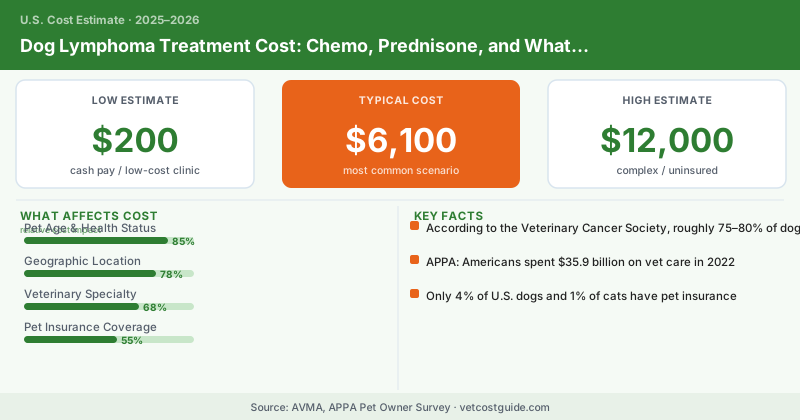
Lymphoma is the most common cancer diagnosed in dogs. The American Veterinary Medical Association estimates it accounts for roughly 7–24% of all canine cancers, making it the diagnosis thousands of dog owners face every year. If your vet just told you your dog has lymphoma, you’re probably staring at a cost range that runs from $200 to $12,000 — and you have no idea yet what you’re choosing between. Here’s a straightforward breakdown.
- Prednisone only (palliative): $20–$50/month. Induces partial remission in 40–50% of dogs for 1–3 months. No survival benefit long-term, but lowest cost and no clinic visits.
- Single-agent doxorubicin (Dox-only protocol): $1,500–$3,500 total. 5 treatments over 10 weeks. Median survival ~6–8 months.
- CHOP protocol (multi-agent): $6,000–$12,000 total over 19–25 weeks. The gold standard. Median first remission 12–13 months; ~25% of dogs survive 2 years.
- Modified/abbreviated CHOP (budget protocol): $3,000–$6,000. Shorter duration, comparable initial remission but lower long-term outcomes.
- Most dogs tolerate chemo well — side effects are milder than in human oncology
Why Lymphoma Costs Vary So Dramatically
The range — $200 to $12,000 — isn’t marketing confusion. It reflects genuinely different treatment goals and different lengths of life bought. Prednisone is a quality-of-life decision, not a curative one. CHOP chemotherapy is the evidence-backed path to longest survival. The choice between them is yours to make with your vet.
| Protocol | Total Cost | Median Survival | Visit Count |
|---|---|---|---|
| Prednisone only | $20–$50/month | 1–3 months | 0 additional |
| Single-agent L-asparaginase | $300–$800 (induction) | Variable | 1–2 |
| Doxorubicin only (5 treatments) | $1,500–$3,500 | 6–8 months | 5 |
| Modified CHOP (12–15 wks) | $3,000–$6,000 | 9–11 months | 8–12 |
| Full CHOP-based (19–25 wks) | $6,000–$12,000 | 12–14 months | 15–20 |
| Post-remission rescue protocols | $1,000–$4,000+ | 3–6 months added | Varies |
The CHOP Protocol: What You’re Getting
CHOP stands for Cyclophosphamide, Hydroxydaunorubicin (doxorubicin), Oncovin (vincristine), and Prednisone. It’s named from human oncology and adapted for dogs. Most canine oncologists use a 25-week protocol with treatments weekly for the first 8 weeks, then every other week.
Each visit involves a brief physical exam, often bloodwork to confirm adequate white cell counts ($60–$150), and the drug administration itself. Some drugs are given orally at home (cyclophosphamide, prednisone). Others are IV infusions administered at the clinic over 15–45 minutes.
The total CHOP cost — $6,000–$12,000 — includes all visits, all drug costs, and routine monitoring. At a university veterinary oncology program, expect the lower end. At a private specialty oncology center in a major metro, expect the higher end. Geographic variation of 30–50% is real.
Dogs Tolerate Chemo Better Than Humans
This surprises most owners. Canine chemotherapy protocols are designed for quality of life, not cure — doses are calibrated to minimize side effects rather than push to maximum tumor kill. According to the Veterinary Cancer Society, roughly 75–80% of dogs on CHOP-based protocols experience no significant adverse effects. About 15–20% have mild, self-limiting nausea, appetite reduction, or fatigue lasting 24–48 hours after treatment. Serious adverse events requiring hospitalization occur in roughly 5–10% of cases — typically neutropenia (low white cell count) or GI illness.
Your dog won’t lose its coat (dog fur grows differently than human hair), won’t feel constantly nauseated, and will typically have a good quality of life throughout treatment.
The Prednisone Path: What to Expect
Prednisone alone costs almost nothing — $20–$50/month — and will induce partial remission in 40–50% of dogs for weeks to months. It’s not without cost, though. Prednisone causes increased thirst, urination, and appetite; can cause GI upset; and with prolonged use leads to muscle wasting and Cushing’s-like effects.
More importantly, prior prednisone treatment significantly reduces the response rate to CHOP if you later decide to pursue chemotherapy. This is a one-way door: starting prednisone when lymphoma is first suspected, before staging or oncology consultation, can close off the most effective treatment path. If there’s any chance you’d want chemo, get the oncology consult first.
What’s Not Included in Those Cost Estimates
Diagnosis and staging: Before any treatment decision, your dog needs confirmed diagnosis (fine needle aspirate or biopsy, $150–$400) and ideally staging (bloodwork, chest X-rays, abdominal ultrasound — $400–$900). This tells you the cancer subtype and extent, which directly affects prognosis and protocol selection.
Rescue protocols: When first remission ends, rescue chemotherapy can sometimes achieve a second remission. Response rates and costs vary widely ($1,000–$4,000+ depending on protocol).
Supportive care: Anti-nausea medications ($20–$50/month), appetite stimulants, and GI protectants are often prescribed alongside chemotherapy. Budget $50–$100/month for these.
B-cell lymphoma and T-cell lymphoma look similar but behave very differently. B-cell lymphoma responds well to CHOP — median survival 12–13 months. T-cell lymphoma has a significantly worse prognosis — median survival 6–9 months on CHOP. Immunophenotyping (a lab test, $100–$200) determines which type your dog has and directly affects whether aggressive treatment is warranted. Request this before committing to a protocol if your oncologist hasn’t already ordered it.
Pet Insurance and Lymphoma
Most comprehensive pet insurance policies cover chemotherapy and cancer treatment as long as lymphoma wasn’t diagnosed before the policy was purchased. With a $500 deductible and 80% reimbursement, a $10,000 CHOP course would generate a $7,600 reimbursement. For owners who purchased insurance when their dog was young and healthy, this is one of the highest-value claims the policy will ever pay.
If your dog is uninsured, some oncology practices offer payment plans directly. CareCredit is widely accepted at specialty oncology centers and offers 0% APR for 12–18 months on large charges.
The Honest Conversation About Goals
There’s no wrong answer. A 12-year-old dog with concurrent heart disease and kidney dysfunction isn’t the same candidate as a 5-year-old otherwise healthy dog. Prednisone as palliative care for an older dog with other conditions — keeping them comfortable and happy for a few more good months — is a completely legitimate choice that many experienced veterinarians would make for their own dogs.
The best thing you can do right now: get an oncology consultation before making any decision. Many veterinary oncologists offer consultations for $100–$250, during which they’ll walk through your specific dog’s situation, subtype, staging, and realistic expectations for each path. That conversation is worth paying for.
Frequently Asked Questions
How do I find a board-certified veterinary oncologist? The Veterinary Cancer Society (vetcancersociety.org) maintains a searchable directory. University veterinary hospitals also have oncology departments, often at lower cost than private specialty practices.
Can lymphoma go into complete remission? Yes. With CHOP, approximately 80–90% of dogs with B-cell lymphoma achieve complete remission initially. The challenge is duration — median first remission is 12–13 months, and most dogs eventually relapse.
Is lymphoma painful for dogs? Lymphoma itself is generally not painful in the way solid tumor cancers can be. Dogs often feel and act largely normal despite significant lymph node enlargement. Pain becomes a consideration in late-stage disease when organ involvement increases.
Frequently Asked Questions
CHOP chemotherapy typically costs $4,000–$9,000 for the full multi-drug protocol, which usually spans 16–25 weeks with multiple injections scheduled throughout treatment. Individual sessions range from $300–$800 depending on your veterinary clinic and whether your dog requires additional bloodwork or supportive medications.
Most pet insurance policies cover lymphoma treatment if your dog was enrolled before diagnosis, with typical coverage of 70–90% after you meet your deductible (usually $250–$500). However, many insurers exclude or limit cancer treatments, so you should review your specific policy exclusions before filing a claim.
CHOP chemotherapy costs $4,000–$9,000 and typically extends survival 12–14 months, while prednisone-only palliative care costs $200–$1,000 and may extend survival 4–6 months with fewer side effects. Your choice depends on your dog's age, overall health, and your priorities around treatment intensity versus quality of life and cost.