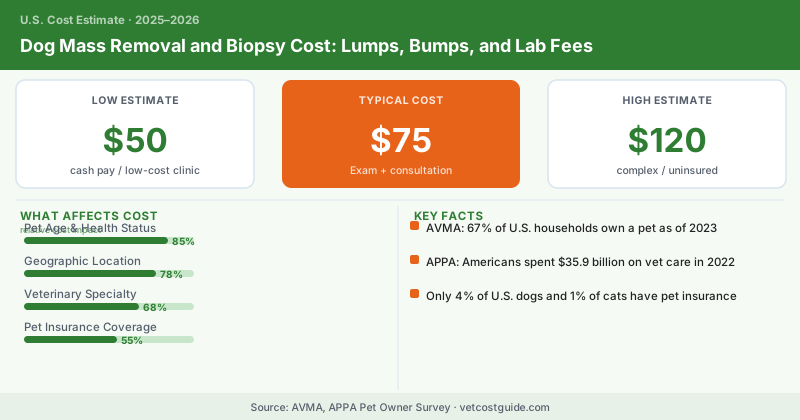
What does it cost to find out if a lump is cancer? More than most people expect, and less than the worst case they fear. Removing a mass and having it biopsied runs $300 to $2,500, depending on how big it is, where it sits, and whether your vet sends it to a pathology lab — which they always should.
The lump on your dog’s side might be a harmless fatty deposit. It might not be. The only way to know for sure is to take it off and let a pathologist look at it under a microscope.
- Fine-needle aspirate (in-clinic preview): $25–$200
- Small surgical mass removal: $300–$800
- Larger or tricky-location removal: $800–$2,500
- Histopathology (lab analysis): $100–$400
- A fine-needle aspirate is the cheap first step — it often tells you whether you’re dealing with a fatty lipoma or something that needs full removal
- The American College of Veterinary Surgeons stresses that wide margins on cancerous masses reduce the chance of regrowth — which is why the removal itself can’t be rushed or skimped
- Skin masses are among the most common reasons dogs over age six see the vet
Mass Removal and Biopsy Cost Breakdown
| Item | Low | High | Typical |
|---|---|---|---|
| Exam + consultation | $50 | $120 | $75 |
| Fine-needle aspirate + cytology | $25 | $200 | $100 |
| Pre-op blood work | $80 | $200 | $130 |
| Anesthesia + monitoring | $150 | $600 | $350 |
| Mass removal (per mass, small) | $200 | $600 | $400 |
| Mass removal (large/complex) | $600 | $1800 | $1000 |
| Histopathology | $100 | $400 | $200 |
| Post-op meds + suture removal | $40 | $150 | $80 |
Start With the Cheap Test
Before anyone reaches for a scalpel, your vet should do a fine-needle aspirate. They poke the lump with a tiny needle, smear the cells on a slide, and either read it in-house or send it out. For under $200, this often answers the big question: is it a benign fatty lump or something concerning?
If it’s clearly a lipoma and not bothering your dog, your vet may recommend simply monitoring it. That’s the cheapest outcome of all. If the aspirate is suspicious or inconclusive, removal and full biopsy become the next step.
Why “Just Cut It Off” Costs What It Does
Removing a mass isn’t snipping a skin tag. It’s surgery under anesthesia, with the same foundation costs as any operation — IV catheter, monitoring, a recovery period. Location matters enormously: a mass on a loose-skinned flank is simple, while one on a leg, eyelid, or near a joint where skin is tight gets complicated and pricey.
If the mass is or might be cancerous, the surgeon takes “wide margins,” meaning extra healthy tissue around it to catch stray cells. That bigger excision is more work, more suturing, and sometimes requires reconstruction — all of which raises the bill but lowers the odds of regrowth.
The Biopsy Is Not Optional
Some owners ask to skip the lab fee to save $200. Don’t. The biopsy is the entire point. It confirms whether the whole mass came out, identifies the exact type if it’s cancer, and tells you whether you’re done or whether dog cancer treatment is the next conversation. Removing a mass without biopsying it is like getting a test result and never opening the envelope.
Managing the Cost
Lump removals span a huge price range, so a few moves help:
- Get the aspirate first — it may save you the entire surgery
- Bundle multiple small masses into one anesthesia event rather than separate visits
- Ask about combining the procedure with a scheduled dog teeth cleaning if your dog is due, since the anesthesia is already covered
- Check your pet insurance — most plans cover diagnostic biopsies and removal of cancerous masses; our pet insurance how it works guide explains reimbursement
- Use CareCredit for vet bills if a large removal stretches the budget
A routine average vet visit is where most lumps first get noticed, so don’t skip the annual exam — early detection keeps a small, cheap removal from becoming a large, expensive one.
When to Move Fast
Most lumps aren’t emergencies, but some signals mean don’t wait: a mass that’s growing quickly, changing color, ulcerating, or making your dog uncomfortable. Rapidly changing masses get aspirated sooner rather than later. The lump that doubles in a month is the one you want a pathologist looking at this week, not next quarter.
Frequently Asked Questions
The total cost ranges from $300 to $2,500, depending on the size and location of the mass, plus lab fees for pathology analysis. A small, easily accessible lump might cost $300–$600, while larger masses or those in complex locations can reach $1,500–$2,500 when biopsy is included.
Most pet insurance plans cover mass removal and biopsy as they treat it as an illness or injury, though you typically pay upfront and submit for reimbursement. However, many policies exclude pre-existing conditions or have annual deductibles ($250–$1,000) and copays (10–20%), meaning your out-of-pocket cost could still be $100–$500 even with coverage.
Pathology results typically return within 5–10 business days after the mass is sent to the lab, though some labs offer rush services for an additional fee. Your vet will contact you with results and discuss next steps, which may include additional treatment if the mass is cancerous.