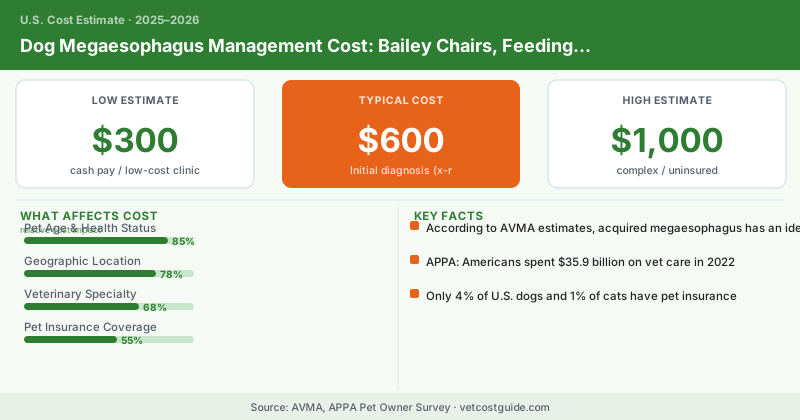
What if your dog couldn’t swallow normally — and every meal became a potential cause of pneumonia? That’s the reality for dogs with megaesophagus, a condition where the esophagus loses motility and food pools instead of moving to the stomach. There’s no surgery that fixes this. Management is lifelong, creative, and costs anywhere from $500 to $3,000+ per year depending on how severe the disease is and whether complications develop. Here’s what you’re actually paying for.
- Diagnosis (x-rays, fluoroscopy, bloodwork): $400–$1,200
- Bailey chair (custom or commercial): $100–$400
- Modified diet supplies (meatballs, slurries, elevated feeding setup): $50–$200/month
- Aspiration pneumonia hospitalization (when it occurs): $800–$2,500
- Ongoing medications (cisapride, sildenafil, treat underlying cause): $50–$200/month
- Annual management cost (uncomplicated): $500–$1,500
- Annual cost with pneumonia episodes: $2,500–$5,000+
Megaesophagus Management Costs
| Cost Category | Low | Average | High |
|---|---|---|---|
| Initial diagnosis (x-rays + bloodwork) | $300 | $600 | $1,000 |
| Fluoroscopic swallow study | $250 | $450 | $700 |
| Bailey chair (commercial) | $100 | $200 | $400 |
| Monthly food modification supplies | $30 | $80 | $150 |
| Monthly medications (if indicated) | $40 | $120 | $200 |
| Aspiration pneumonia treatment | $800 | $1,500 | $2,500 |
| Annual management (stable dog) | $500 | $900 | $1,500 |
| Annual cost (with 1–2 pneumonia episodes) | $1,800 | $3,000 | $5,000 |
What Megaesophagus Actually Costs to Diagnose
Most megaesophagus diagnoses begin with a chest x-ray — a dilated, food-filled esophagus is visible on a plain radiograph. But x-rays don’t tell you whether the esophagus has any motility remaining, which matters for treatment decisions. That’s where fluoroscopy comes in: a real-time x-ray video of your dog swallowing barium contrast, showing exactly how food moves (or doesn’t). Fluoroscopy is available at specialty centers and university veterinary hospitals.
Bloodwork matters too. Megaesophagus is often secondary to another disease: hypothyroidism, Addison’s disease, myasthenia gravis, or inflammatory myopathy. According to AVMA estimates, acquired megaesophagus has an identifiable underlying cause in 25–30% of dogs. Finding and treating the primary disease sometimes improves or resolves the megaesophagus — which is why a full diagnostic workup upfront (even at $800–$1,200) often pays off long-term.
The Bailey Chair: Your Most Important Investment
A Bailey chair is a specially designed chair that holds a dog upright at a 45–90 degree angle for 20–30 minutes after every meal, using gravity to move food from the esophagus into the stomach. It’s not a medical device — it’s a piece of furniture — but it’s the cornerstone of megaesophagus management and genuinely life-saving.
Commercial Bailey chairs run $150–$400. Custom-built versions using PVC pipe or repurposed furniture can cost under $50 if you’re handy. Plans are freely available online from the Canine Megaesophagus Support Group, a community resource for affected dog owners.
Feeding consistency matters as much as the chair. Dogs with megaesophagus often need food in a specific consistency — “meatballs” (food rolled into balls sized to swallow whole), slurries, or specific textures determined by the fluoroscopy results. What works varies by individual dog, and finding the right texture often requires experimentation supervised by your vet.
Aspiration Pneumonia: The Major Cost Driver
Aspiration pneumonia — lung infection from food or liquid inhaled into the airways — is the primary cause of death in megaesophagus dogs and the biggest cost driver. It develops when regurgitated material enters the lungs, causing bacterial infection and inflammation.
Signs include coughing, labored breathing, fever, lethargy, and green-tinged nasal discharge. Treatment requires hospitalization: IV antibiotics, nebulization therapy, oxygen support if hypoxic, and repeat chest x-rays to track progression. A single episode runs $800–$2,500. Dogs with poorly managed megaesophagus may develop multiple episodes per year.
Good management — upright feeding, appropriate food consistency, never leaving a dog unsupervised around water bowls — dramatically reduces pneumonia frequency. Dogs whose owners master the feeding protocol often go months or years between episodes.
Any dog with megaesophagus coughing, breathing rapidly, or running a fever needs emergency evaluation. Aspiration pneumonia can progress from “seems off” to respiratory failure within 24 hours. Don’t monitor it overnight — go to the vet or an emergency clinic the same day symptoms appear.
When Underlying Causes Are Treatable
Myasthenia gravis is the most common treatable underlying cause of acquired megaesophagus in dogs. It’s diagnosed with an acetylcholine receptor antibody blood test and treated with pyridostigmine. Approximately 25% of dogs with myasthenia gravis-associated megaesophagus experience spontaneous remission — meaning the megaesophagus can resolve if the immune disease goes into remission.
Hypothyroidism-associated megaesophagus often improves with thyroid hormone supplementation. Addison’s disease treatment can also improve esophageal function when that’s the underlying cause.
This is why the diagnostic workup matters. Treating “megaesophagus” without identifying the cause misses the opportunity to address the real problem.
Financial Planning for a Long-Term Condition
Megaesophagus is a chronic management situation, not a one-time cost. Realistic annual budgets for a well-managed dog range from $500–$1,500 in stable years. Pet insurance policies that cover chronic illness (accident-and-illness plans, not accident-only) typically cover aspiration pneumonia episodes and ongoing medication costs, but not the Bailey chair or feeding supplies.
Many owners find that connecting with the online megaesophagus community (Canine Megaesophagus Support Group on Facebook has thousands of members) reduces their learning curve dramatically and helps them avoid the feeding mistakes that lead to pneumonia — which is the real financial protection.
Frequently Asked Questions
What’s the life expectancy of a dog with megaesophagus? It depends entirely on the underlying cause and management quality. Dogs with idiopathic congenital megaesophagus who are well-managed live normal lifespans in many cases. Dogs with poorly controlled disease or frequent aspiration pneumonia have shorter, harder lives. There’s no single prognosis — individual variation is enormous.
Can puppies grow out of megaesophagus? Sometimes. Congenital megaesophagus in puppies — often presenting as regurgitation from the first solid food — occasionally resolves by 6–12 months of age as the nervous system matures. German Shepherds, Great Danes, and Irish Setters are disproportionately affected. Vets typically recommend managing carefully and re-evaluating with x-rays and fluoroscopy at 6 and 12 months.
Is there a surgery to fix megaesophagus? No reliable surgical treatment exists for idiopathic megaesophagus. Some cases associated with persistent right aortic arch (a vascular ring anomaly) in puppies are corrected surgically — this is a different diagnosis — but the segmental dilation from that condition may persist even after surgery.
Frequently Asked Questions
A Bailey chair typically costs $300–$800 depending on size, materials, and whether you purchase a commercial model or have one custom-built. Many owners also DIY versions for $100–$200 using PVC pipe or wood, though commercial chairs offer better durability and ergonomic design for daily feeding.
Most pet insurance plans exclude megaesophagus as a pre-existing condition if diagnosed before enrollment, and many policies classify it as a chronic or congenital condition with limited or no coverage. You can expect to pay 100% out-of-pocket for the Bailey chair, special feeding protocols, and ongoing veterinary monitoring unless your plan has specific chronic illness coverage, which typically covers 70–90% of eligible costs.
Dogs with megaesophagus are fed elevated in a Bailey chair for 10–30 minutes after meals to allow gravity to help food move into the stomach, followed by keeping them upright for another 30 minutes or longer. Feeding typically occurs 3–4 times daily with small, soft, or moistened meals; the entire feeding and positioning routine takes 60–90 minutes per day and is essential to reduce aspiration pneumonia risk.