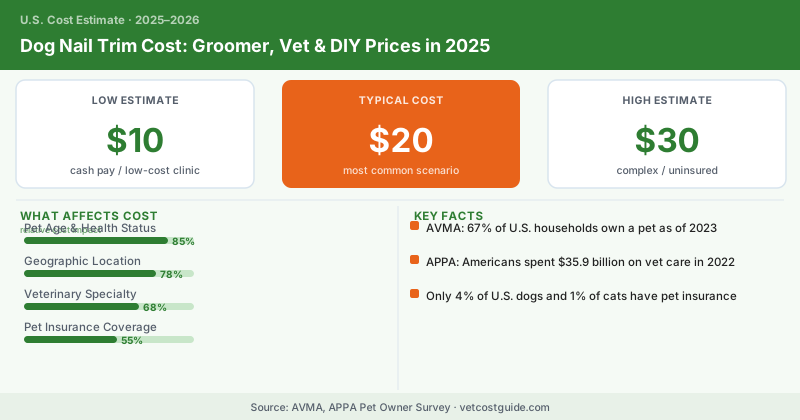
Most dogs need their nails trimmed every 3–6 weeks. That’s 8–17 times a year. At $10–$25 per visit, you’re looking at $80–$400 annually for a service that takes 5–10 minutes — or $0 if you learn to do it yourself with a $15 clipper. The math is simple. What’s less simple is what happens when nails go too long, get quicked by an anxious groomer, or belong to a dog who requires sedation to cooperate. That’s when “a quick nail trim” turns into a $150 vet visit.
Nail Trim Prices by Provider
| Provider | Typical Price | Notes |
|---|---|---|
| Pet store groomer (PetSmart, Petco) | $10–$20 | Walk-in available most locations |
| Independent groomer | $12–$30 | Often includes file/grind option |
| Mobile groomer | $20–$40 | Add-on to full groom or standalone |
| Veterinary clinic (routine) | $15–$45 | Higher if dog is fractious or large |
| Veterinary clinic (with sedation) | $75–$250 | For dogs requiring chemical restraint |
| DIY (clippers or Dremel) | $0–$3/session | After $15–$40 upfront tool cost |
Grind vs. Clip: Is It Worth More?
A Dremel-style grind (rotary file) leaves nails smoother and shorter than clipping and reduces the risk of splitting — but not all dogs tolerate the vibration and sound. Most groomers charge $5–$15 extra for a grind over a standard clip. For dogs prone to nail cracks or those with thick, black nails (where the quick is harder to see), the grind add-on is worth it.
Sedation Nails: The Real Vet Bill
Dogs with severe nail anxiety — bolting, biting, requiring three people to hold — sometimes need chemical sedation for safe nail trims. This isn’t rare. According to a 2021 study in the Journal of Veterinary Behavior, nail trimming is among the top three most stress-inducing handling procedures for dogs. When anxiety is severe enough to require sedation at a vet clinic, the bill looks different:
- Exam fee: $50–$75 (if not an established patient on record that day)
- Sedation (Trazodone + Dexmedetomidine, or Telazol for heavy sedation): $40–$150
- Recovery monitoring: included
- Nail trim itself: $20–$40
- Total: $110–$265
For these dogs, behavioral desensitization is a better long-term investment than repeated sedation visits.
Dewclaws: The Extra Charge You Forget About
Dogs with dewclaws (the extra “thumb” nail on the inside of the leg) need them trimmed too — dewclaws don’t touch the ground, so they grow unchecked and can curl back into the paw. Most groomers and vets include dewclaws in the standard trim price. A few charge $2–$5 extra. Ask before you book if your dog has them.
Severely overgrown nails — those curling toward the paw pad or already touching/embedded in the skin — should be handled by a vet, not a groomer. Cutting curled nails too short can cause intense pain, the quick extends much further in overgrown nails, and embedded nails may need the tip cut, antibiotics, and sedation to treat the puncture wound safely.
The Quick: What Happens When It Gets Cut
Every groomer eventually quicks a dog (cuts into the blood vessel inside the nail). It bleeds a lot, looks alarming, and hurts. Standard response: styptic powder ($5–$10 at any pet store) applied with firm pressure for 30–60 seconds stops the bleeding. Your groomer should carry this. If they don’t, that’s a flag.
A quicked nail doesn’t require a vet visit unless bleeding won’t stop after 10–15 minutes of direct pressure, or signs of infection develop over the following days.
A $15 scissor clipper and a $20 Dremel-style grinder are all you need. The real investment is 3–4 weeks of counter-conditioning: show the tool, give a treat, touch the paw, give a treat, touch a nail, give a treat. Build up slowly. YouTube channels from certified veterinary behaviorists walk through the exact protocol. Once your dog is conditioned, a full trim takes 10–15 minutes at home and costs nothing. For most dog owners, the payback period on the tools is under two months.
How Often, Really?
A good rule: if you can hear your dog’s nails clicking on a hard floor, they’re too long. Nails touching the floor alter the dog’s gait, which over years contributes to joint stress — particularly in senior dogs or breeds prone to orthopedic issues. Monthly trims are the standard recommendation. For dogs that walk frequently on pavement (which files nails naturally), every 6–8 weeks may be sufficient. For dogs that primarily walk on grass or carpet, every 3–4 weeks is often needed.
Annual cost at a groomer, monthly trims: $120–$360. Annual cost DIY after tool purchase: $15–$40 (tools, styptic powder). The savings over a dog’s lifetime are several hundred to several thousand dollars.
Frequently Asked Questions
A basic nail trim costs $10–$30 at a groomer and $15–$45 at a vet clinic. The difference reflects that vets charge higher rates but can handle medical complications, while groomers offer faster service for routine trims on cooperative dogs.
No, most pet insurance plans do not cover routine nail trims because they are considered preventive grooming maintenance, not medical treatment. You'll pay the full cost out-of-pocket unless you have a wellness add-on plan, which some insurers offer for $15–$40 extra per month.
Most dogs need trims every 3–6 weeks (8–17 times per year). If your dog is anxious or won't hold still, you can pay $15–$30 extra for sedation at a vet, ask a groomer for a Dremel grind instead of clippers, or invest $15 in a clipper and do it yourself at home.