In 2010, a dog diagnosed with a nasal tumor had limited options and a median survival of 6 months. Today, stereotactic radiosurgery (SRS/SRT) is changing those numbers — with some studies showing median survival times of 14–18 months. But the technology comes at a price: $6,000–$12,000 for a full radiation course. Here’s what’s actually available, what it costs, and how to decide what’s right for your dog.
What Are Nasal Tumors in Dogs?
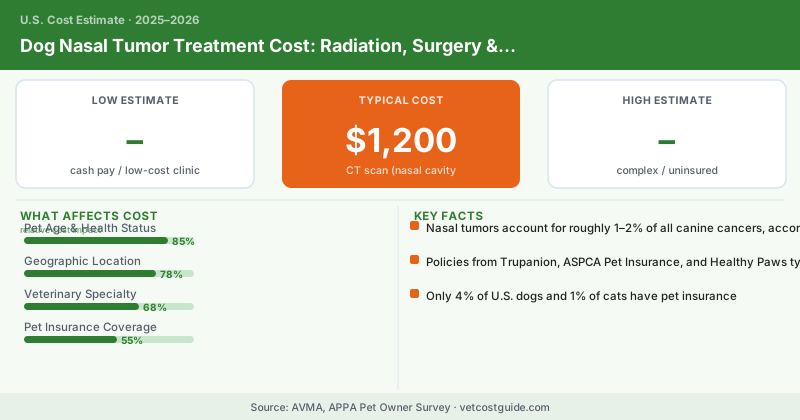
Nasal tumors account for roughly 1–2% of all canine cancers, according to data published in Veterinary Clinics of North America: Small Animal Practice. About 60–75% are carcinomas (epithelial origin) and 20–30% are sarcomas. Most are locally invasive — they tend to destroy the bones of the nasal cavity and push into the brain — but distant metastasis is relatively late and uncommon, which is why aggressive local treatment makes sense.
Larger breeds and long-nosed (dolichocephalic) dogs like Collies, German Shepherds, and Golden Retrievers are overrepresented. Most dogs are diagnosed at 8–11 years of age.
Diagnostic Costs
Before any treatment decision, your dog will need a full diagnostic workup:
| Diagnostic | Cost Range | Purpose |
|---|---|---|
| CT scan (nasal cavity + chest) | $1,200–$2,500 | Stage the tumor, check for metastasis |
| MRI (nasal + brain) | $1,800–$3,500 | Better soft tissue detail than CT |
| Biopsy (rhinoscopic or surgical) | $500–$1,200 | Confirm tumor type before treating |
| Bloodwork + urinalysis | $150–$350 | Baseline before anesthesia/treatment |
| Chest X-rays | $200–$400 | Screen for lung metastasis |
Total diagnostic workup: $2,000–$5,500
This is before you’ve chosen a treatment path.
Treatment Options and Costs
Radiation Therapy (Primary Treatment)
Radiation is the gold standard for nasal tumors because it’s the only modality that meaningfully improves survival time. Two forms are used:
Conventional fractionated radiation (CFRT): 15–20 treatments over 3–4 weeks at a university or specialty center
- Cost: $4,000–$8,000
- Median survival: ~12–14 months
Stereotactic radiosurgery/radiotherapy (SRS/SRT): 1–3 treatments using precise, high-dose beams (similar to CyberKnife or Varian technology in human oncology)
- Cost: $6,000–$12,000
- Median survival: 14–18+ months in recent studies
- Less anesthesia required (fewer sessions), but only available at select facilities
Surgery Alone
Surgical removal of nasal tumors (rhinotomy) without radiation is generally not recommended — margins are essentially never clean given how invasive these tumors are, and surgery without radiation does not improve survival over no treatment. Some oncologists use surgery as an adjunct to radiation in specific cases.
Cost if pursued: $2,000–$5,000 for the surgical procedure, not including anesthesia and hospitalization.
Palliative Care
If curative intent isn’t pursued — whether because of cost, the dog’s age, or owner preference — palliative care focuses on quality of life and symptom control.
- Palliative radiation (3–5 fractions): $1,500–$3,500 — reduces tumor burden and relieves signs for weeks to months
- Piroxicam (NSAID with anti-tumor properties): $20–$60/month
- Carboplatin chemotherapy: $300–$600 per session, may slow progression
- Supportive care: nasal decongestants, anti-inflammatories, antibiotics for secondary infection — $100–$300/month
Most dogs on palliative care for nasal tumors experience nosebleeds, nasal discharge, snoring, and facial distortion as the tumor progresses. Piroxicam has documented anti-tumor effects in some canine nasal tumors and costs very little. Palliative radiation doesn’t cure the cancer but can provide 4–6 months of meaningful symptom relief. Your board-certified oncologist can help you weigh what fits your dog’s situation and your budget.
Total Cost by Approach
- Diagnostics only (no treatment): $2,000–$5,500
- Palliative care path: $3,000–$7,000 total over 6–12 months
- Curative-intent radiation (CFRT): $6,000–$14,000 all-in
- Stereotactic radiosurgery (SRS/SRT): $9,000–$18,000 all-in
Nasal tumors are typically diagnosed late because early signs — mild nasal discharge, occasional nosebleeds, slightly noisy breathing — look like allergies or a minor infection. If your dog has had unilateral (one-sided) nasal discharge or nosebleeds for more than 2–3 weeks that haven’t resolved with antibiotics, request a CT scan. Early diagnosis meaningfully improves outcomes for every treatment option.
Financing and Insurance
Pet insurance that covers cancer treatment is the single best financial backstop for a nasal tumor diagnosis. Policies from Trupanion, ASPCA Pet Insurance, and Healthy Paws typically cover radiation therapy at 70–90% after deductible.
If your dog isn’t insured, CareCredit, Scratchpay, and university veterinary school payment plans are the most common financing paths. Most owners making a decision between palliative and curative care say the most important factor was having a clear picture of total cost — which is why the full diagnostic workup, while expensive, is always worth doing before you commit to a treatment path.
Frequently Asked Questions
Stereotactic radiosurgery (SRS/SRT) for nasal tumors typically costs $6,000–$12,000 for a full course of treatment in 2025–2026. A broader range accounting for conventional radiation and facility variations is $4,000–$15,000, with most treatments completed over 3–5 weeks of outpatient sessions.
Most pet insurance plans classify nasal tumors as pre-existing conditions if diagnosed before enrollment, making them ineligible for coverage. Accident-and-illness policies purchased before diagnosis may cover 70–90% of radiation costs after your deductible ($250–$1,000), leaving typical out-of-pocket costs of $600–$4,500 depending on your plan limits.
Radiation therapy (SRS/SRT at $6,000–$12,000) targets tumor shrinkage and extends median survival to 14–18 months, while palliative care ($500–$2,000) focuses on comfort and pain management without treating the tumor itself, typically providing 4–6 months of symptom relief. Palliative care is often chosen for older dogs, those with advanced disease, or owners seeking to avoid side effects.