Most dogs do fine on a quality commercial food. But some don’t — and for those dogs, the advice from a pet store employee or a dog food brand’s website isn’t going to cut it.
A board-certified veterinary nutritionist (Diplomate ACVN) has completed 4 years of veterinary school, a residency in veterinary nutrition, and passed board examinations. There are fewer than 100 board-certified veterinary nutritionists practicing in the United States. When your dog has a complex medical condition that diet affects, this is the specialist you want.
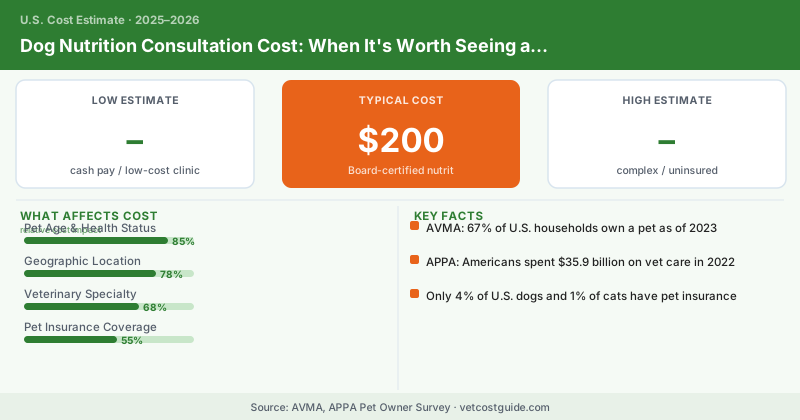
- Board-certified veterinary nutritionist consultation: $150–$400
- Online remote consultation (BalanceIt.com, JustFoodForDogs): $100–$250
- Custom home-cooked diet formulation: $150–$300 one-time cost
- Prescription therapeutic diet (ongoing monthly food cost): $80–$180/month
- Annual monitoring for dogs on therapeutic diets: $200–$400
Nutrition Consultation Costs by Type
| Consultation Type | Cost | What You Get | Best For |
|---|---|---|---|
| Board-certified nutritionist (in-person) | $200–$400 | Full diet analysis, custom formulation, medical integration | Complex medical cases |
| Board-certified nutritionist (remote) | $150–$300 | Same as above via email/video | Any location; most common option |
| Veterinary school nutrition service | $75–$175 | Resident/faculty supervised consult | Budget-conscious; excellent quality |
| BalanceIt.com online service | $100–$200 | Custom recipe formulation | Home-cooked diet planning |
| Petdiets.com consultation | $50–$150 | Balance analysis of current diet | Basic diet evaluation |
| Home-cooked diet formulation (one-time) | $150–$300 | Complete nutritionally balanced recipe | Long-term home cooking |
| Follow-up consultation | $75–$150 | Diet adjustment, recheck | After initial diagnosis changes |
When a Nutrition Consultation Is Worth It
Most dogs eating quality commercial food don’t need a nutritionist. A consultation pays for itself when:
Your dog has a medical condition where diet is treatment:
- Chronic kidney disease (phosphorus restriction, controlled protein)
- Liver disease (modified protein, copper-restricted in Bedlington Terriers and Labrador Retrievers)
- Urinary stones (dietary management is first-line for struvite; helps with oxalate prevention)
- Food allergies with confirmed specific protein triggers
- Inflammatory bowel disease
- Heart disease (sodium restriction, appropriate taurine status)
- Cancer (some evidence for high-protein, low-carbohydrate diets during chemotherapy)
- Pancreatitis (fat restriction)
You’re feeding or considering a home-cooked diet: A 2019 study published in the Journal of the American Veterinary Medical Association analyzed 200 online home-cooked dog diet recipes and found that 95% were nutritionally deficient in at least one essential nutrient, and 83% were deficient in multiple nutrients. Online recipes are not safe substitutes for a properly formulated diet. A one-time $150–$300 consultation to get a genuinely balanced recipe is insurance against long-term nutritional disease.
Your dog is on a raw food diet: Raw diets carry documented risks of Salmonella, Listeria, and E. coli contamination — the FDA has flagged this repeatedly in their raw pet food testing programs. If you’re committed to raw feeding, a nutritionist consultation ensures the diet is at minimum nutritionally balanced. The AVMA recommends against raw diets for immunocompromised pets and in households with immunocompromised humans.
You have a large or giant breed puppy: Incorrect calcium-to-phosphorus ratios in large breed puppy diets contribute to developmental orthopedic disease (DOD) — conditions like osteochondrosis, hypertrophic osteodystrophy, and angular limb deformities. If you’re feeding homemade food to a large breed puppy, get a formulation from a nutritionist.
How to Access a Board-Certified Nutritionist
The American College of Veterinary Nutrition (ACVN) maintains a specialist finder at acvn.org. There are two ways to access consultations:
In-person: Mostly available at veterinary school teaching hospitals or specialty referral centers. Cost: $200–$400.
Remote consult: Most ACVN Diplomates accept remote consultations. They’ll review your dog’s medical records, bloodwork, current diet, and health concerns, then provide a written report with recommendations. Cost: $150–$300. This is how most pet owners access this specialty regardless of location.
Veterinary school nutrition services: Many veterinary schools (UC Davis, Tufts, Ohio State, Cornell) offer nutrition consultations through their teaching hospitals at reduced cost. A faculty-supervised resident provides the consultation. Cost: $75–$175. Quality is excellent.
Prescription Therapeutic Diets
For many medical conditions, the actual intervention is a prescription therapeutic diet — not a homemade diet. These are commercially formulated, consistently manufactured, and AAFCO-tested. Major lines:
- Hill’s Prescription Diet: Extensive range covering kidney, liver, urinary, GI, cardiac, skin/food allergy, weight management, joint health. Monthly cost: $80–$160 depending on dog size and formulation.
- Royal Canin Veterinary Diet: Similar range; some formulas (especially urinary and GI) are preferred by some specialists. $80–$170/month.
- Purina Pro Plan Veterinary Diets: Competitive range, often slightly less expensive. $70–$150/month.
These foods are more expensive than premium commercial foods, but they’re formulated for specific medical conditions with controlled nutrient profiles that matter for disease management.
“Grain-free” diets became popular based on the unfounded idea that grains cause health problems in dogs. In 2019, the FDA issued an advisory warning about a potential association between grain-free, legume-heavy diets and dilated cardiomyopathy (DCM) in dogs. The investigation is ongoing and causality hasn’t been established, but grain-free diets (particularly those using peas, lentils, or potatoes as the primary carbohydrate source) are no longer recommended by most veterinary cardiologists. Conventional diets with traditional grain sources (rice, corn, oats) have not been associated with increased DCM risk.
What to Bring to a Nutrition Consultation
Getting the most value from a nutrition consultation means arriving prepared:
- Current complete diet — brand, product name, amount fed, any treats, supplements
- Recent bloodwork and urinalysis (if available)
- Current weight and body condition score (your vet can provide this)
- Any diagnosed medical conditions with treatment notes
- A list of your dog’s symptoms or concerns
The nutritionist will review this information and provide specific dietary recommendations. For complex cases, they’ll often communicate directly with your primary vet to coordinate diet and medical management.
Frequently Asked Questions
A consultation with a board-certified veterinary nutritionist (Diplomate ACVN) typically costs $150–$400 for an in-person visit. Online consultations are more affordable, ranging from $100–$250, making them a good option if you don't have access to a specialist nearby.
Most standard pet insurance plans do not cover nutrition consultations, as they're considered wellness or preventive care rather than treatment for illness. You'll typically pay the full cost out-of-pocket, though some wellness-focused plans may offer limited reimbursement—check your policy details with your provider.
You should consult a board-certified nutritionist if your dog has chronic health conditions (kidney disease, diabetes, allergies), isn't thriving on commercial food, or needs a specialized homemade diet plan. Your regular veterinarian can provide general feeding advice, but a Diplomate ACVN has specialized training to design medical nutrition therapy tailored to your dog's specific needs.