The orthopedic quote came back and it’s $4,500. Your first reaction might be: “Is that real?” It is. Veterinary orthopedic surgery is genuinely expensive — specialized equipment, board-certified surgeons, lengthy procedures, and extended hospitalization and recovery support push costs into ranges that genuinely surprise people. But the range matters a lot. A simple fracture repair in a small dog looks very different from a bilateral hip replacement in a 90-pound Labrador.
Here’s the full cost picture for the most common dog orthopedic surgeries.
Dog Orthopedic Surgery Costs by Procedure
| Surgery | Low | Typical | High |
|---|---|---|---|
| TPLO (torn CCL / ACL equivalent) | $3,000 | $4,500 | $6,000 |
| TTA (tibial tuberosity advancement) | $2,500 | $3,800 | $5,500 |
| Lateral suture (extracapsular repair) | $1,500 | $2,200 | $3,500 |
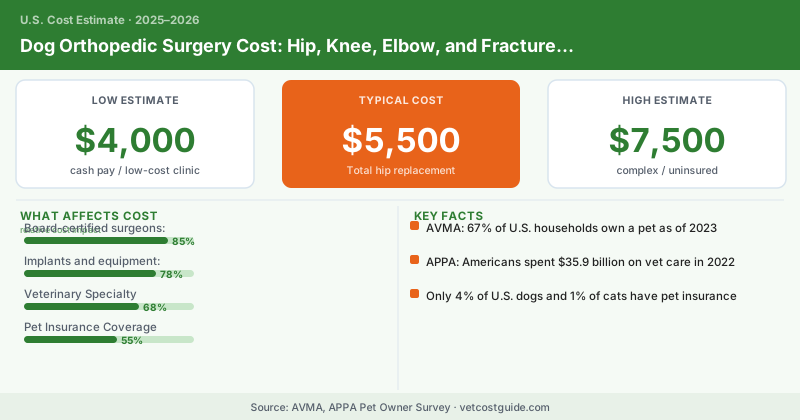
| Total hip replacement (THR) | $4,000 | $5,500 | $7,500 |
| FHO (femoral head ostectomy) | $1,200 | $2,000 | $3,000 |
| Elbow dysplasia (arthroscopy + OCD) | $2,000 | $3,500 | $5,500 |
| Fracture repair (plate/rod/pins) | $1,500 | $2,800 | $5,000 |
| Luxating patella (patellar luxation) | $1,500 | $2,500 | $4,000 |
| Spinal decompression (IVDD) | $3,000 | $5,000 | $8,000 |
These figures include surgery, anesthesia, and hospitalization for the procedure. They generally do not include pre-surgical diagnostics (X-rays, CT, orthopedic consultation), post-surgical medications, rehabilitation, or recheck appointments.
What Drives Orthopedic Surgery Costs So High
Board-certified surgeons: Board-certified veterinary surgeons (Diplomate of the American College of Veterinary Surgeons — DACVS) command significantly higher fees than general practitioners, for the same reason that a human orthopedic surgeon earns more than a GP. The ACVS reports approximately 1,400 board-certified veterinary surgeons in the U.S. — a relatively small specialist pool for a large pet population.
Implants and equipment: TPLO surgery requires a specialized saw and precisely sized titanium plates. Hip replacement implants cost $800–$1,500 in materials alone per hip. Arthroscopy equipment, bone screws, external fixation devices — orthopedic surgery is materially expensive in ways that, say, a soft tissue surgery isn’t.
Anesthesia complexity: Orthopedic procedures run 1–4 hours. Extended anesthesia requires continuous monitoring by a dedicated anesthesia technician, which adds to cost.
Recovery support: Most orthopedic patients need 1–2 nights of post-surgical hospitalization for pain management, monitoring, and initial physical therapy assessment.
- Pre-surgical orthopedic consultation: $150–$350
- Advanced imaging (CT or radiographs): $300–$900
- Pre-anesthetic bloodwork: $100–$200
- Post-surgical medications (pain management, antibiotics): $100–$250
- E-collar, post-op support devices, sling: $30–$80
- Rehabilitation/physical therapy (6–12 weeks): $400–$1,500
- Recheck X-rays (4–8 weeks post-op): $150–$300
- Total add-on costs: $1,000–$3,000 above surgery quote
The Most Common Dog Orthopedic Surgeries
CCL Rupture (the “Dog ACL”)
The cranial cruciate ligament (CCL) is the canine equivalent of the human ACL, and CCL rupture is the most common orthopedic injury in dogs. It can happen acutely (jumping, landing wrong) or develop over time through progressive degeneration.
The three main repair options:
- TPLO (Tibial Plateau Leveling Osteotomy): Changes the geometry of the knee so the CCL is no longer needed for stability. The gold standard for medium and large dogs. Cost: $3,000–$6,000.
- TTA (Tibial Tuberosity Advancement): Similar philosophy to TPLO, different cut. Comparable results, similar cost. Some surgeons prefer one over the other based on anatomy. Cost: $2,500–$5,500.
- Lateral Suture (Extracapsular): A synthetic suture stabilizes the joint. Less invasive, lower cost, suitable for small dogs under 25 lbs. Outcomes are generally good for small dogs; less reliable for larger breeds. Cost: $1,500–$3,500.
The AVMA estimates CCL rupture affects approximately 1 in 100 dogs annually, with certain breeds (Labrador Retrievers, Golden Retrievers, Rottweilers, Newfoundlands) at significantly higher risk.
Hip Problems
Total Hip Replacement (THR): For severe hip dysplasia causing debilitating pain, THR is the most effective long-term solution — outcomes are comparable to human hip replacement with most dogs returning to near-normal activity. Cost: $4,000–$7,500 per hip. Bilateral replacement (both hips) runs $8,000–$14,000.
FHO (Femoral Head Ostectomy): The femoral head is removed, allowing scar tissue to form a “false joint.” It’s much cheaper than THR ($1,200–$3,000) and appropriate for small-to-medium dogs, cats, and dogs where the cost of THR is prohibitive. Functional outcomes are good for lighter animals.
Luxating Patella
The kneecap slides out of its groove — common in small breeds (Chihuahuas, Yorkies, Pomeranians, Toy Poodles). Mild cases are managed medically; grades III–IV require surgical correction (groove deepening, tibial crest transposition). Cost: $1,500–$4,000.
Fracture Repair
Cost varies enormously based on bone fractured, break complexity, and repair method. A simple radius/ulna fracture in a small dog repaired with plates and screws: $1,500–$2,500. A complex femur fracture requiring an intramedullary nail plus external support: $3,000–$5,000. Open fractures (bone through skin) add risk and cost.
Comparing Orthopedic Surgeons
For major orthopedic procedures (TPLO, hip replacement, complex fractures), a board-certified veterinary surgeon (DACVS) consistently produces better outcomes than a general practitioner performing occasional orthopedic surgery. The complication rate difference matters significantly for procedures involving implants — a failed implant means revision surgery. The higher surgeon fee is typically worth paying for procedures where technical precision drives long-term outcomes.
Paying for Dog Orthopedic Surgery
A $4,500 surgery is a financial emergency for most households. Realistic options:
Pet insurance: If your dog is already insured and the injury isn’t pre-existing, orthopedic surgery is typically covered at 70–90% after your deductible. That turns a $4,500 bill into $450–$1,350 out of pocket. The ASPCA notes that orthopedic conditions are among the top three most-filed pet insurance claims.
CareCredit: 6-month or 12-month promotional financing for balances over $200. If you pay the balance in full within the promotional period, no interest is charged. For a $4,000–$5,000 surgery, 12-month financing makes the cost manageable as monthly payments.
ScratchPay: Often approves applicants CareCredit doesn’t. Longer repayment terms (12–24 months) at fixed interest rates.
Veterinary school surgeons: Teaching hospitals have board-certified surgeons supervising residents. Quality is genuine. Cost is 20–40% lower than private specialty hospitals. Wait times are often longer, which matters less for a scheduled elective procedure than an emergency.
Second opinions: Orthopedic surgical recommendations vary. Some surgeons recommend TPLO for dogs where lateral suture would achieve comparable outcomes at lower cost. A second opinion from another DACVS surgeon is worth getting for any procedure over $3,000.
Frequently Asked Questions
What happens if I don’t do the surgery? For CCL rupture, the joint continues to destabilize and the dog develops progressive, painful arthritis. Many dogs compensate initially, but long-term outcomes without surgical repair are poor for medium and large breeds — most develop significant lameness within 1–2 years. The surgery cost isn’t wasted; it’s preventing years of pain management costs.
Is orthopedic surgery covered by pet insurance? Yes, for accidents and injuries in insured dogs without pre-existing conditions. CCL rupture is a gray area — some insurers classify it as hereditary/breed-related, particularly in breeds like Labs and Goldens. Read your policy’s exclusions carefully.
How long is recovery? Most TPLO and hip surgery dogs need 12–16 weeks of restricted activity, with gradual return to normal. Fracture repairs vary. Rehabilitation therapy significantly improves and speeds recovery — factor that cost into your total budget.
Frequently Asked Questions
Hip replacement surgery typically costs $4,000–$7,000 per hip, depending on whether one or both hips are affected and your veterinary surgeon's experience level. Bilateral hip replacements (both hips) can run $7,000–$8,000+, while a single hip replacement usually falls in the $4,000–$5,500 range.
Most pet insurance plans cover orthopedic surgeries including hip replacements and TPLO knee surgery if the condition is not pre-existing, though you typically pay out-of-pocket first and submit for reimbursement (70–90% depending on your plan). Many policies have annual limits or breed-specific exclusions for orthopedic conditions, so reviewing your policy details before surgery is critical to avoid unexpected costs.
Most orthopedic surgeries require 8–12 weeks of restricted activity and physical therapy, with full recovery taking 4–6 months. Conservative management with pain medication, weight loss, and physical therapy can cost $500–$2,000 and may delay or avoid surgery, but it doesn't cure conditions like hip dysplasia or ACL tears—it only manages symptoms.