Most dogs don’t warn you. One day they’re stealing scraps off the Thanksgiving table. Thirty-six hours later they’re hunched, vomiting, and refusing to lift their head. Pancreatitis in dogs can escalate from “seems off” to full hospitalization in under two days — and the cost escalation is just as steep.
Understanding the hospitalization cost before you’re sitting in an emergency waiting room makes the conversation with your vet significantly less overwhelming.
What Pancreatitis Actually Costs
The severity of the attack determines nearly everything about the bill. Mild pancreatitis managed with 24-hour supportive care looks completely different from a severe hemorrhagic case requiring four days of intensive monitoring.
| Severity Level | Typical Cost | What's Included |
|---|---|---|
| Mild (outpatient) | $300–$800 | Exam + IV fluids in-clinic + anti-nausea meds + lipase test |
| Moderate (1–2 night hospitalization) | $800–$2,500 | IV fluids, pain management, anti-emetics, monitoring |
| Severe (3–5 night hospitalization) | $2,500–$5,000 | ICU-level care, continuous IV, plasma transfusion if needed |
| Complicated/referral cases | $5,000–$10,000+ | Surgery if abscess, specialty care, ventilator support |
Referral to an internal medicine specialist or emergency hospital bumps costs higher — specialty hospitals charge 30–60% more than general practices for equivalent care.
The Cost Drivers in a Pancreatitis Hospitalization
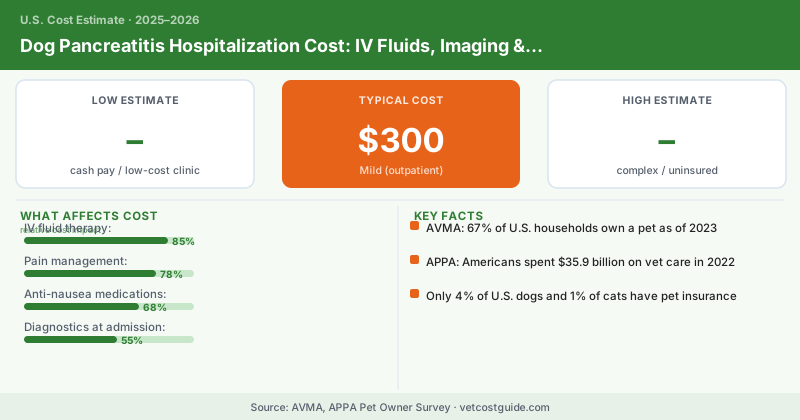
IV fluid therapy: The cornerstone of treatment. Pancreatitis causes fluid shifts and dehydration, and aggressive fluid replacement is non-negotiable. IV fluids plus the catheter placement typically run $150–$300/day.
Pain management: Pancreatitis is painful — the pancreas essentially self-digests. Buprenorphine or other opioid analgesics are standard. Add $50–$100/day.
Anti-nausea medications: Maropitant (Cerenia) is the most commonly used antiemetic. About $30–$60/dose.
Diagnostics at admission:
| Diagnostic | Cost | Purpose |
|---|---|---|
| Abdominal ultrasound | $300–$600 | Confirms pancreatitis; rules out obstruction or abscess |
| Specific canine lipase (Spec cPL) | $80–$150 | Most accurate blood test for pancreatitis |
| CBC + chemistry panel | $150–$300 | Baseline organ function and electrolytes |
| Radiographs (x-rays) | $150–$300 | Rules out foreign body or obstruction |
Daily hospitalization fees: Beyond medications and monitoring, hospitals charge facility fees. Expect $200–$500/day just for the cage/monitoring charge at a 24-hour emergency hospital.
Why Pancreatitis Keeps Coming Back
Here’s the expensive truth about pancreatitis: it’s not always a one-time event. The AVMA notes that dogs who have one pancreatitis episode are at elevated risk for recurrence, particularly if the underlying trigger isn’t addressed. High-fat diets, obesity, certain medications (potassium bromide, some antibiotics), and breed predisposition all contribute.
Miniature Schnauzers are notably prone to recurrent pancreatitis — researchers believe they have an underlying lipid metabolism abnormality that predisposes them to the disease. If you have a Schnauzer, that’s worth knowing before it happens.
After a hospitalization, most dogs need a prescription low-fat diet long-term. Prescription foods like Hill’s i/d Low Fat or Royal Canin GI Low Fat run $60–$100 for a 17-lb bag — a real ongoing cost for large dogs.
Don’t wait for a regular vet appointment if your dog shows:
- Persistent vomiting (more than 2 episodes)
- Hunched posture or prayer position (elbows down, rear up)
- Refusal to eat for more than 24 hours
- Obvious abdominal pain when touched
- Lethargy or collapse
These signs can indicate severe pancreatitis — a condition that can progress to multi-organ dysfunction without prompt treatment. Same-day emergency care is appropriate.
Outpatient vs. Hospitalization: What Determines the Recommendation
Vets decide between outpatient and hospitalization based on:
- Whether the dog can keep water down
- Degree of pain on abdominal palpation
- Blood test severity (lipase levels, liver values, electrolytes)
- Overall hydration status
A mildly affected dog who can tolerate subcutaneous fluids and oral medication at home might be managed for $300–$600 in an outpatient setting. A dog who’s vomiting repeatedly and clearly painful needs IV support — and that means hospitalization.
Pancreatitis complicated by systemic inflammatory response (SIRS) — where inflammation spreads beyond the pancreas — carries a significantly worse prognosis. Signs include abnormal heart rate, abnormal temperature, and low blood pressure. Hospitalization in these cases isn’t optional, and costs reflect the increased intensity of care required.
What to Do About the Bill
A $3,000 pancreatitis hospitalization lands without warning. Here are real options:
CareCredit: Accepted at most vet clinics and emergency hospitals. Zero-interest 12-month option if paid in full. Apply at the front desk while your dog is being admitted.
Payment plans: Ask directly. Many private practices — not all emergency hospitals — will arrange payment plans for established clients. It doesn’t hurt to ask.
Pet insurance: If you have it, submit everything. IV fluids, medications, diagnostics, hospitalization fees, and follow-up care all typically qualify under accident and illness plans. If you don’t have it yet, a pancreatitis hospitalization is a compelling reason to enroll after recovery — noting that the condition will likely be excluded as pre-existing going forward.
Frequently Asked Questions
How long does a dog stay in the hospital for pancreatitis? Mild to moderate cases typically require 1–3 days. Severe cases can mean 5–7 days or longer. The dog goes home when they’re holding down water, not showing pain, and stable on oral medications.
Can a dog recover from pancreatitis without hospitalization? Truly mild cases sometimes resolve with subcutaneous fluids, anti-nausea medication, and a 24-hour food rest — managed at home or on an outpatient basis. But vomiting dogs, painful dogs, and dogs showing signs of severe disease need IV fluids, which requires hospitalization. Don’t try to manage pancreatitis at home without veterinary guidance.
Will my dog get pancreatitis again? Maybe. First-episode dogs without an identifiable trigger (like a one-time fatty meal) often don’t recur. Dogs with underlying lipid disorders, obesity, or breed predisposition are more likely to have recurrent episodes. A permanent low-fat diet and maintaining healthy weight are the primary prevention strategies.
Frequently Asked Questions
Severe pancreatitis requiring hospitalization typically costs $1,500–$5,000, while mild cases treated on an outpatient basis run $300–$800. The final bill depends on the length of stay (usually 2–5 days), imaging (ultrasound or CT scans at $300–$800), IV fluid therapy, and bloodwork monitoring.
Most pet insurance plans cover pancreatitis treatment if it is not classified as a pre-existing condition, typically reimbursing 70–90% of eligible costs after you meet your deductible ($250–$1,000). However, some policies exclude gastrointestinal conditions entirely or have breed-specific exclusions, so review your policy details or contact your insurer before emergency treatment.
Hospitalization for severe pancreatitis usually lasts 2–5 days while your dog receives IV fluids, pain management, and monitoring. Mild cases can sometimes be managed at home with oral medications, a low-fat diet, and close observation, but severe or rapidly worsening pancreatitis always requires hospitalization to prevent complications like organ failure.