Your dog ate the Thanksgiving turkey skin, or the holiday ham, or something greasy from the trash. Twenty-four hours later, she’s hunched over, vomiting, and won’t eat. If pancreatitis is the diagnosis, what happens next depends almost entirely on how bad it is — and the difference between “mild” and “severe” isn’t just clinical. It’s the difference between a $400 outpatient visit and a $4,000 hospitalization.
Mild Pancreatitis: Outpatient Treatment Costs
Mild pancreatitis means the dog is uncomfortable, vomiting, and not eating — but still stable enough to be treated at home or with brief outpatient care. The pancreas is inflamed but not triggering systemic organ complications. These dogs typically respond within 48–72 hours with supportive care.
- Physical exam and patient history
- Serum lipase or cPLI (canine pancreatic lipase immunoreactivity) test
- Basic bloodwork (CBC + chemistry panel) to rule out concurrent issues
- Anti-nausea injection (maropitant/Cerenia)
- Subcutaneous fluids if mildly dehydrated
- Take-home medications: anti-nausea, antacid, appetite stimulant
- Dietary instructions (bland/low-fat diet transition)
| Service | Low End | High End | Notes |
|---|---|---|---|
| Office exam | $55 | $100 | Sick visit surcharge may apply |
| Serum lipase test | $35 | $80 | Basic screening |
| cPLI (SNAP or Spec cPL) | $60 | $120 | More specific for pancreatitis |
| CBC + chemistry panel | $80 | $200 | Rules out concurrent issues |
| Anti-nausea injection | $25 | $60 | Maropitant most common |
| Subcutaneous fluids (in-clinic) | $30 | $70 | If mildly dehydrated |
| Take-home medications | $40 | $100 | Antinausea + antacid typically |
| Abdominal ultrasound | $300 | $600 | If diagnosis uncertain or worsening |
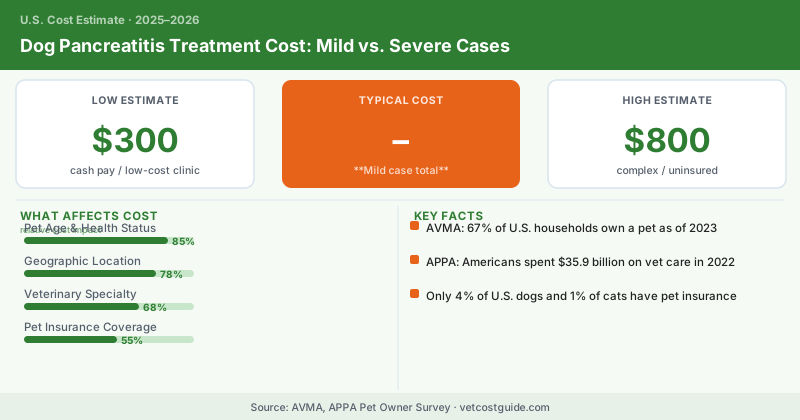
| **Mild case total** | **$300** | **$800** | Without ultrasound on the low end |
Severe Pancreatitis: Hospitalization Costs
Severe pancreatitis is a different animal entirely. The dog can’t hold down water, is profoundly dehydrated, in serious abdominal pain, and may have concurrent complications: aspiration pneumonia from vomiting, hypoglycemia, or early multi-organ dysfunction. These dogs need hospitalization with IV fluids, continuous monitoring, and often 2–5 days of inpatient care.
According to a 2022 review in the Journal of Veterinary Internal Medicine, Miniature Schnauzers, Cocker Spaniels, and Yorkshire Terriers are significantly over-represented in severe pancreatitis cases — partly due to genetic predispositions to hypertriglyceridemia (high blood fat) that feed the inflammatory cascade.
| Service | Daily Cost Range | Total (3-Day Estimate) |
|---|---|---|
| IV catheter placement | $75–$150 | One-time cost |
| IV fluid therapy | $100–$200/day | $300–$600 |
| Anti-nausea (IV maropitant) | $40–$80/day | $120–$240 |
| Pain management (buprenorphine, etc.) | $50–$120/day | $150–$360 |
| Hospitalization/nursing care fee | $100–$300/day | $300–$900 |
| Daily bloodwork monitoring | $80–$180/day | $240–$540 |
| Abdominal ultrasound | $300–$600 | One-time |
| ER exam + admission workup | $200–$500 | One-time |
| **3-day hospitalization total** | — | **$1,500–$3,500** |
Severe cases that progress to ICU-level care — oxygen supplementation, plasma transfusions for coagulopathy, or surgical intervention for necrotic pancreatic tissue — push costs to $3,000–$6,000+. These cases are uncommon but real, particularly in middle-aged obese dogs or those with prior pancreatitis episodes.
Signs of severe pancreatitis include persistent vomiting (6+ times in 24 hours), complete food and water refusal, extreme lethargy, a hunched or “prayer” posture, and a rigid or painful abdomen. If your dog has these signs, don’t wait — this is an emergency vet situation, not a “see how it goes tonight” situation. Delayed treatment significantly worsens outcome and can increase total cost.
Breeds at Higher Risk
Miniature Schnauzers have a genetic predisposition to hypertriglyceridemia (high blood fat), which is a direct risk factor for pancreatitis. Other higher-risk breeds include Yorkshire Terriers, Cocker Spaniels, and Poodles. Middle-aged to older, overweight females are the demographic most commonly affected — which is useful to know before the holiday table scraps situation arises.
Long-Term Management Costs
Dogs who have one episode of pancreatitis have a real risk of recurrence. Long-term management includes:
- Prescription low-fat diet: $60–$120/month for Hill’s i/d Low Fat, Royal Canin GI Low Fat, or Purina EN
- Periodic lipase monitoring: $60–$120 every 6–12 months
- Triglyceride testing (for Miniature Schnauzers specifically): $40–$80
Some dogs with chronic recurrent pancreatitis develop diabetes or exocrine pancreatic insufficiency (EPI) as long-term complications — each of which adds its own ongoing treatment costs.
For a full picture of diagnostic costs that often accompany pancreatitis workup, see our guide on dog blood work cost and dog ultrasound cost. If hospitalization costs are a concern, vet payment plans and CareCredit for vet bills are two real options most emergency hospitals accept.
Bottom Line
Mild pancreatitis — one episode, responds quickly to outpatient care — costs $300–$800. Moderate cases requiring 2 days of hospitalization land at $1,000–$2,500. Severe cases with 3–5 days of inpatient care and ICU monitoring can reach $3,000–$5,000 or more. The best financial protection is prevention: don’t feed high-fat table scraps, keep your dog at a healthy weight, and take pancreatitis warning signs seriously before they escalate. Pet insurance that covers internal medicine conditions will cover pancreatitis — it’s not considered a pre-existing condition unless your dog has had a prior diagnosed episode.
Frequently Asked Questions
Mild pancreatitis typically costs $300–$800 for outpatient treatment, which usually includes a veterinary exam, bloodwork (pancreatic enzyme tests), and prescription medications like antibiotics and anti-nausea drugs. Most dogs recover within 3–5 days with home care and dietary management.
Most pet insurance plans cover pancreatitis treatment if your policy includes illness coverage and you've met your deductible, though you'll typically pay 10–20% coinsurance out-of-pocket after meeting a $250–$500 deductible. However, some insurers classify pancreatitis as a pre-existing condition if your dog showed symptoms before enrollment, which would exclude coverage entirely.
Severe pancreatitis requiring hospitalization ($1,500–$5,000+) is necessary when your dog is severely dehydrated, vomiting uncontrollably, has low blood sugar, or shows signs of organ failure—conditions that need IV fluids, round-the-clock monitoring, and injectable medications. Your vet will recommend hospitalization (typically 2–4 days) if outpatient treatment isn't improving symptoms within 24–48 hours.