Your dog is holding up a paw, leaving bloody prints on the floor, and looking at you with that specific expression that means you’re both in for a stressful afternoon. Paw lacerations are one of the most common injuries vets treat — glass, metal edges, sharp sticks, and ice melt chemicals all do damage. The cost of treatment ranges dramatically depending on where the cut is, how deep it goes, and whether it needs stitches.
Here’s the honest breakdown of what you’ll pay.
Cost by Severity Level
Paw lacerations range from minor pad abrasions that need cleaning and bandaging to full-thickness pad lacerations requiring sedation and sutures. The location matters too — a cut between the toes requires different treatment than a deep slice across the pad itself.
| Severity | Typical Treatment | Cost Range |
|---|---|---|
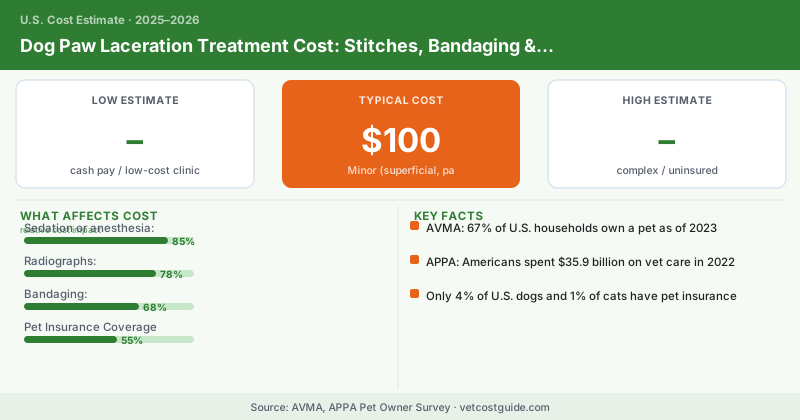
| Minor (superficial, pad abrasion) | Clean + bandage; no sutures | $100–$250 |
| Moderate (full-thickness but small) | Sedation + sutures or tissue adhesive | $300–$600 |
| Severe (large, deep, or involving tendon) | Surgery under anesthesia | $700–$2,000 |
| After-hours emergency visit add-on | Emergency facility surcharge | +$100–$300 |
| Follow-up bandage changes (per visit) | 2–4 visits typically needed | $50–$150 each |
What Drives the Cost
Sedation or anesthesia: This is the biggest cost driver. Dogs in pain won’t hold still for suturing, and a moving patient makes repair much harder (and more dangerous). Even “light sedation” for a paw procedure typically runs $100–$250. General anesthesia for complex repairs: $200–$500.
Radiographs: If the wound is deep or caused by glass, your vet may recommend x-rays to confirm no foreign material is embedded. Glass is radio-opaque and shows up well on x-rays. X-rays: $100–$200.
Bandaging: Paw wounds need special bandaging — not just because dogs will lick them, but because pads are weight-bearing and bandages need to protect the wound from ground contact and stay in place on a structure that flexes with every step. Bandage materials for paws run $20–$50 per application, plus the time to apply correctly.
Follow-up visits: Paw wounds typically need bandage changes every 2–3 days for the first week, then weekly. At $50–$150 per visit, four follow-up visits adds $200–$600 to the total cost. Many owners learn to change bandages at home after the first demonstration — ask your vet to show you how.
Go to the ER immediately if:
- Bleeding won’t slow down after 10–15 minutes of firm pressure
- The wound is very deep or gaping significantly
- You can see tendon, bone, or tissue that shouldn’t be visible
- Your dog won’t bear any weight at all
- The injury happened on broken glass or metal (foreign body risk)
Can wait for your regular vet if:
- Bleeding has slowed or stopped with pressure
- The wound appears superficial (surface abrasion, no gaping edges)
- Your dog is walking on it (even with a limp)
Emergency visits for paw lacerations outside regular hours add $100–$300 in facility fees, but some injuries genuinely can’t wait until morning.
The Paw Pad Problem: Why Healing Takes Time
Paw pads are unique tissue — dense, specialized, and weight-bearing. They don’t heal the way skin elsewhere on the body does. A suture line on a pad is under mechanical stress with every step. That’s why:
- Strict rest is required — limited outdoor activity, no running
- Boots or bandages must stay on (which dogs resist)
- Healing takes 3–6 weeks for full-thickness pad lacerations, longer than equivalent cuts elsewhere on the body
The AVMA notes that pad lacerations are among the more technically challenging wound repairs in small animal medicine — the tissue is dense and tough to suture, and keeping the repair intact requires owner cooperation with activity restriction.
Some vets prefer tissue adhesive (Vetbond or similar) over sutures for smaller pad wounds, since sutures through pad tissue can be uncomfortable and prone to pulling out with movement. Tissue adhesive adds $20–$40 to the repair cost but may reduce the total follow-up burden.
Home Care and Bandaging Costs
After initial treatment, your vet will likely send you home with:
- Elizabethan collar (e-collar): $15–$40; prevents licking
- Antibiotic ointment or spray: $15–$30
- Pain medication (meloxicam or gabapentin): $30–$80 for a 7–10 day course
- Bandage materials for home changes: $30–$60 for enough material to do several changes
Total home care supplies: $90–$200.
If you’re uncomfortable changing the bandage yourself or your dog won’t cooperate, plan on those vet visit fees for every bandage change. There’s no shame in that — a properly applied paw bandage is genuinely hard to do solo on a dog in pain.
A bandage that gets wet or is left on too long becomes a bacterial incubator. If your dog gets their paw bandage wet, it needs to be changed immediately — don’t leave a wet bandage on overnight. Use a plastic bag or commercial paw cover (Pawz rubber boots work well) over the bandage during outdoor potty trips. Wet bandages cause wound complications that extend healing time and overall cost significantly.
Prevention: Common Causes and How to Avoid Them
The most common causes of dog paw lacerations treated by vets:
- Glass and metal edges: Most common in urban areas; watch where your dog walks near dumpsters and construction
- Ice melt chemicals: Cause chemical burns that look like lacerations; rinse paws after winter walks
- Rough terrain: Gravel, sharp rocks on hiking trails
- Broken nails (torn to the quick): Painful, bleeds heavily, but less severe than deep pad cuts
Protective boots (Ruffwear, Muttluks) prevent most paw injuries in high-risk environments. They’re not cheap — $40–$80 for a set — but that’s still less than one emergency vet visit for a bad paw laceration.
Frequently Asked Questions
Can I treat a small paw laceration at home? A truly minor abrasion — surface-level, not gaping, bleeding stopped — can sometimes be managed at home with cleaning, antibiotic ointment, and a bandage. The test: does it stop bleeding with 10 minutes of firm pressure? Does the wound have clean edges and not gape? Can your dog bear some weight? If yes to all three, call your vet to describe it and get their advice. If not, see a vet.
Do paw lacerations need stitches? Not always. Small, clean wounds sometimes heal well with tissue adhesive and bandaging. Deep wounds, gaping edges, or wounds near the junction between pad and skin typically need sutures to heal correctly. Your vet makes this call based on examining the wound.
How do I stop my dog from chewing off the bandage? An e-collar (cone) is the most reliable solution. Some dogs tolerate the soft fabric e-collars (Comfy Cone) better than the rigid plastic cone. Bitter apple spray on the outside of the bandage helps as a deterrent but isn’t foolproof with determined lickers.
Frequently Asked Questions
Stitches with sedation typically cost $300–$700, depending on the depth of the laceration and your vet's location. If the wound is superficial and doesn't require sedation, you may pay $200–$400 for basic suturing and wound care.
Most pet insurance plans cover paw lacerations as accidental injuries after you meet your deductible ($250–$1,000 typical range), with reimbursement rates between 70–90%. However, some policies exclude injuries related to pre-existing conditions or require a waiting period, so check your specific plan details before filing a claim.
Most paw lacerations heal within 10–14 days with stitches in place; your vet will remove them at the two-week mark. Full healing and return to normal activity typically takes 3–4 weeks, during which you must keep the bandage dry and prevent your dog from licking or putting weight on the injured paw.